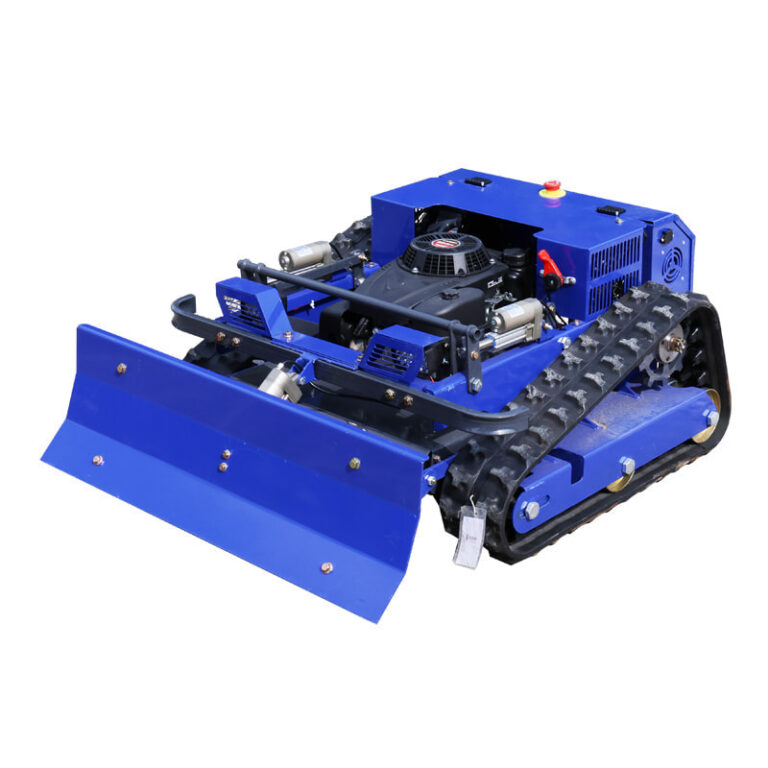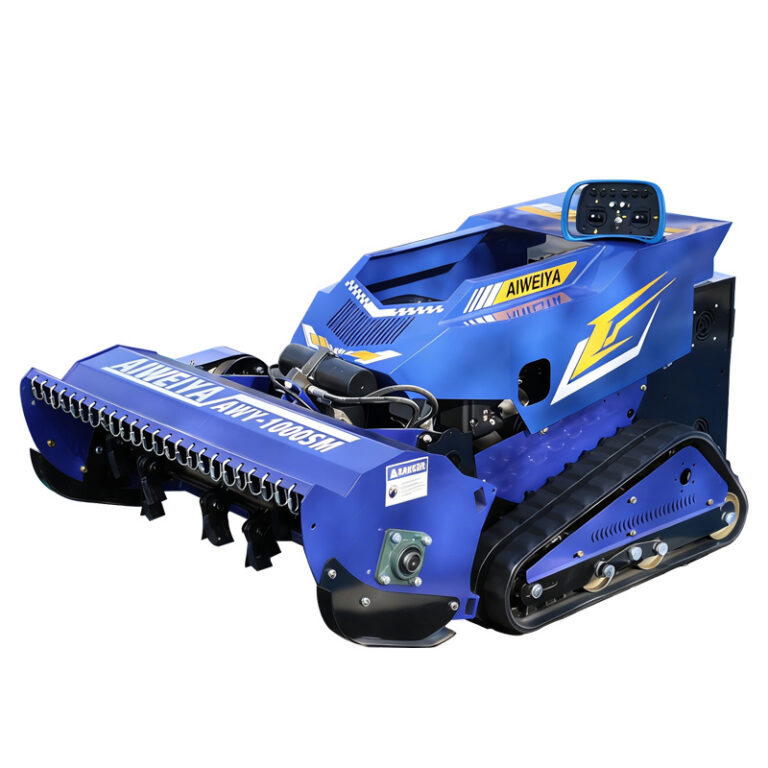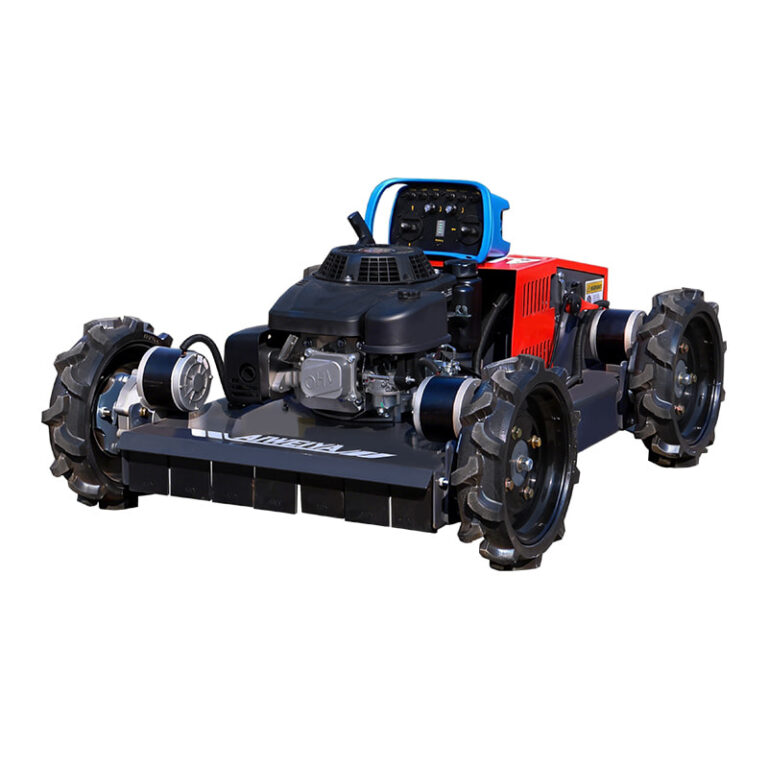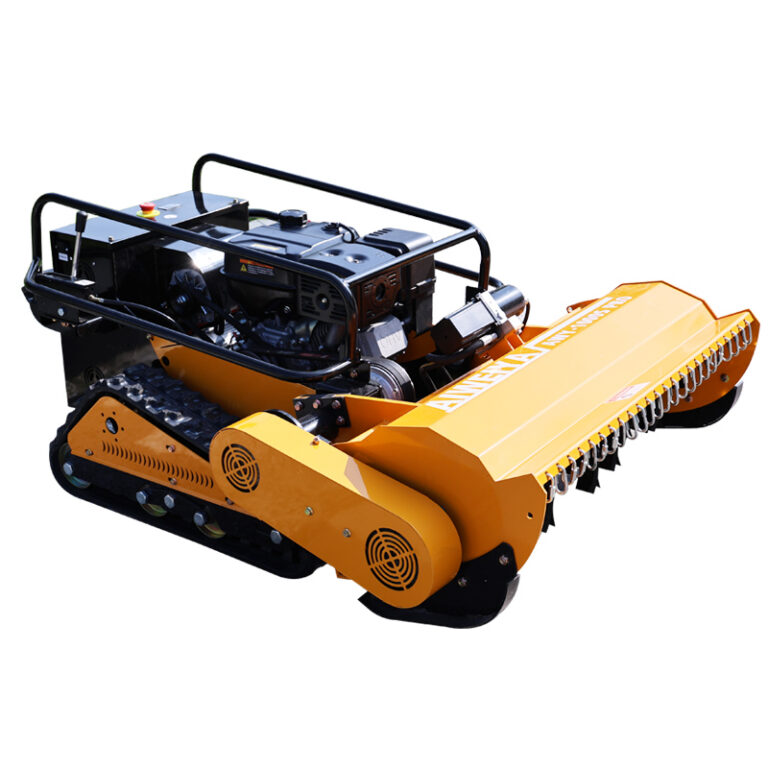
Introduction: Is a Remote Control Mower a Good Addition to Your Rental Fleet?
Equipment rental companies serve contractors, landscaping businesses, property maintenance teams, agricultural operators, and other commercial customers. These customers often need specialized equipment for a specific project but may not want to purchase a machine they will use only occasionally.
Remote control mowers can be worth evaluating for rental fleets serving customers who maintain rough grass, selected slopes, overgrown property boundaries, orchards, and other vegetation areas.
Unlike conventional lawn mowers, these machines allow operators to control the mower remotely. Depending on the model and working conditions, this can offer an alternative for certain difficult-to-access mowing tasks.
However, adding a specialized mower to a rental fleet requires more than identifying a potential application. Rental operators must consider local demand, purchase price, expected utilization, equipment durability, maintenance requirements, transport, customer training, and the cost of downtime.
A machine that performs well for an owner-operated landscaping company may not automatically be the best rental product. Rental equipment must serve different customers, withstand varied operating practices, and return to service efficiently between bookings.
This guide explains how rental businesses can evaluate a remote control mower for rental companies and develop a practical plan for managing the equipment as a commercial asset.
1. Why Rental Companies Should Consider Remote Control Mowing Equipment
A rental business succeeds when its equipment meets genuine customer demand at a sustainable cost.
Remote control mowing equipment may appeal to customers who need a specialized machine for a limited period, particularly when their own fleet is not suitable for a particular task.
1.1 Serving Customers with Specialized Mowing Requirements
Potential customer groups include:
- Landscaping and grounds maintenance contractors
- Vegetation management service providers
- Agricultural and orchard operators
- Property maintenance companies
- Contractors maintaining suitable embankments and slopes
- Municipal service contractors
- Commercial property maintenance teams
Not every customer will need a remote control mower. The rental company should identify which local customer segments regularly encounter jobs that justify specialized equipment.
1.2 Offering an Alternative to Equipment Ownership
Some contractors may need a specialized mower for only a few projects each season. Renting can allow them to access the equipment without committing to the full purchase cost.
For the rental company, this creates a possible revenue opportunity, provided the rental rate, booking frequency, and maintenance expenses support the investment.
1.3 Expanding Beyond Conventional Lawn Equipment
A fleet dominated by standard lawn mowers may have limited coverage for certain rough vegetation jobs. A suitable remote control mower can complement existing equipment and help the business serve a broader range of professional customers.
The objective is not to replace every conventional mower. It is to add equipment that meets a clearly identified gap in the rental offering.
1.4 Supporting Project-Based Demand
Some customers need equipment for a short contract, seasonal maintenance campaign, or one-time site clearance. A rental model may suit these requirements better than ownership.
Rental operators should assess demand across the year rather than assuming that interest during peak vegetation season will continue at the same level throughout the year.
2. Identify the Right Customers Before Buying
Before purchasing a remote control mower, research the customers who could realistically rent it.
2.1 Landscaping Contractors
Landscaping companies may need a specialized mower for commercial properties with rough boundaries, selected slopes, or vegetation that is unsuitable for their regular lawn equipment.
These customers often care about availability, transport convenience, cutting performance, and the time required to collect and return equipment.
2.2 Vegetation Management Contractors
Contractors responsible for rough grass, weeds, and selected dense vegetation may need equipment that fits the conditions of individual projects.
Their requirements can differ substantially depending on the vegetation, terrain, and cutting specification. Rental staff should collect application details before recommending a model.
Remote Control Mower for Brush and Weed Cutting
2.3 Agricultural and Orchard Businesses
Orchards and farms may require vegetation management between rows, around property boundaries, or on suitable sloping ground.
Access dimensions, crop protection, turning space, soil conditions, and the timing of agricultural work all influence whether a particular machine is appropriate.
Remote Control Mower for Orchard Grass Management
2.4 Commercial Property Maintenance Contractors
Companies maintaining industrial facilities, business campuses, estates, and large properties may need a specialized mower for occasional difficult areas.
The rental business should determine whether these customers require a machine for a single day, a weekly maintenance program, or a longer contract.
2.5 Municipal and Public-Sector Contractors
Contractors working on public land may have specialized mowing requirements. Their equipment selection can also be affected by procurement conditions, site-access rules, work-zone procedures, and documentation requirements.
Rental operators should confirm the customer’s application and ensure the proposed equipment is appropriate for the job.
3. How to Choose a Remote Control Mower for a Rental Fleet
A rental machine should be selected for its intended applications, serviceability, and commercial practicality.
3.1 Match the Cutting System to Expected Demand
Determine whether local customers mainly need routine grass cutting, rough vegetation control, or equipment designed for selected dense vegetation applications.
A flail mower may be relevant for some rough vegetation tasks, but the exact machine configuration and manufacturer guidance determine what it can handle.
Do not advertise a rental unit as suitable for every type of brush or terrain without confirming its specifications.
3.2 Evaluate Cutting Width and Machine Dimensions
A wider cutting deck may help on larger open areas, while a more compact machine may be easier to transport or position in restricted locations.
Rental customers may have different trailers, access routes, and storage arrangements. Provide clear dimensions and loading requirements before booking.
3.3 Check Track Design and Terrain Limitations
Tracked mowers may suit certain uneven surfaces, but performance depends on the machine design and ground conditions.
Before adding a model to the fleet, confirm the manufacturer’s guidance on slopes, wet ground, turning, traction, and other restrictions. Include these limitations in the rental documentation.
3.4 Review Remote-Control Features
Check the controller functions, documented operating range, emergency-stop arrangements, visibility requirements, and instructions for responding to control or communication problems.
Rental staff should understand these functions well enough to explain them accurately during customer handover.
3.5 Prioritize Serviceability
The machine should be practical to inspect, clean, maintain, and repair between bookings.
Ask suppliers about routine service procedures, access to wear parts, technical support, warranty conditions, and the recommended maintenance schedule.
3.6 Consider Transport and Handling
Rental customers may collect the mower themselves or require delivery. Either arrangement affects operating costs.
Confirm the machine’s weight, loading method, transport dimensions, and securing requirements. Determine whether the rental business needs additional loading equipment or a suitable delivery trailer.
4. Estimate Rental Demand and Seasonal Utilization
A rental fleet investment depends heavily on how often the machine is booked at profitable rates.
4.1 Research Existing Customer Demand
Speak with established customers before purchasing. Ask which mowing tasks they currently struggle to complete, what equipment they use, how frequently these jobs occur, and whether they would consider renting a specialized mower.
Feedback from actual customers is more useful than general assumptions about market demand.
4.2 Review Seasonal Work Patterns
Vegetation growth and maintenance schedules vary by region. Some rental markets may experience concentrated demand during the growing season, while others have more evenly distributed workloads.
Use local booking history and customer project schedules to estimate likely demand.
4.3 Estimate Available Rental Days
A machine cannot be rented every day of the year. Time may be required for servicing, cleaning, delivery, inspection, repairs, and periods when demand is low.
Estimate realistic rental days rather than using the total number of calendar days.
4.4 Distinguish Bookings from Profitable Utilization
High utilization does not necessarily mean high profitability. A machine may be frequently rented but generate limited contribution if rates are too low or maintenance and delivery expenses are high.
Track both rental days and the financial contribution generated by those bookings.
4.5 Start with a Pilot Unit
Where demand is uncertain, consider testing the market with a limited initial investment.
A pilot period can reveal booking patterns, common customer questions, damage risks, service requirements, and the most attractive rental terms.
Use the results to determine whether expanding the fleet is justified.
5. Calculate Rental Fleet Profitability
A remote control mower should be assessed using a realistic financial model.
5.1 Determine the Full Acquisition Cost
The investment may include:
- Machine purchase price
- Delivery and import-related costs
- Required accessories
- Transport or loading equipment
- Initial spare-parts inventory
- Staff training
- Preparation and setup
Ask suppliers to clarify exactly what is included in the quotation.
5.2 Calculate Revenue per Rental
Rental revenue depends on the rental rate, booking duration, discounts, and any additional services.
For a simple estimate:
Gross rental revenue = Average rental rate × Paid rental days
If the company charges separately for delivery, accessories, or other services, account for those items separately.
5.3 Calculate Variable Operating Costs
Depending on the rental arrangement, variable costs may include:
- Cleaning and preparation
- Delivery and collection
- Wear components
- Maintenance attributable to usage
- Repair costs
- Payment processing or booking fees
- Customer support
Some costs are incurred even when the machine is not rented, so separate variable costs from fixed ownership expenses.
5.4 Estimate Annual Contribution
A simple model is:
Annual operating contribution = Rental revenue − Variable operating costs − Allocated fixed ownership costs
The calculation should reflect the company’s accounting method and include relevant expenses such as insurance, storage, financing, and depreciation where applicable.
5.5 Estimate the Payback Period
For an initial estimate:
Payback period = Initial investment ÷ Annual net cash contribution
This is a simplified measure. A complete investment decision should consider equipment life, future repairs, financing, resale value, taxes, and changing demand.
5.6 Test Different Utilization Scenarios
Build at least three forecasts:
- Low utilization: Fewer bookings and more idle time
- Expected utilization: Based on realistic local demand
- High utilization: Strong booking levels supported by evidence
This makes it easier to understand how sensitive the investment is to demand and rental pricing.

6. Establish Rental Rates and Terms
Rental pricing should cover the cost of owning and maintaining the equipment while remaining commercially attractive to customers.
6.1 Daily, Weekly, and Monthly Rates
Different rental periods serve different needs.
Daily rentals may suit short projects, while weekly or monthly rentals may appeal to contractors with ongoing maintenance contracts.
Compare the revenue from longer bookings with the benefits of shorter rentals, which may allow the business to charge higher rates per day when demand is strong.
6.2 Include Delivery and Collection Costs
A remote control mower may require a suitable trailer and careful loading. If the rental company provides delivery, account for driver time, vehicle expenses, distance, and loading arrangements.
State whether transportation is included in the quoted rate.
6.3 Define the Rental Scope
The rental agreement should clearly describe:
- Included equipment and accessories
- Rental period and return deadline
- Collection or delivery arrangements
- Customer training and handover
- Fuel or consumables responsibilities
- Cleaning requirements
- Damage reporting procedures
- Late-return charges
- Maintenance and breakdown arrangements
- Liability, insurance, and deposit terms
Have the agreement reviewed for applicable local laws and business requirements.
6.4 Consider Damage Deposits and Insurance
Specialized equipment may be exposed to misuse, debris, unsuitable terrain, or accidental damage.
Set deposit and insurance requirements according to the machine’s value, risk profile, and applicable law. Explain the terms before the customer confirms the booking.
6.5 Price Optional Services Transparently
Possible services include delivery, collection, operator familiarization, additional accessories, or agreed maintenance support.
Keep the base rental rate clear and list additional charges separately to reduce disputes.
7. Customer Training: A Critical Part of Rental Operations
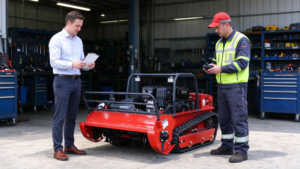
Remote-controlled equipment may be unfamiliar to some customers. A structured handover helps them understand the controls and operating limits before leaving the rental facility.
7.1 Demonstrate the Basic Controls
Explain the controller layout, startup, normal operation, stopping procedure, and emergency-stop function according to the manufacturer’s manual.
Allow the customer to become familiar with the controls in an appropriate training area before starting the job.
7.2 Explain Application Limits
Customers should understand which vegetation and terrain conditions are suitable for the specific model.
Clearly explain restrictions relating to slope, wet ground, obstacles, cutting conditions, and visibility.
7.3 Review Work-Area Safety
Explain the need to inspect the site, keep people away from the active cutting area, manage flying-debris hazards, and stop if the operator loses suitable visibility.
The customer remains responsible for following the rental agreement, the manufacturer’s instructions, and applicable site requirements.
7.4 Provide Written Operating Instructions
Give customers the relevant manual, startup and shutdown guidance, routine inspection checklist, and contact information for reporting problems.
Do not rely on verbal instructions alone.
7.5 Document the Handover
Record that the customer received the equipment, relevant instructions, accessories, and a basic operational demonstration where provided.
A consistent handover procedure can help reduce misunderstandings and improve the rental experience.
8. Inspection and Maintenance Between Rentals
A reliable inspection process helps protect the equipment investment and identify issues before the next booking.
8.1 Check the Machine on Return
Use a consistent checklist to record the machine’s condition, visible damage, missing accessories, operating-hour information where available, and any customer-reported issues.
Photographs taken at handover and return can support the company’s condition records.
8.2 Clean According to the Manufacturer’s Instructions
Remove grass and debris using approved procedures. Pay attention to the cutting deck, track system, ventilation areas, and other locations identified in the maintenance manual.
Follow the required shutdown and isolation steps before cleaning or inspecting the cutting mechanism.
8.3 Inspect Cutting Components
Check the cutting system for wear, damage, missing components, or unusual conditions according to the manufacturer’s procedures.
Do not return the machine to service if a safety-related fault or significant mechanical problem remains unresolved.
8.4 Inspect Tracks and Undercarriage
Check the track system for visible damage, abnormal wear, debris buildup, or other conditions requiring attention.
The precise inspection procedure and adjustment requirements depend on the model.
8.5 Verify the Remote-Control System
Confirm that the controller, communication functions, emergency-stop arrangements, and other required controls operate according to the manufacturer’s instructions.
If a fault is suspected, remove the machine from rental availability until it has been assessed and cleared for service.
8.6 Record Maintenance and Parts Usage
Maintain a history of repairs, replaced components, service dates, and reported faults.
These records help identify recurring problems and improve future purchasing decisions.
9. Managing Breakdowns and Rental Downtime
Unexpected downtime can affect both rental revenue and customer relationships.
9.1 Set a Clear Breakdown Procedure
Give customers instructions for stopping the machine safely and reporting a fault. Explain what information the service team needs, such as the model, symptoms, operating conditions, and any visible warning indicators.
Customers should not attempt repairs beyond their training or the actions authorized by the manufacturer.
9.2 Keep Critical Parts Available
Work with the supplier to identify components that are important for routine maintenance and common repairs.
Stock levels should reflect equipment usage, supplier lead times, local service availability, and the cost of keeping a machine unavailable.
9.3 Maintain Supplier Support
Before purchasing, clarify how technical support is accessed, what information the supplier needs to diagnose problems, and which repairs require trained service personnel.
For imported equipment, confirm realistic parts-delivery arrangements and warranty procedures.
9.4 Have a Customer Communication Plan
If a breakdown affects a booking, contact the customer promptly and explain the available options under the rental agreement.
Where practical, alternatives may include repair, rescheduling, or replacement equipment of a suitable specification.
Do not promise a replacement machine unless one is actually available and appropriate for the customer’s task.
9.5 Track Downtime as a Business Metric
Record unavailable days, repair costs, missed bookings, and the causes of downtime.
These figures can reveal whether the issue is related to equipment selection, operating practices, maintenance planning, or supplier support.
10. Transport, Storage, and Fleet Deployment
Rental companies need to move equipment efficiently between the depot, customers, and service locations.
10.1 Confirm Transport Compatibility
Verify the mower’s dimensions and operating weight against the company’s trailers, vehicles, and loading facilities.
Check load ratings and securing requirements. Provide customers with accurate transport information before collection.
10.2 Offer Delivery Where It Makes Commercial Sense
Some customers may prefer delivery because they do not have suitable transport equipment.
Calculate delivery charges using realistic travel time, vehicle costs, loading time, and distance. Consider whether deliveries can be grouped geographically.
10.3 Organize Storage and Access
The storage area should allow the mower to be inspected, cleaned, serviced, and loaded without unnecessary handling.
Keep the controller, manuals, accessories, and related equipment organized with the correct unit.
10.4 Plan Service Windows
Schedule inspections and routine servicing between bookings wherever possible.
Do not shorten required maintenance procedures to increase rental availability. Safe and reliable operation is more important than maximizing short-term booking capacity.
10.5 Use a Fleet Availability System
Record each unit’s booking status, maintenance schedule, location, and expected return date.
A simple, consistently updated system can reduce double bookings and make it easier to identify equipment that is ready for the next customer.
11. How to Compare Suppliers Before Purchasing
Rental companies should compare more than the purchase price when evaluating potential equipment suppliers.
Technical Specifications
Request written information about:
- Cutting width and cutting-system type
- Machine dimensions and operating weight
- Power source and intended applications
- Documented slope and ground-condition limits
- Remote-control functions
- Safety features and operating instructions
- Routine maintenance requirements
Service and Parts
Ask about spare-parts availability, service documentation, technical support, warranty terms, and procedures for handling faults.
Clarify which maintenance tasks can be performed by the rental company’s technicians and which require specialist support.
Commercial Terms
Confirm the full quotation, delivery costs, lead times, payment terms, available configurations, and optional accessories.
For multiple-unit purchases, request a clear breakdown of the proposed equipment and any included services.
Documentation and Training
Check whether the supplier provides operating manuals, maintenance instructions, and training materials suitable for rental customers.
These materials are important when the equipment will be used by different operators rather than a single experienced owner.
Remote Control Mower Buying Guide for Commercial Buyers
12. Working with NUOYU on Rental Fleet Procurement
NUOYU supplies remote control lawn mower solutions for business customers, including buyers evaluating equipment for commercial vegetation management applications.
For rental companies, the purchasing discussion should focus on the actual customer base, intended use cases, service resources, and operating environment.
Before requesting a quotation, prepare:
- The main customer groups you serve
- Typical rental applications and vegetation conditions
- Expected rental frequency and seasonal demand
- Preferred cutting width and cutting system
- Transport and storage limitations
- Required order quantity
- Spare-parts and technical-support expectations
- Delivery destination and any customization requirements
Ask the supplier to identify suitable available models and provide written specifications. Confirm slope limits, intended applications, warranty coverage, maintenance requirements, lead times, and commercial terms before committing to a purchase.
Explore related NUOYU resources:
13. Frequently Asked Questions
Q1. Is a remote control mower suitable for equipment rental companies?
It may be suitable when local customers regularly need specialized mowing equipment for appropriate terrain or vegetation. Rental businesses should validate demand, operating costs, maintenance requirements, and customer training needs before purchasing.
Q2. How can a rental company estimate demand?
Review booking history, speak with established customers, research seasonal maintenance schedules, and identify recurring jobs that are difficult to complete with conventional equipment. A pilot unit can provide useful real-world data.
Q3. What matters most when selecting a rental mower?
Important factors include suitability for the intended applications, machine durability, ease of inspection, parts availability, transport requirements, customer training, and total ownership cost.
Q4. How should rental rates be calculated?
Consider the purchase cost, financing, expected paid rental days, maintenance, repairs, cleaning, delivery, insurance, storage, and other operating expenses. Test several utilization scenarios before setting the final rate.
Q5. Should rental companies provide customer training?
Yes. Customers should receive appropriate instruction on the controls, emergency stops, operating limitations, inspections, and safe work procedures. Training should follow the manufacturer’s documentation and the rental company’s operating policy.
Q6. How can a rental business reduce equipment downtime?
Use consistent inspections, follow scheduled maintenance, stock appropriate spare parts, document faults, and establish clear technical-support arrangements with the supplier.
Q7. Can one mower serve different customer groups?
Potentially, if the applications are compatible with the same machine configuration. Confirm the vegetation, terrain, cutting requirements, and operating limits for each customer’s intended use.
Q8. What should I ask NUOYU before purchasing rental fleet equipment?
Request model specifications, intended applications, maintenance requirements, spare-parts information, warranty terms, technical support details, delivery arrangements, and pricing. Explain your target customers and expected rental applications so the proposed equipment can be evaluated appropriately.
Conclusion: Build Your Rental Fleet Around Proven Demand
A remote control mower can expand a rental company’s equipment offering when local customers have recurring needs that conventional mowing equipment does not fully address.
The strongest investment decisions combine evidence of demand with careful equipment selection, realistic utilization forecasts, clear rental agreements, structured customer training, and reliable maintenance processes.
Before purchasing, identify your target customers, calculate the total cost of ownership, test demand where possible, and establish a plan for inspections, spare parts, transport, and downtime.
Planning to expand your commercial equipment rental fleet? Contact NUOYU to discuss available remote control mower configurations, technical requirements, and business purchasing options.