Introduction: Managing Public Green Spaces More Efficiently
Municipal vegetation management covers a wide range of outdoor maintenance responsibilities. Local authorities, public works departments, landscaping contractors, and municipal service providers may need to maintain parks, roadside green belts, drainage channels, public facility grounds, embankments, vacant land, and other landscaped areas.
These locations rarely have identical maintenance requirements. A public park may require frequent grass cutting and a clean finish, while an overgrown drainage boundary may need more robust vegetation-cutting equipment. A sloping area near public infrastructure can introduce additional challenges involving access, operator positioning, and work-zone planning.
For organizations responsible for multiple sites, choosing suitable equipment is about more than cutting grass. The right machine should fit the terrain, vegetation, maintenance schedule, transportation arrangements, operator training requirements, and available maintenance resources.
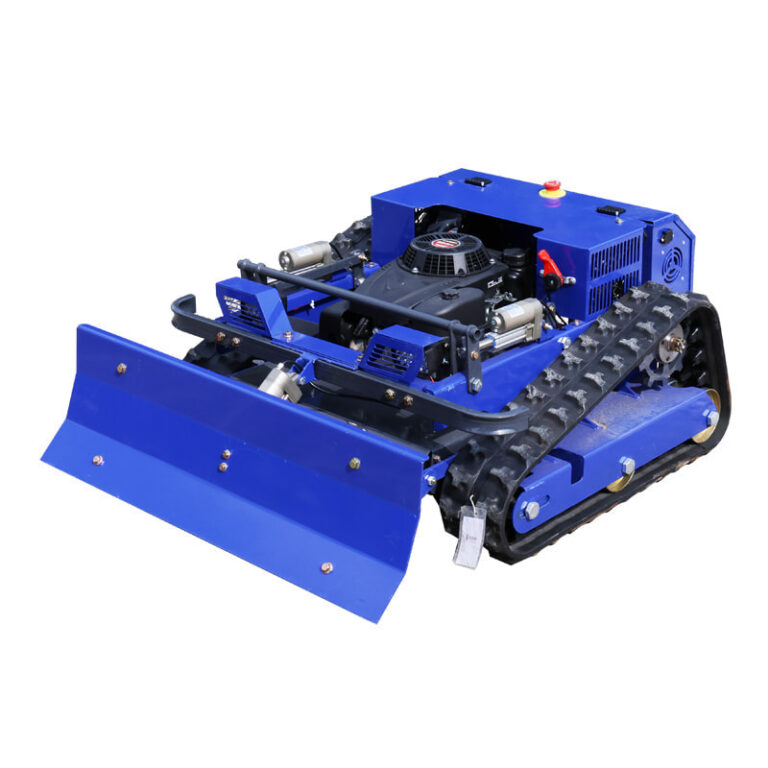
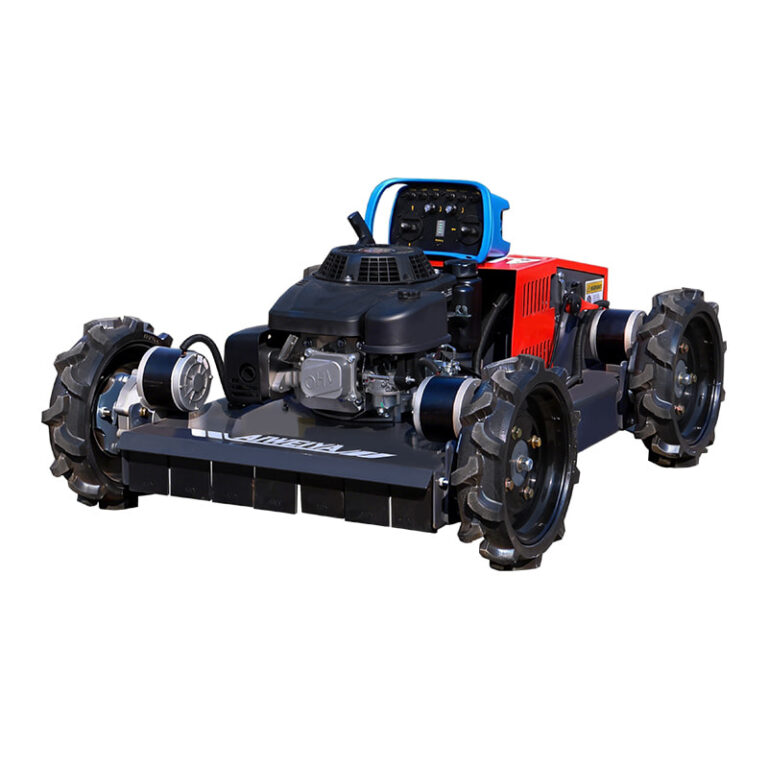
A remote control mower for municipal vegetation management can help maintenance teams operate from a position separated from the cutting machine. Depending on its configuration and the site conditions, it may be suitable for certain slopes, uneven ground, rough grass, and vegetation areas where conventional mowing equipment is less practical.
This guide explains how municipal buyers and their contractors can evaluate remote control mowing equipment for public-land maintenance projects.

1. What Is Municipal Vegetation Management?
Municipal vegetation management refers to the planned maintenance and control of grass, weeds, brush, and other unwanted vegetation across land managed by local authorities or public service organizations.
The objective varies by location. In recreational areas, maintenance teams may prioritize appearance and accessibility. Around drainage infrastructure, the focus may be vegetation control and access for inspections. On embankments or undeveloped municipal land, the priority may be managing growth while using equipment appropriate for the terrain.
Typical municipal maintenance areas include:
1.1 Public Parks and Green Spaces
Parks, community gardens, recreational grounds, and landscaped public spaces often require recurring mowing schedules. Open lawns may be suitable for conventional mowers, while perimeter slopes, rough boundaries, and less accessible sections may require specialized equipment.
1.2 Roadside Green Belts and Public Verges
Municipal road networks often include planted strips, grass-covered boundaries, and undeveloped land beside roads. These areas may need regular vegetation control to maintain the landscape and prevent excessive growth.
For sites close to traffic, the work plan should account for traffic exposure, visibility, access restrictions, and appropriate work-zone controls.
Remote Control Mower for Roadside Maintenance
1.3 Drainage Channels and Retention Areas
Drainage ditches, stormwater retention areas, and water-management boundaries can develop dense grass and weeds. Ground conditions may vary considerably with weather and drainage conditions.
Equipment selection should consider access, soil bearing capacity, surface stability, and the manufacturer’s operating restrictions. A remote-controlled machine is not automatically suitable for every wet or unstable location.
1.4 Embankments and Sloping Public Land
Municipal properties may contain earth banks, landscaped slopes, and sloping areas around public infrastructure. These sites can be difficult to maintain with conventional ride-on equipment.
Remote operation can allow the operator to control a suitable machine from a separate position. The machine must still remain within its documented operating limits, including any slope, traction, and ground-condition restrictions.
Remote Control Mower for Embankment Maintenance
1.5 Vacant Lots and Rough Public Land
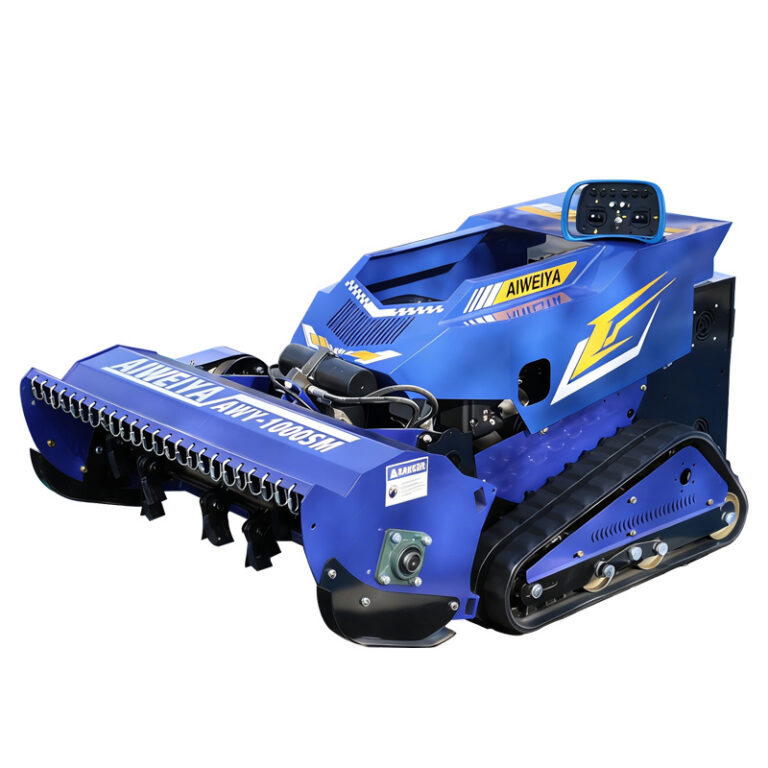
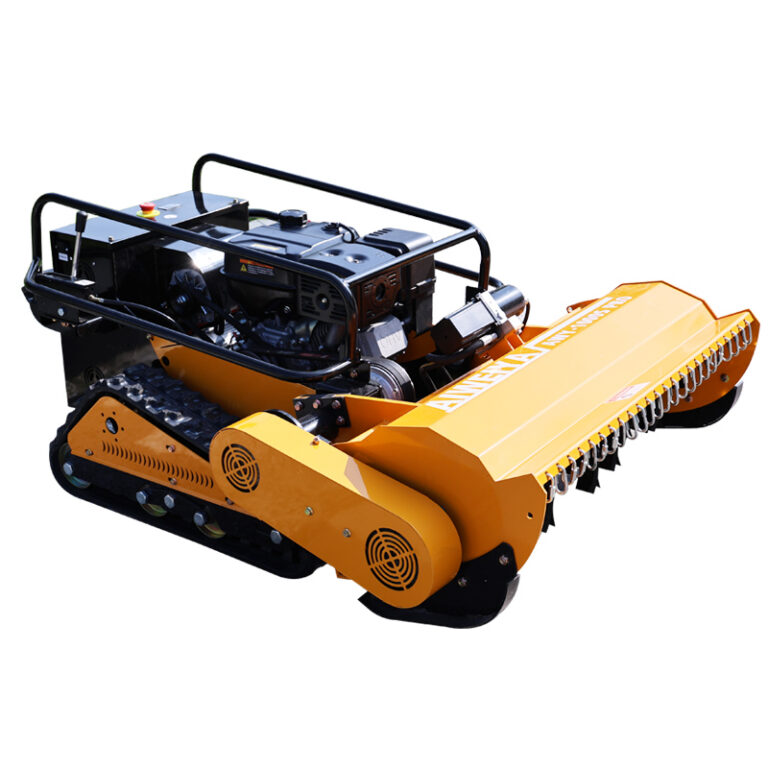
Unused municipal plots and undeveloped property can develop tall grass, weeds, and light brush. Depending on vegetation density, cutting conditions, and the selected attachment, a commercial remote control flail mower may be worth evaluating.
Municipal buyers should distinguish between routine grass cutting and heavy vegetation clearing. Not every mower or cutting system is designed for thick woody growth.
2. Why Municipal Buyers Should Evaluate Remote Control Mowers
Remote control mowing equipment is not intended to replace every machine in a municipal fleet. Its value is strongest when a particular site or task creates challenges for conventional mowing methods.
2.1 Separating the Operator from the Cutting Machine
Remote operation allows the operator to control the machine without riding directly on it. This can be valuable when working in selected rough or sloping areas, provided the operator maintains suitable visibility and follows the machine’s operating instructions.
The operator must still assess falling-object hazards, flying debris, machine movement, nearby people, and changing ground conditions.
2.2 Accessing Certain Difficult-to-Maintain Areas
A compact tracked mower may be easier to position in some narrow or uneven areas than larger conventional equipment. Whether it can reach a particular site depends on its dimensions, turning space, ground clearance, access route, and transport arrangements.
Municipal buyers should measure restricted entrances and paths before ordering rather than relying on general descriptions such as “compact” or “all-terrain.”
2.3 Supporting Recurring Maintenance Programs
Municipal maintenance is often organized around scheduled visits rather than one-time cutting jobs. A machine that fits the recurring workload can help teams establish a more consistent operating process.
Before estimating productivity, evaluate the actual cutting width, travel speed under working conditions, vegetation density, maneuvering time, and the number of stops required around obstacles.
2.4 Supplementing Existing Fleet Equipment
A remote control mower can complement conventional tractors, ride-on mowers, brush cutters, and handheld tools.
For example, a municipality may continue using standard mowers on broad, level lawns while assigning a remote-controlled machine to selected rough boundaries and difficult slopes. This approach can avoid purchasing specialized equipment for tasks that existing machines already handle efficiently.
2.5 Supporting Contractors Serving Multiple Public-Sector Clients
Landscaping contractors and vegetation management companies may maintain parks, commercial properties, roadside land, and municipal facilities under separate service agreements.
A versatile machine can be useful across suitable projects, but the contractor should verify that its cutting system and operating capabilities match the requirements of each contract.
3. Match the Mower to the Municipal Site
The most important purchasing decision is identifying the work the machine will actually perform.
| Municipal site | Typical maintenance requirement | Equipment considerations |
|---|---|---|
| Public park perimeter | Routine grass cutting | Finish quality, maneuverability, access |
| Sloping green space | Grass control on suitable slopes | Rated slope limits, traction, operator position |
| Drainage boundary | Grass and weed management | Ground stability, vegetation density, access |
| Vacant municipal lot | Rough grass and weeds | Cutting system, debris conditions, serviceability |
| Public facility grounds | Recurring landscape maintenance | Transport, storage, schedule, finish requirements |
| Large undeveloped site | Broad vegetation-control workload | Productivity, cutting width, fuel and maintenance planning |
| Embankment beside infrastructure | Controlled vegetation maintenance | Ground conditions, site restrictions, risk assessment |
This comparison should be used as an initial screening tool, not as confirmation that one machine is suitable for every listed environment.
3.1 Distinguish Routine Mowing from Heavy Vegetation Cutting
Municipal contracts may use the general term “grass cutting” even when the site contains different vegetation types.
Before selecting a machine, identify whether the work involves:
- Short grass maintained on a regular schedule
- Tall grass caused by infrequent maintenance
- Mixed weeds and fibrous vegetation
- Dense vegetation with small woody material
- Areas containing stones, litter, or other potential cutting hazards
A mower designed for routine grass cutting may not be appropriate for dense brush. Similarly, a heavy-duty flail mower may be unnecessary for a well-maintained ornamental lawn.
Remote Control Flail Mower for Dense Vegetation

4. Key Specifications Municipal Buyers Should Compare
Product specifications should be evaluated against the maintenance program, not simply compared as isolated numbers.
4.1 Cutting Width
Cutting width affects how much ground the mower can cover in a pass. A wider cutting deck may reduce the number of passes on broad open land, but it can also make access and maneuvering more difficult.
For municipal properties, consider:
- The narrowest entrance to the work area
- The width of paths and service routes
- Trees, benches, bollards, signs, and other obstacles
- The amount of open ground available for turning
- The proportion of time spent cutting versus repositioning
A practical estimate should account for the usable cutting width rather than assuming that every pass covers the full nominal width.
Remote Control Mower Specifications Buyers Should Compare
4.2 Engine or Motor Power
The required power depends on the cutting system, vegetation density, terrain, and expected workload.
Buyers should ask the supplier to explain the machine’s intended applications and the operating conditions behind any productivity estimates. Maximum engine output alone does not establish how efficiently a mower will handle a particular municipal site.
4.3 Track Design and Ground Contact
Tracked machines can be useful on selected uneven surfaces because the track system distributes machine weight across its contact area. Actual traction and ground pressure depend on the machine’s weight, track geometry, surface conditions, and design.
Municipal buyers should evaluate:
- Track width and overall machine dimensions
- Track material and maintenance requirements
- Ground clearance
- Turning behavior on the intended surface
- Traction on the expected terrain
- Restrictions for soft, wet, or unstable ground
Do not assume that tracks make a machine suitable for every slope or wet surface.
4.4 Slope Capability
If the municipal workload includes embankments, buyers should request the manufacturer’s documented maximum operating slope and the conditions attached to that rating.
Confirm whether the limit differs by direction of travel, turning, surface type, cutting operation, or other factors. The operator must follow the manufacturer’s instructions and the site’s risk assessment.
A machine should not be purchased for a slope simply because a supplier describes it as suitable for hillside mowing.
4.5 Remote Control Range and Functions
Remote control systems differ by model. Buyers should verify the control distance specified by the manufacturer, visibility requirements, emergency-stop arrangement, and the functions available to the operator.
The advertised control range should not be treated as a guarantee of safe operation in every environment. Buildings, vegetation, interference, and site layout can affect practical operation.
4.6 Transport and Storage Dimensions
Municipal maintenance equipment often moves between depots, parks, drainage sites, and other properties.
Confirm machine dimensions, weight, loading arrangements, trailer compatibility, and any requirements for ramps or securing equipment during transport.
A mower that performs well at a site may still create operational difficulties if it cannot be transported efficiently by the existing fleet.
5. Plan for Public Safety Before Selecting Equipment
Municipal work often takes place where pedestrians, cyclists, residents, vehicles, or maintenance personnel may be nearby. Equipment selection must therefore be supported by a site-specific operating procedure.
5.1 Establish a Controlled Work Area
Before mowing begins, determine how people will be kept away from the machine and the active cutting area. Depending on the location, the work plan may require barriers, signs, temporary access restrictions, traffic controls, or coordination with site managers.
The appropriate controls depend on local requirements and the hazards present at the site.
5.2 Consider Flying Debris
Stones, branches, litter, and other objects can become hazards during mowing. Inspect the area before work starts and remove debris where practical.
The cutting system, protective features, and operating procedure should be appropriate for the expected vegetation and site conditions.
5.3 Maintain Suitable Visibility
The operator should be positioned according to the manufacturer’s instructions and the site’s risk assessment. The machine should remain observable throughout operation, and the work should stop if visibility becomes inadequate.
Never assume that remote operation eliminates the need for operator awareness or supervision.
5.4 Train Operators on the Actual Model
Training should cover the remote controller, starting and stopping, emergency procedures, machine limitations, routine inspections, and safe handling during loading and unloading.
If multiple models are used in a municipal fleet, document any differences in controls and operating procedures.
5.5 Check Local Procurement and Operating Requirements
Municipal projects may have specific requirements relating to noise, emissions, public access, transport, insurance, worker training, or equipment documentation.
These requirements vary by jurisdiction and contract. Buyers should confirm applicable rules with the responsible authority rather than assuming that a general product description proves compliance.
How to Choose a Remote Control Mower for Your Application
6. Build a Practical Municipal Mowing Workflow
The benefits of specialized equipment depend on how it is integrated into daily operations.
Step 1: Create a Site Inventory
Record the location, approximate area, terrain, vegetation type, access points, nearby infrastructure, and required maintenance frequency for each property.
Separate sites suitable for conventional equipment from locations that may benefit from remote-controlled mowing.
Step 2: Rank Sites by Difficulty and Frequency
Identify areas that repeatedly consume disproportionate labor or require specialized operating procedures.
These may be suitable candidates for a remote control mower trial, provided the machine is compatible with the terrain and task.
Step 3: Conduct a Site Assessment
Inspect representative sites before making a purchase decision. Record slope conditions, ground stability, obstacles, cutting requirements, and access restrictions.
Where possible, ask the supplier to demonstrate the proposed configuration under comparable conditions.
Step 4: Assign Equipment to Appropriate Tasks
Use the remote mower for the tasks it is designed to perform. Keep conventional mowers and other equipment available for jobs where they are more practical.
A mixed fleet can offer more flexibility than trying to use one machine for every type of public-land maintenance.
Step 5: Standardize Inspections
Develop a checklist for daily inspections, cleaning, cutting-component checks, track inspection, remote-control checks, and scheduled servicing.
Follow the model-specific maintenance instructions supplied by the manufacturer.
Step 6: Review Performance After Each Maintenance Cycle
Track operating hours, completed area, fuel consumption, labor time, service interruptions, and unexpected repair costs.
These records help the organization determine whether the selected machine is delivering the expected operational value.
7. Calculate the Total Cost of Ownership
Public-sector and contractor buyers should look beyond the initial purchase price. A machine with a low upfront cost may not be the most economical choice if it is unsuitable for the workload or difficult to maintain.
A useful ownership-cost model includes:
Total ownership cost = Purchase cost + Transport and setup + Energy or fuel + Routine maintenance + Repairs and parts + Training and operating costs
Depending on the procurement model, additional items may include financing, insurance, storage, dealer support, and end-of-life disposal.
7.1 Purchase and Delivery Costs
Ask suppliers to clarify what is included in the quotation. The machine price may not include delivery, taxes, import duties, accessories, spare parts, or training.
For international procurement, confirm the delivery terms and the party responsible for each cost.
7.2 Routine Maintenance
Review the service schedule and the expected replacement intervals for wear components. Ask which inspections can be performed by the in-house team and which require specialist assistance.
A clear maintenance plan helps municipal managers schedule downtime around recurring service obligations.
7.3 Spare Parts Availability
For seasonal operations, waiting for a critical replacement part can disrupt a scheduled maintenance program.
Ask about the availability of cutting components, tracks, filters, belts, remote-control parts, and other model-specific items. Confirm ordering procedures and estimated delivery times before purchase.
7.4 Labor and Productivity
Compare the complete operating process rather than only the machine’s nominal cutting rate.
For example, record the time required for transportation, site preparation, mowing, repositioning, cleaning, and servicing. The relevant metric is the amount of acceptable work completed within the available labor and operating hours.
7.5 Equipment Utilization
A specialized mower can be difficult to justify if it is used only occasionally. Municipalities with several suitable sites may achieve better utilization by planning maintenance routes or coordinating work between departments, where procurement and operating rules allow.
Contractors should similarly estimate how many billable projects can realistically use the same machine.
8. Municipal Fleet Planning: One Machine or Several?
The correct fleet size depends on the number of sites, their geographic distribution, vegetation growth rates, and maintenance commitments.
8.1 When One Machine May Be Enough
A single remote control mower may be suitable when the organization has a limited number of difficult sites and can schedule work without conflicting deadlines.
The decision should account for travel time between locations, expected maintenance hours, and the consequences of machine downtime.
8.2 When Multiple Machines May Be Appropriate
Several units may be justified when different crews operate simultaneously, sites are geographically dispersed, or service agreements require strict completion deadlines.
Before standardizing a fleet, check whether the same configuration can handle the intended workload across the different locations.
8.3 Standardization Versus Task-Specific Equipment
Standardizing on one model may simplify training, spare-parts inventory, and operator familiarization. However, one configuration may not be ideal for every vegetation type or terrain.
A balanced fleet can combine a common platform for routine specialized work with task-specific equipment where the requirements differ significantly.
8.4 Keep Backup Arrangements in the Plan
Consider how work will continue if a machine requires repair during a peak maintenance period. Possible arrangements include access to conventional equipment, a backup unit, service agreements, or a subcontractor.
The best option depends on the cost of downtime and the availability of alternative equipment.
9. Procurement Checklist for Municipal Buyers
A structured specification helps procurement teams compare quotations consistently.
Before requesting a formal quotation, prepare the following information:
- Organization and project: Department, contractor, or public-land maintenance project
- Work locations: Parks, drainage areas, public facility grounds, embankments, or other sites
- Vegetation type: Short grass, tall grass, weeds, or dense vegetation
- Terrain: Flat, uneven, sloping, or variable ground conditions
- Workload: Approximate area, expected frequency, and seasonal schedule
- Access requirements: Gate widths, transport route, trailer dimensions, and storage limitations
- Machine requirements: Cutting width, cutting system, power source, remote-control functions, and relevant operating limits
- Safety documentation: Manuals, emergency procedures, training information, and requested supporting documents
- Maintenance arrangements: Service intervals, parts availability, technical support, and warranty terms
- Commercial requirements: Quantity, delivery location, lead time, payment terms, and required accessories
Where a tender specifies technical thresholds, suppliers should respond against each requirement individually. Avoid relying solely on general statements such as “suitable for municipal work.”

10. Questions to Ask a Remote Control Mower Supplier
A detailed supplier discussion can prevent misunderstandings after delivery.
Technical Questions
- Which vegetation types is the proposed machine designed to cut?
- What are the machine’s dimensions and operating weight?
- What cutting width and cutting system are available?
- What slope limits does the manufacturer specify, and under what conditions?
- What remote-control functions and emergency-stop features are provided?
- What ground conditions or applications are excluded from the manufacturer’s recommendations?
Service Questions
- Which routine maintenance tasks can be completed by the customer?
- Which spare parts should be stocked for seasonal operation?
- What technical support is available after delivery?
- Are operating and maintenance manuals supplied?
- What warranty terms and exclusions apply?
Commercial Questions
- What is included in the quoted price?
- What are the production and delivery lead times?
- Are different configurations available for different sites?
- Can the supplier provide a detailed specification sheet?
- Are OEM or private-label arrangements available where required?
- What documentation can be supplied to support the buyer’s procurement process?
Buyers should request written answers for important technical and commercial conditions so that quotations can be compared on a consistent basis.
11. Choosing Between In-House Municipal Operations and Contractors
Municipalities may operate their own maintenance teams or outsource some or all vegetation work to external contractors. Either model can make use of specialized mowing equipment, but the purchasing priorities may differ.
In-House Maintenance Teams
An in-house team may prioritize long-term equipment ownership, operator training, predictable servicing, and compatibility with existing vehicles and storage facilities.
Before purchasing, the department should estimate annual utilization and confirm that it has the staff and maintenance capacity to support the machine.
Landscaping and Vegetation Management Contractors
Contractors may focus more heavily on equipment utilization, transport efficiency, job flexibility, and the ability to meet service-level commitments across multiple customers.
A machine that can be used on several compatible projects may offer more commercial value than one dedicated to a single low-frequency task.
Rental and Equipment Supply Businesses
Rental companies and dealers should consider customer training, parts stocking, machine durability, and the range of applications the configuration can reasonably support.
Clear documentation about suitable applications and operating limits can help reduce misunderstandings between the supplier and end user.
12. Working with NUOYU on Municipal Vegetation Management Equipment
NUOYU presents itself as a remote control lawn mower manufacturer serving business customers and overseas markets. Municipal contractors, dealers, importers, and maintenance equipment distributors can evaluate its product range against their project requirements.
When discussing a potential municipal application, buyers should provide specific details rather than requesting a general-purpose machine without context.
Useful information includes:
- The type and approximate size of the maintenance area
- Vegetation height and density
- Whether the site includes slopes or uneven ground
- Expected working hours and maintenance frequency
- Access and transportation restrictions
- Desired cutting width and cutting-system requirements
- Order quantity and delivery destination
- Any procurement documentation or customization requirements
This information helps establish whether a proposed model is appropriate for the intended job. Confirm all specifications, slope limitations, available configurations, lead times, and commercial terms directly with the supplier before placing an order.
Explore related NUOYU resources:
- NUOYU Remote Control Mower Products
- Remote Control Mower for Large Property Maintenance
- Remote Control Mower for Roadside Maintenance
- NUOYU OEM/ODM Solutions
- Contact NUOYU for a Commercial Quotation
13. Frequently Asked Questions
Q1. What is a remote control mower used for in municipal vegetation management?
It can be used for selected grass and vegetation maintenance tasks on public property, including certain rough boundaries, embankments, and other difficult-to-access areas. Suitability depends on the machine configuration, vegetation, ground conditions, and manufacturer operating limits.
Q2. Can a remote control mower replace all municipal mowing equipment?
No. Conventional mowers remain practical for many broad, level lawns and routine landscaping jobs. A remote control mower is best evaluated as part of a mixed fleet for tasks where its specific capabilities offer a clear operational benefit.
Q3. Is a tracked mower suitable for municipal slopes?
Some tracked models are designed for certain sloping applications, but their capabilities differ. Buyers should verify the manufacturer’s documented slope limits and operating conditions and assess the site before use.
Q4. Which cutting system is best for municipal land?
The correct system depends on the vegetation and the required finish. Routine grass, tall weeds, and dense vegetation can require different cutting approaches. Buyers should describe the actual site conditions when requesting recommendations.
Q5. How can municipalities estimate operating costs?
Include purchase and delivery costs, fuel or energy, routine maintenance, spare parts, labor, training, transport, and expected downtime. Comparing these costs against realistic annual utilization gives a more useful estimate than comparing purchase prices alone.
Q6. What should a municipal buyer include in a request for quotation?
Provide site conditions, vegetation type, estimated workload, access dimensions, required cutting width, terrain, delivery location, quantity, service expectations, and any applicable procurement requirements.
Q7. Can remote control mowers be used near pedestrians or public roads?
Only when the specific application is suitable and appropriate safety controls are in place. The organization must follow the manufacturer’s instructions and applicable local rules, including any requirements for work-zone management and public access.
Q8. Can NUOYU provide equipment for dealers and contractors?
Business buyers can contact NUOYU to discuss available models, quantities, configurations, OEM/ODM requirements, and delivery arrangements. Confirm the exact product specifications and commercial terms directly with the supplier.
Conclusion: Select Equipment Around the Municipal Workload
Municipal vegetation management requires a practical balance between site conditions, cutting performance, public safety, maintenance schedules, and long-term operating costs.
A remote control mower can be a useful addition to a municipal or contractor fleet when conventional equipment is less suitable for a particular task. The best purchasing decision begins with a clear site assessment, followed by a comparison of cutting systems, dimensions, operating limits, maintenance requirements, transport arrangements, and supplier support.
For public-sector buyers, the goal should not simply be to purchase a machine with attractive specifications. It should be to select equipment that can perform the required work reliably within the organization’s operating procedures and budget.
Planning a municipal vegetation management project? Contact NUOYU to discuss your site conditions, maintenance workload, and remote control mower requirements.