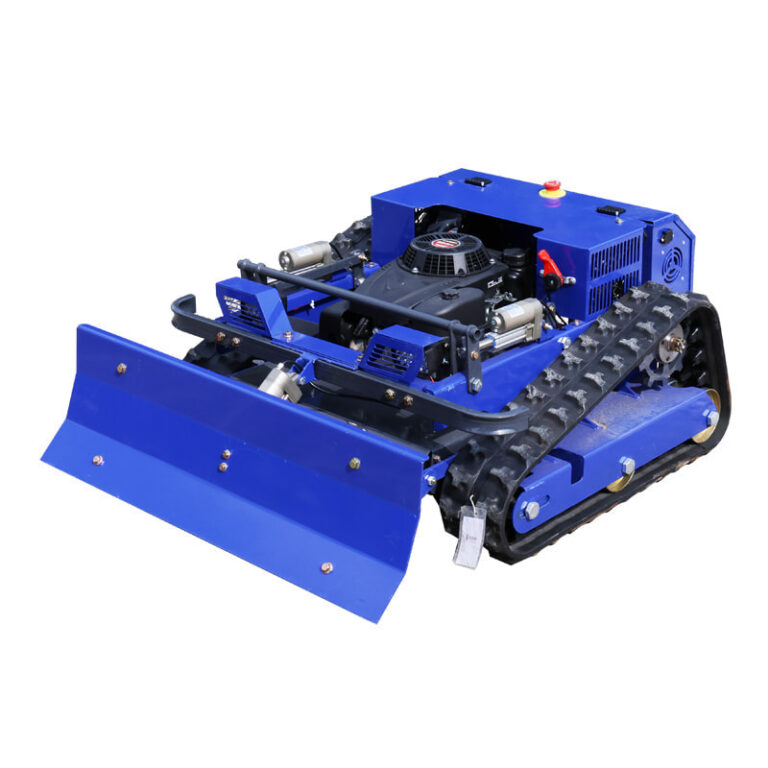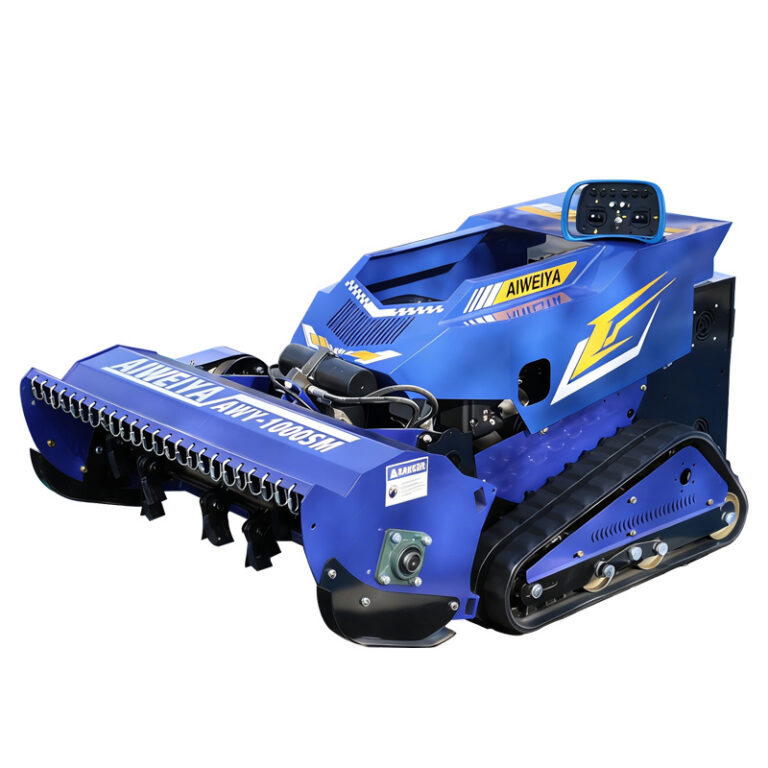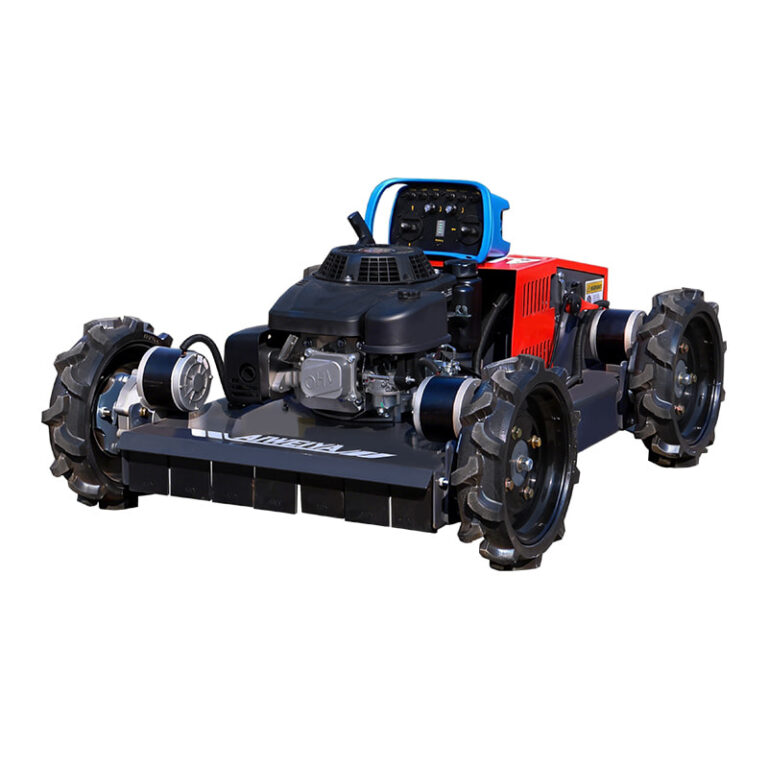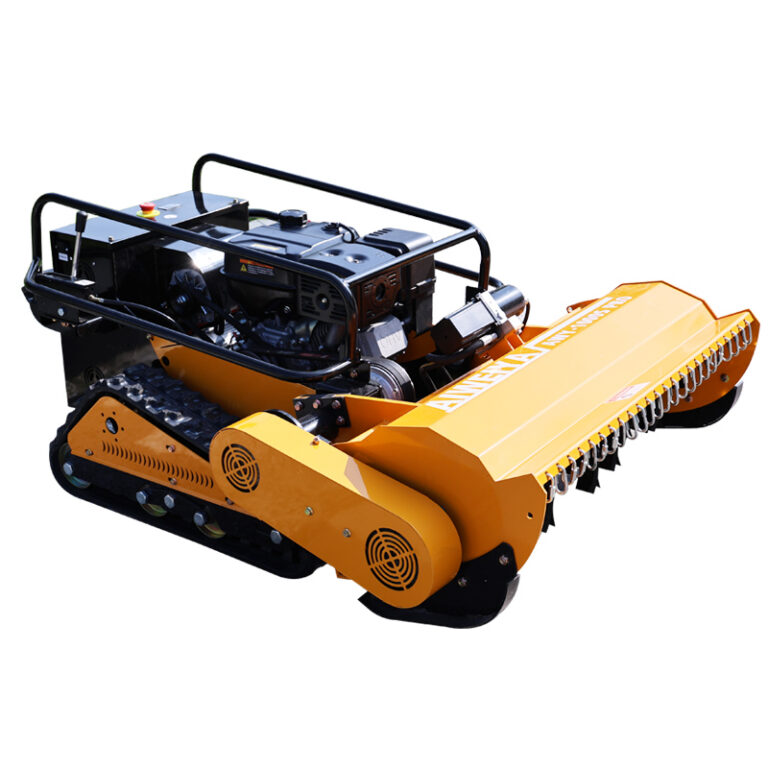
Maintaining steep slopes is one of the more demanding tasks in commercial vegetation management.
Traditional mowing equipment can become difficult to operate when terrain becomes steep, uneven, slippery, or difficult to access. Operators may also need to work close to embankments, drainage areas, roadside slopes, construction sites, or other challenging environments.
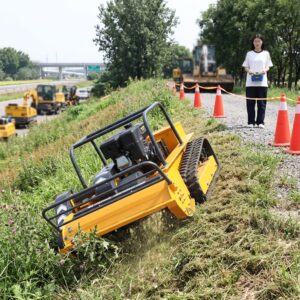
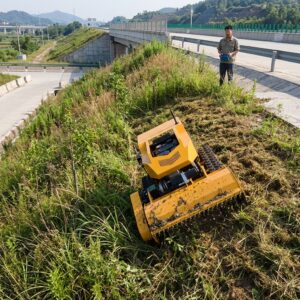
A remote control mower for steep slopes provides another approach. Instead of sitting directly on the machine, the operator controls the mower from a safer position while the machine works on the slope.
For contractors, landscaping companies, municipalities, farms, rental companies, and vegetation-management businesses, remote-controlled mowing equipment can become part of a broader strategy for handling difficult terrain.
The key is not simply whether a mower can physically climb a slope. Commercial users also need to consider traction, stability, cutting performance, operating visibility, transportation, maintenance, productivity, and the specific requirements of each project.
1. Why Steep Slope Mowing Is Different
Slope mowing is not simply normal mowing performed at an angle.
As the terrain becomes steeper, several operating conditions change simultaneously.
The mower needs to maintain sufficient contact with the ground while moving across or along the slope. At the same time, the cutting system must continue processing vegetation without creating excessive load on the engine.
Ground conditions can also change during the same project.
A slope may contain:
- Dry grass
- Dense weeds
- Brush
- Small stones
- Uneven soil
- Loose material
- Wet vegetation
- Drainage channels
- Tree roots
- Small obstacles
This means commercial buyers need to consider the entire working environment rather than looking at a single specification.
For professional applications, the mower should be selected according to the actual terrain, vegetation, working frequency, and expected workload.
How to Choose a Remote Control Mower for Steep Slopes
2. Common Commercial Applications for Steep Slope Mowers
A remote control mower for steep slopes can be used in a variety of commercial environments.
Highway and Roadside Embankments
Roadside vegetation can grow rapidly and may need regular maintenance.
Embankments beside roads can be difficult to access with conventional riding equipment. A remote-controlled machine allows the operator to remain away from the cutting area and manage the mower from a more suitable position.
For contractors handling roadside vegetation contracts, this can be particularly useful where repeated slope maintenance is required.
Remote Control Mower for Highway Slope Maintenance
Drainage Channels and Embankments
Drainage areas often combine slopes, uneven ground, vegetation, and restricted access.
A compact tracked mower can be used for vegetation management where conventional equipment may have difficulty reaching the working area.
Remote Control Mower for Embankment Maintenance
Farms and Orchards
Agricultural properties can include grass-covered banks, access slopes, field edges, and areas between different levels of land.
A remote mower can help contractors and farm operators maintain these areas without requiring the operator to drive directly on the slope.
Remote Control Mower for Farms and Orchards
Solar Farms
Solar farms often contain large areas of grass and vegetation surrounding solar panels.
Some sites include slopes or uneven ground, making vegetation management more complicated.
Remote-controlled mowing equipment can be considered for maintaining vegetation around infrastructure while allowing the operator to maintain visibility of the machine.
Remote Control Mower for Solar Farm Vegetation Management
Municipal Land
Municipalities may need to maintain roadside areas, parks, drainage zones, public embankments, and other difficult landscapes.
For these projects, equipment selection often needs to consider long-term reliability, serviceability, spare parts, operator training, and fleet management.
3. Crawler Tracks Are Important on Sloped Terrain
One of the most important characteristics of a slope-oriented remote mower is its ground-contact system.
Crawler tracks distribute the machine’s weight across a larger contact area than many conventional wheel configurations.
This can provide useful traction characteristics when working on uneven or sloped terrain.
However, tracks alone do not determine whether a mower is suitable for a particular slope.
Performance also depends on:
- Machine weight
- Track design
- Ground condition
- Center of gravity
- Engine power
- Surface moisture
- Vegetation density
- Direction of travel
- Machine configuration
Commercial buyers should therefore evaluate the complete machine rather than selecting equipment based only on the word “tracked.”
Why Crawler Tracks Are Important for Slope Mowing
4. Understanding Slope Conditions Before Starting a Project
A slope is not a uniform surface.
Two slopes with the same angle can behave very differently.
For example, a dry grass-covered slope may provide considerably different traction from wet soil or loose gravel.
Before beginning a commercial mowing project, operators should evaluate:
Slope Angle
Understand the actual working angle and compare it with the manufacturer’s specified operating capability.
Surface Condition
Check whether the surface is:
- Dry
- Wet
- Muddy
- Loose
- Rocky
- Covered with dense vegetation
Direction of Travel
The machine may behave differently when moving vertically up and down a slope compared with traveling across it.
Obstacles
Identify:
- Rocks
- Tree roots
- Drainage channels
- Posts
- Fences
- Concrete structures
- Large vegetation
Access
Determine how the mower will reach the working area and how it will be transported to the project site.
This pre-job assessment can be especially important for contractors managing multiple properties.
5. Stability Matters as Much as Traction
Traction helps the mower maintain movement, but stability is equally important.
A machine operating on a slope is affected by its weight distribution and center of gravity.
A lower and well-balanced machine design can help provide a more stable operating platform.
Commercial users should examine:
- Overall machine dimensions
- Weight distribution
- Center of gravity
- Track width
- Cutting-deck position
- Ground clearance
- Operating orientation
The objective is not simply to make the mower climb a slope.
The machine needs to perform its intended mowing task while maintaining controlled movement throughout the operation.
6. Match the Cutting System to the Vegetation
Slope mowing projects can involve very different vegetation conditions.
Light grass requires a different cutting approach from thick weeds, brush, or overgrown vegetation.
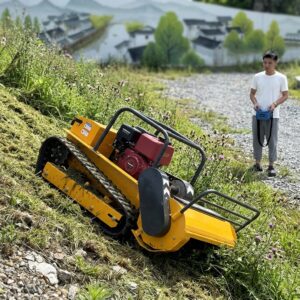
For commercial slope maintenance, a remote control flail mower can be useful where vegetation is dense or mixed.
Flail cutting systems use rotating cutting components to process vegetation within the cutting deck.
Depending on the machine configuration, they can be used for applications involving:
- Grass
- Weeds
- Dense vegetation
- Brush
- Overgrown roadside areas
- Farm vegetation
- Orchard ground cover
However, the cutting system should always be matched to the manufacturer’s intended application.
How to Choose a Remote Control Flail Mower
7. Cutting Width Affects Commercial Productivity
Cutting width is another important consideration for contractors.
A wider cutting deck can cover more ground during each pass.
However, wider is not automatically better.
A large cutting width may be less convenient in narrow working areas, around obstacles, or on restricted embankments.
For commercial applications, buyers should consider:
Working Width + Terrain + Access + Vegetation Density + Machine Stability
For example, a roadside contractor may prefer a configuration that balances productivity with access around barriers and infrastructure.
An agricultural contractor working across open fields may place greater emphasis on mowing coverage.
Remote Control Mower Cutting Width Explained
8. Engine Power and Heavy Vegetation
Slope mowing can place significant demands on a mower.
The machine may need to move across uneven terrain while simultaneously powering the cutting system.
When vegetation becomes dense, cutting resistance can increase.
Engine power therefore needs to be considered together with:
- Cutting width
- Cutting-system design
- Vegetation density
- Working speed
- Terrain
- Machine weight
A high-power engine does not automatically make a machine suitable for every slope.
The complete powertrain and machine configuration need to be considered.
Remote Control Mower Engine Power Explained
9. Remote Operation Changes the Working Process
One of the main advantages of a remote control mower is the separation between the operator and the machine.
Instead of sitting on the mower, the operator controls the equipment using a handheld remote controller.
This can provide greater flexibility when working in environments where direct riding or walking behind the machine is less practical.
The operator can monitor:
- Machine direction
- Cutting progress
- Terrain
- Obstacles
- Vegetation conditions
The exact operating range and functions depend on the mower model and remote-control system.
For commercial users, remote control should therefore be evaluated as part of the complete equipment package rather than as a standalone feature.

10. Safety Should Be Part of the Operating Procedure
Remote control technology does not eliminate the need for safe operating procedures.
Commercial operators should follow the manufacturer’s instructions and conduct a site assessment before mowing.
Important considerations include:
- Keeping unauthorized people away from the working area
- Checking the slope before operation
- Inspecting the mower before use
- Checking the remote-control system
- Identifying obstacles
- Monitoring weather and ground conditions
- Maintaining visual awareness of the machine
- Following manufacturer slope limits
- Stopping operation if conditions become unsuitable
The specific safety procedures should always follow the equipment manufacturer’s operating manual and local workplace requirements.
11. Weather and Ground Conditions Can Change Performance
Slope conditions can change quickly.
After heavy rain, for example, a surface that was previously easy to mow may become wet or slippery.
Vegetation can also become heavier when wet.
Before starting a project, commercial operators should consider:
- Recent rainfall
- Soil moisture
- Ground firmness
- Wind
- Visibility
- Vegetation condition
For long-term contracts, contractors may also need an operating procedure for deciding when weather conditions require mowing to be postponed.
12. Plan the Mowing Workflow Before Arriving on Site
Commercial productivity depends on more than cutting speed.
A project workflow can include:
Step 1: Site Assessment
Review the terrain, access points, slope conditions, vegetation, and obstacles.
Step 2: Transport
Determine how the mower will be transported to the project.
Step 3: Machine Inspection
Check the tracks, cutting system, engine, remote controller, and other relevant components.
Step 4: Working Area Setup
Establish an appropriate operating area and keep unauthorized personnel away.
Step 5: Mowing
Operate the mower according to the manufacturer’s instructions and site conditions.
Step 6: Inspection
Check the finished area and identify sections that require additional passes.
Step 7: Cleaning and Maintenance
Clean the mower and inspect components after the job.
This structured process can help contractors standardize operations across different sites.
13. Remote Mowers for Roadside Contractors
Roadside vegetation maintenance is one of the practical commercial applications for slope-capable remote mowers.
Contractors may encounter:
- Road embankments
- Drainage slopes
- Grass-covered banks
- Overgrown roadside vegetation
- Uneven access areas
The ability to operate remotely can help create a different workflow from conventional ride-on mowing.
For businesses handling recurring roadside contracts, factors such as transport time, mowing productivity, maintenance requirements, and spare-parts availability can be important when evaluating equipment.
Remote Control Mower for Roadside Vegetation Control
14. Remote Mowers for Landscaping Companies
Landscaping companies may manage a wide variety of properties.
Some projects may contain steep banks or difficult terrain that require specialized mowing equipment.
A remote control mower can potentially complement a company’s existing equipment fleet.
Instead of replacing every conventional mower, businesses can use specialized remote equipment for terrain where standard machines are less suitable.
This can be particularly relevant for companies that provide:
- Commercial landscaping
- Estate maintenance
- Vegetation control
- Grounds maintenance
- Slope mowing
- Brush management
Remote Control Mower for Landscaping Companies
15. Remote Mowers for Municipal and Infrastructure Projects
Municipal and infrastructure projects can involve large areas requiring regular vegetation maintenance.
Typical locations may include:
- Public embankments
- Drainage channels
- Roadside areas
- Parks
- Utility areas
- Infrastructure sites
For organizations managing equipment fleets, purchasing decisions may involve more than machine performance.
They may also consider:
- Operator training
- Maintenance procedures
- Spare parts
- Service support
- Equipment availability
- Standardized configurations
- Long-term operating costs
This is why B2B buyers should evaluate the supplier as carefully as the mower itself.
16. What Contractors Should Compare When Buying
For a commercial project, a useful comparison should include more than the machine price.
Consider comparing:
| Category | What to Check |
|---|---|
| Drive system | Crawler or wheel configuration |
| Slope capability | Manufacturer-rated working capability |
| Engine | Power and engine type |
| Cutting system | Flail or other cutting configuration |
| Cutting width | Working coverage |
| Machine weight | Transport and stability |
| Remote control | Range and control functions |
| Ground clearance | Ability to handle uneven terrain |
| Maintenance | Service access and routine requirements |
| Spare parts | Availability and lead time |
| Warranty | Coverage and conditions |
| Supplier support | Technical and after-sales support |
| Customization | OEM/ODM options |
| Shipping | Packaging and logistics arrangements |
Remote Control Mower Specifications Buyers Should Compare
17. Why Supplier Support Matters for Commercial Slope Mowing
A mower used commercially becomes part of a business operation.
If equipment is unavailable because of a missing component, the problem can affect project schedules.
For this reason, B2B buyers should ask suppliers about:
- Spare-parts availability
- Technical documentation
- Maintenance instructions
- Remote-control replacement parts
- Engine service information
- Cutting components
- Track components
- Warranty procedures
- Technical support
- Delivery times
For importers and distributors, these factors can also affect customer satisfaction after resale.
What to Ask a Remote Control Mower Supplier Before Ordering
18. OEM and Private-Label Opportunities
Some distributors and equipment companies may want to sell remote control mowers under their own brand.
In this case, the supplier’s manufacturing capability becomes important.
Potential OEM/ODM requirements may include:
- Brand labeling
- Product color
- Packaging
- Product configuration
- Documentation
- Remote-controller branding
- Product specifications
- Spare-parts packages
The exact customization options depend on the manufacturer.
For businesses developing a remote mower product line, it is useful to discuss technical requirements before placing a bulk order.
Remote Control Mower OEM and ODM Guide
Private Label Remote Control Mower: A B2B Guide
19. How to Estimate the Commercial Value of a Slope Mower
The value of a remote mower should not be measured only by purchase price.
A contractor can evaluate the equipment using several operational factors:
Project Revenue
minus
Labor + Fuel + Maintenance + Transport + Equipment Costs
equals
Operating Contribution
The actual calculation depends on the contractor’s local labor costs, project pricing, machine utilization, transportation distance, and maintenance expenses.
For businesses using the machine regularly, utilization can have a major effect on the overall economics.
A mower that remains unused for most of the year should be evaluated differently from equipment operating across multiple commercial contracts each week.
20. Choosing the Right Machine for Different Slope Projects
Different businesses may need different configurations.
Roadside Contractor
Priorities may include:
- Slope capability
- Reliable remote operation
- Flail cutting performance
- Transport convenience
- Maintenance support
Landscaping Company
Priorities may include:
- Versatility
- Machine size
- Maneuverability
- Cutting quality
- Ease of operation
Farm or Orchard Operator
Priorities may include:
- Ground clearance
- Width
- Terrain adaptability
- Vegetation management
- Seasonal operating requirements
Municipal Buyer
Priorities may include:
- Reliability
- Operator training
- Safety procedures
- Service support
- Spare parts
Dealer or Distributor
Priorities may include:
- Product configuration
- Wholesale pricing
- OEM/private labeling
- Parts supply
- Technical documentation
- Supplier production capability
How to Choose a Remote Control Mower Supplier for Your Market
21. Common Mistakes When Buying a Slope Mower
Mistake 1: Looking Only at Maximum Slope Capability
A published maximum angle does not describe every real-world working condition.
Ground type, vegetation, moisture, direction of travel, and machine configuration all matter.
Mistake 2: Choosing Only by Engine Power
More horsepower does not automatically solve traction or stability problems.
Mistake 3: Ignoring Cutting System
The mower needs to match the vegetation being managed.
Mistake 4: Ignoring Transport
A machine that performs well on-site still needs to reach the job site efficiently.
Mistake 5: Buying Without Considering Spare Parts
Commercial equipment needs ongoing support.
Mistake 6: Comparing Suppliers Only by Price
Two quotations can represent very different equipment configurations and support packages.
22. A Practical Checklist for Commercial Buyers
Before purchasing a remote control mower for steep slopes, ask:
Terrain
- What type of slope will the machine work on?
- What is the typical working angle?
- Is the ground dry, wet, rocky, or loose?
- Are there drainage channels or obstacles?
Vegetation
- Is the machine mainly cutting grass?
- Is dense weed or brush involved?
- What cutting system is required?
Machine
- Is a crawler configuration appropriate?
- What engine power is required?
- What cutting width fits the working area?
- What machine weight is suitable?
Remote Control
- What operating range is required?
- Can the operator maintain a clear view?
- What control functions are included?
Commercial Use
- How many hours will the machine work per week?
- How often will it be transported?
- How quickly are spare parts required?
- Does the supplier offer technical support?
B2B Supply
- Is OEM/ODM available?
- What is the minimum order quantity?
- What documentation is provided?
- Can the supplier support long-term orders?
23. Why Remote Control Mowers Can Be Useful for Commercial Slope Management
Steep-slope mowing is a specialized application.
The value of remote-controlled equipment comes from combining several characteristics:
- Remote operation
- Tracked mobility
- Stable machine design
- Appropriate cutting technology
- Commercial-grade construction
- Flexible application
- Manufacturer support
For contractors and other professional users, the goal is not simply to find a mower that can climb a slope.
The equipment should fit the entire workflow—from transportation and setup to mowing, maintenance, and long-term fleet management.
24. Working With a Remote Control Mower Manufacturer
For B2B customers, the manufacturer relationship can be as important as the machine specification.
A manufacturer experienced in remote mowing equipment may be able to provide:
- Product selection
- Configuration recommendations
- Technical documentation
- OEM/ODM services
- Spare-parts support
- Packaging solutions
- Export support
- After-sales assistance
For distributors and importers, a long-term supplier relationship can also simplify future product expansion.
How to Find a Reliable Remote Control Mower Manufacturer in China
Remote Control Mower Manufacturer vs Trading Company
25. NUOYU Remote Control Mower Solutions
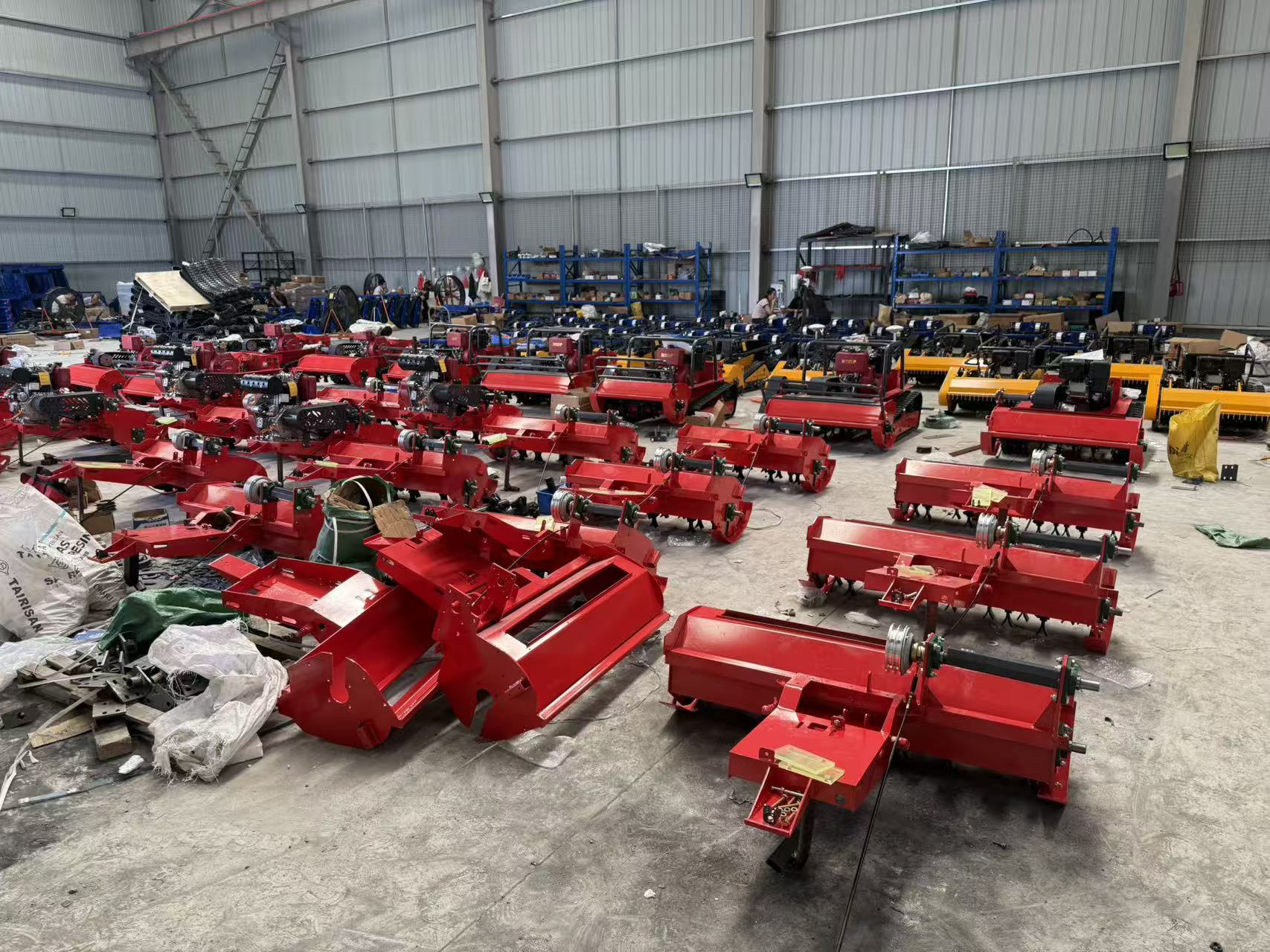
For commercial customers looking for remote mowing equipment for difficult terrain, NUOYU provides remote control mower solutions for applications including slope mowing, farm and orchard maintenance, roadside vegetation control, brush cutting, landscaping, and other professional vegetation-management projects.
Depending on the application, buyers can evaluate different mower configurations based on:
- Terrain
- Vegetation
- Cutting requirements
- Machine size
- Track configuration
- Engine power
- Commercial workload
NUOYU also supports B2B cooperation models such as dealer supply and OEM/ODM projects.
NUOYU Remote Control Mower Solutions
NUOYU Remote Control Mower Products
For project-based requirements, buyers can provide the working environment, slope conditions, vegetation type, expected working area, and purchasing quantity when requesting a quotation.
Contact NUOYU for a Remote Control Mower Quote
FAQ
1. What is a remote control mower for steep slopes?
A remote control mower for steep slopes is a mowing machine operated remotely rather than from a conventional driver’s seat. It is designed for applications where difficult terrain, slopes, vegetation, or restricted access make conventional mowing equipment less suitable.
2. Are crawler remote control mowers suitable for steep slopes?
Crawler systems can provide useful ground contact and traction characteristics for sloped and uneven terrain. However, actual suitability depends on the machine configuration, manufacturer specifications, surface conditions, and operating environment.
3. What type of cutting system is suitable for steep-slope vegetation?
For dense grass, weeds, and brush, a remote control flail mower can be a suitable configuration for many commercial applications. The correct cutting system depends on vegetation type and machine specifications.
4. Can remote control mowers be used on roadside slopes?
Yes. Roadside embankments and vegetation-control areas are among the commercial applications for remote mowing equipment. Site conditions and manufacturer operating limits should always be evaluated before use.
5. What should contractors consider before buying?
Contractors should consider terrain, slope, vegetation, traction, machine stability, cutting width, engine power, remote-control functions, transportation, maintenance, spare parts, and supplier support.
6. Is a tracked mower always better than a wheeled mower?
Not necessarily. Different drive systems suit different terrain and applications. Buyers should compare the machine’s complete configuration with their actual working environment.
7. Can remote control mowers be customized for B2B buyers?
Depending on the manufacturer, OEM and ODM services may be available for product configuration, branding, packaging, documentation, and other requirements.
8. How can I request a quotation for a slope mower?
Provide the supplier with information such as the intended application, slope conditions, vegetation type, approximate working area, preferred cutting width, destination country, and order quantity. More detailed information can help the supplier recommend a suitable configuration and prepare a more accurate quotation.
Conclusion
A remote control mower for steep slopes is designed around a different operating concept from conventional mowing equipment.
For commercial users, the most important consideration is not one individual specification. The complete system—including crawler performance, stability, cutting technology, engine power, remote operation, transportation, maintenance, and supplier support—needs to match the project.
Roadside contractors, landscaping companies, farms, municipalities, solar-farm operators, and vegetation-management businesses may all have different requirements.
Before purchasing, define the terrain and vegetation first, then compare machine configurations and supplier capabilities.
For B2B buyers, a suitable remote mower should support not only the first mowing project but also the company’s longer-term operating and maintenance requirements.
Looking for a remote control mower for steep slopes?