Vegetation management is an important part of maintaining many utility-scale and commercial solar installations.
Solar farms often contain large areas of grass and other vegetation between photovoltaic panel rows, around equipment areas, along site boundaries, and near access roads.
If vegetation becomes excessive, it can make site maintenance more difficult and may interfere with access for inspection and maintenance activities.
However, mowing a solar farm is different from maintaining a conventional lawn or agricultural field.
The site may contain:
- Long rows of solar panels
- Narrow maintenance corridors
- Electrical equipment
- Uneven terrain
- Drainage areas
- Fences
- Access roads
- Cable infrastructure
- Sloped ground
- Areas with different vegetation density
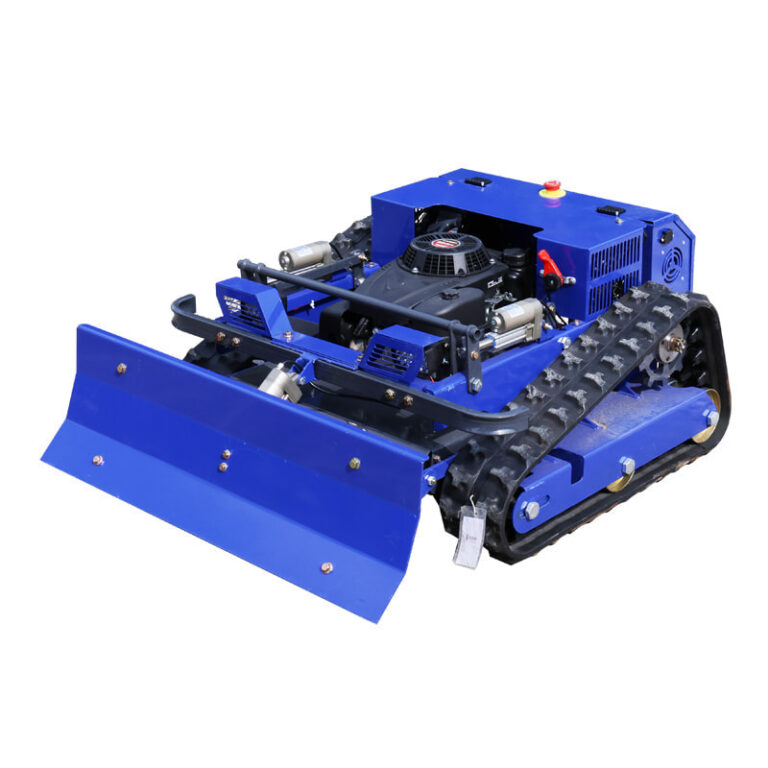
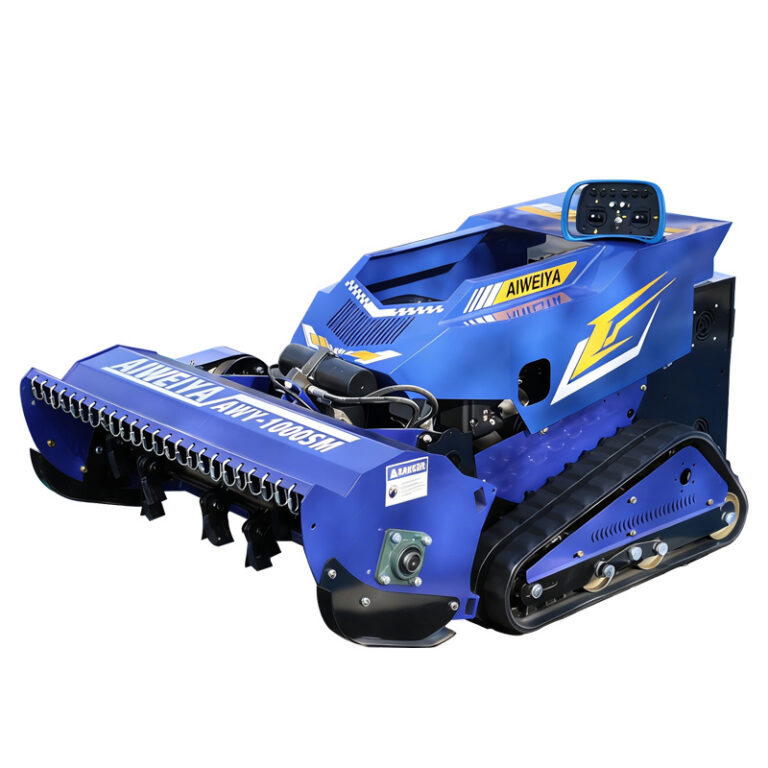
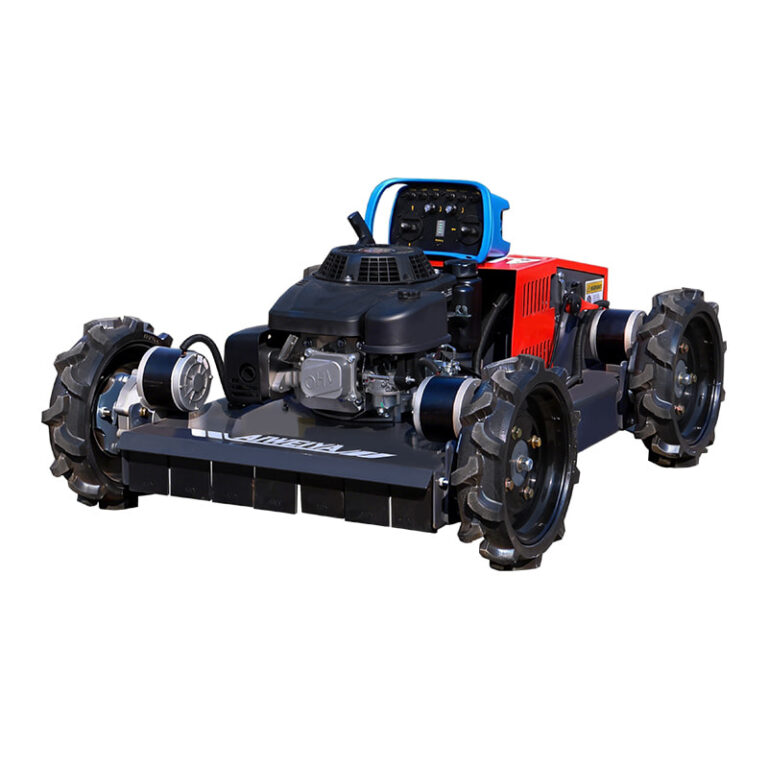
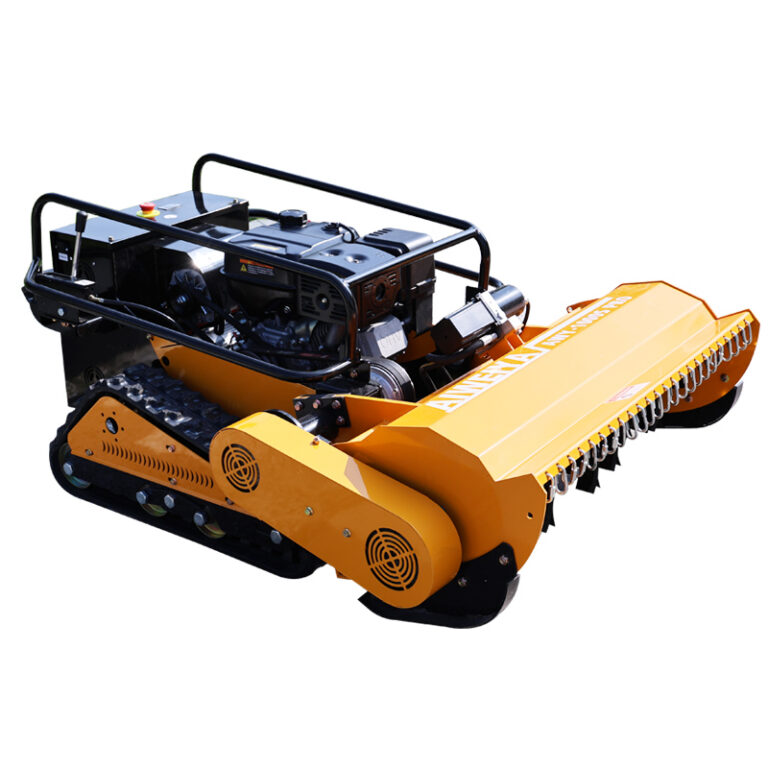
A remote control mower for solar farm vegetation management can provide a commercial equipment option for solar-site operators, O&M companies, vegetation-management contractors, and equipment distributors.
This guide explains what B2B buyers should consider when selecting a remote mower for solar farm maintenance.
1. Why Solar Farms Require Specialized Vegetation Management
Solar farms are large infrastructure sites rather than ordinary grass fields.
Vegetation may grow:
- Between panel rows
- Under or around panel structures
- Along site boundaries
- Near access roads
- Around drainage areas
- Around service areas
- Along fence lines
- In unused sections of the property
The challenge is to maintain vegetation while working around installed infrastructure.
For commercial buyers, the mower therefore needs to be evaluated according to both vegetation requirements and site infrastructure.
The ideal machine configuration depends on:
Panel layout + row spacing + terrain + vegetation + access + maintenance schedule
2. Where Is Vegetation Management Required on a Solar Farm?
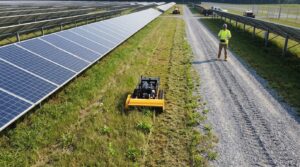
Solar-site mowing is not limited to the area directly beneath solar panels.
Common vegetation-management zones include:
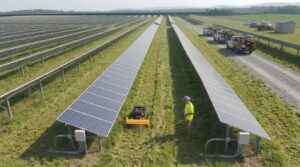
Between Solar Panel Rows
Grass and weeds can grow in the corridors between panel arrays.
Around Panel Structures
Vegetation may grow around supporting structures and other ground-mounted equipment.
Along Access Roads
Road edges can become overgrown and require periodic maintenance.
Around Site Boundaries
Fence lines and perimeter areas may require vegetation control.
Around Drainage Areas
Drainage channels and low-lying areas can experience rapid vegetation growth.
Around Service Areas
Maintenance buildings, equipment areas, and other site infrastructure may also require vegetation management.
Each zone can have different equipment requirements.
3. Solar Panel Row Spacing Should Be Measured Before Buying
One of the first specifications a solar-farm operator should evaluate is available working space.
Solar panel layouts vary between projects.
Before purchasing a mower, measure:
- Distance between panel rows
- Distance between support structures
- Narrowest maintenance corridor
- Access-road width
- Gate width
- Turning areas
- Distance around electrical equipment
- Height restrictions
The machine must fit within the actual working environment.
A mower that works well on an open field may not be practical for a tightly configured solar installation.
For B2B buyers, obtaining accurate site dimensions before requesting a quotation can help the manufacturer recommend an appropriate configuration.
4. Machine Width and Cutting Width Are Different
Solar-farm buyers should distinguish between overall machine width and cutting width.
Overall machine width determines whether the equipment can physically access a working corridor.
Cutting width determines how much vegetation can potentially be processed during each pass.
A wider cutting system may increase coverage, but a larger machine may have difficulty operating between closely spaced panel rows.
Therefore, buyers should evaluate:
Machine width → Access
Cutting width → Coverage
Machine length → Turning space
Machine height → Infrastructure clearance
These specifications should be considered together.
For more information, read Remote Control Mower Cutting Width Explained.
5. Vegetation Type Determines the Cutting System
Solar farms can have different vegetation profiles depending on climate, soil, rainfall, maintenance frequency, and local land-management practices.
Common vegetation may include:
- Short grass
- Tall grass
- Weeds
- Mixed vegetation
- Dense seasonal growth
- Small brush in perimeter areas
The cutting system should be matched to the actual vegetation.
Grass
Regular grass management may require a suitable rotary or flail configuration depending on the machine.
Tall Weeds
A heavier cutting configuration may be considered where vegetation becomes dense.
Mixed Vegetation
A flail mower can be an option for some applications involving grass and mixed vegetation.
However, the actual cutting capability depends on the mower’s design, cutting components, engine power, and rated operating conditions.
Buyers should always request the manufacturer’s recommended vegetation range.
See How to Choose a Remote Control Flail Mower.
6. Protecting Solar Infrastructure During Mowing
A solar farm contains valuable infrastructure that must be considered during vegetation maintenance.
The mowing plan should account for:
- Solar panels
- Panel support structures
- Electrical cabinets
- Cables
- Inverters
- Transformers
- Fences
- Monitoring equipment
- Drainage systems
Operators should maintain appropriate clearance from equipment and follow the site’s safety procedures.
A remote control mower should not be assumed to have automatic obstacle detection or collision avoidance unless the specific model is equipped with and documented for those functions.
Before operation, the team should identify infrastructure locations and establish suitable working boundaries.
7. Uneven Solar Farm Terrain
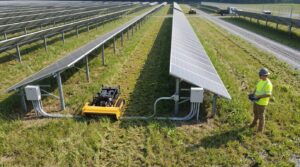
Solar installations are not always constructed on perfectly flat land.
A solar project may contain:
- Gentle slopes
- Uneven ground
- Grass-covered terrain
- Soil variations
- Drainage channels
- Access-road embankments
Terrain conditions can influence machine selection.
For uneven ground, buyers should evaluate:
- Track configuration
- Ground contact
- Traction
- Ground clearance
- Machine weight
- Center of gravity
- Gradeability
- Working direction
Crawler-based remote mowers may be considered for certain uneven or sloped applications, subject to the manufacturer’s operating limits.
See Why Crawler Tracks Are Important for Slope Mowing.
8. Why Remote Operation Can Be Useful on Solar Sites
Solar farms can cover large areas.
An operator may need to monitor the mower while maintaining an appropriate position relative to:
- Solar panels
- Electrical equipment
- Fences
- Drainage
- Slopes
- Other workers
Remote operation allows the operator to control the machine without riding directly on it.
Depending on the machine and site conditions, this can provide greater flexibility in operator positioning.
The remote-control system should be evaluated for:
- Operating range
- Signal stability
- Controller layout
- Emergency stop
- Battery life
- Visibility
- Ease of operation
The operator should remain within the manufacturer’s specified operating conditions.

9. Crawler Tracks for Solar Farm Terrain
Crawler tracks can be useful when solar-site terrain includes uneven or soft ground.
A track system provides ground contact across a relatively broad footprint depending on the design.
For solar-site applications, buyers should consider:
- Track width
- Ground pressure
- Traction
- Turning behavior
- Ground clearance
- Machine weight
- Terrain conditions
However, tracks are not a universal solution for every solar site.
A flat site with compact ground may have different equipment requirements from a sloped site with soft or uneven soil.
The equipment should therefore be matched to actual project conditions.
10. Cutting Width and Daily Site Productivity
Large solar installations can contain extensive vegetation-management areas.
For commercial O&M contractors, productivity becomes an important purchasing factor.
A simplified planning model can consider:
Daily mowing capacity ≈ effective cutting width × working speed × working hours × site efficiency
Actual productivity will be affected by:
- Panel layout
- Turning frequency
- Terrain
- Vegetation density
- Obstacles
- Transport
- Operator experience
- Weather
- Maintenance
Therefore, advertised cutting width should not be treated as a guaranteed daily coverage rate.
Contractors should estimate productivity using actual site conditions.
11. Solar Farm Maintenance Frequency
Vegetation-management frequency depends on the project.
Factors can include:
- Local climate
- Rainfall
- Seasonal growth
- Vegetation species
- Soil conditions
- Site-management requirements
Some solar operators may establish regular mowing schedules, while others may increase maintenance during periods of rapid vegetation growth.
A commercial mower should therefore be evaluated according to the site’s annual maintenance plan.
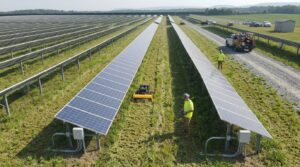
12. Managing Vegetation Around Solar Farm Access Roads
Access roads are essential for solar-site inspection and maintenance.
Vegetation can grow along:
- Road shoulders
- Drainage edges
- Turning areas
- Equipment access zones
- Site entrances
These areas may require a different mowing approach from the main panel corridors.
A remote mower can potentially support maintenance of these areas when its dimensions and cutting configuration are appropriate.
For roadside-specific applications, see Remote Control Mower for Roadside Vegetation Control.
13. Solar Farm Drainage Areas
Drainage is an important consideration on large solar sites.
Vegetation may grow rapidly around:
- Drainage channels
- Culverts
- Low-lying areas
- Water-management structures
These areas can also present more challenging terrain.
Before mowing, operators should evaluate:
- Ground stability
- Water level
- Slope
- Access
- Machine clearance
- Operator visibility
The mower should only be operated within the manufacturer’s specified environmental and terrain conditions.
14. Working Near Electrical Infrastructure
Solar farms contain electrical equipment and energized systems.
Vegetation-management teams should follow the solar site’s electrical safety procedures and maintain appropriate exclusion zones.
The mower’s suitability for working near electrical infrastructure should be determined by the site operator and equipment manufacturer.
Important considerations can include:
- Electrical equipment location
- Cable routes
- Safe working distances
- Site-specific procedures
- Operator training
- Emergency procedures
A remote control mower does not remove the need for proper electrical safety planning.
15. Engine Power for Solar Farm Vegetation Management
Engine power should be selected according to the workload.
A buyer should consider:
Engine power + cutting width + vegetation density + terrain + working speed
For example, a solar site with frequently maintained short grass may have different requirements from a site where tall seasonal vegetation is allowed to develop.
Higher power may also influence:
- Fuel consumption
- Machine size
- Operating cost
- Maintenance requirements
Therefore, the objective should be an appropriate configuration rather than simply the highest engine output.
For more information, see Remote Control Mower Engine Power Explained.
16. Transportation Around Large Solar Sites
Large solar projects may contain several separate work zones.
The mower may need to move between:
- Panel blocks
- Access roads
- Site entrances
- Maintenance areas
- Storage areas
Before purchasing, consider how the machine will be transported.
Important specifications include:
- Machine weight
- Machine width
- Machine length
- Loading requirements
- Trailer compatibility
- Storage requirements
For contractors serving multiple solar projects, transportation between customer sites becomes even more important.
17. Remote Mowers for Solar O&M Contractors
Solar O&M contractors may manage vegetation across multiple projects.
For these companies, a mower should be evaluated as part of a broader service fleet.
Important factors include:
Site Compatibility
Can the machine work across different panel layouts?
Transport
Can the equipment be moved efficiently between sites?
Operator Training
Can operators learn the controls and safety procedures efficiently?
Maintenance
Can routine service be performed quickly?
Spare Parts
Can replacement components be supplied reliably?
Multi-Application Potential
Can the mower also support roadside, commercial-land, farm, or other vegetation-management work?
A machine with broader application potential may be useful for contractors with diverse project portfolios.
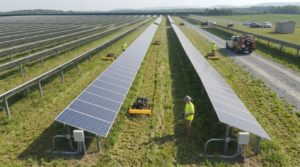
18. Maintenance Requirements for Solar Farm Mowers
Solar sites can expose equipment to:
- Dust
- Grass
- Soil
- Moisture
- Plant residue
- Small stones
Commercial operators should establish a routine maintenance process.
Key inspection areas can include:
- Cutting system
- Engine
- Tracks
- Drive components
- Belts
- Fasteners
- Lubrication points
- Remote controller
- Battery
- Safety functions
After mowing, the machine should be cleaned and inspected according to the manufacturer’s maintenance instructions.
For more information, see Remote Control Mower Maintenance Guide for Commercial Users.
19. Spare Parts and After-Sales Support
Solar O&M companies may operate equipment under tight maintenance schedules.
Before purchasing, ask the supplier about:
- Spare-parts availability
- Wear parts
- Cutting components
- Track components
- Filters
- Belts
- Batteries
- Electrical components
- Technical support
- Warranty
For fleet purchases, buyers may also consider ordering a recommended spare-parts package together with the machines.
20. Buying Remote Mowers for Solar Farm Projects
Solar developers, O&M companies, contractors, and distributors may have different purchasing requirements.
Solar Farm Owner or Operator
May prioritize:
- Reliability
- Maintenance
- Site compatibility
- Long-term operating cost
- Safety procedures
O&M Contractor
May prioritize:
- Productivity
- Transport
- Multi-site compatibility
- Operator training
- Spare parts
Equipment Dealer
May prioritize:
- Product range
- Wholesale pricing
- MOQ
- Warranty
- Dealer support
- OEM/ODM
Understanding the buyer’s business model helps determine the appropriate machine configuration.
21. How to Compare Solar Farm Mower Quotations
When requesting quotations, provide the supplier with as much site information as possible.
A professional comparison table can include:
| Specification | Supplier A | Supplier B | Supplier C |
|---|---|---|---|
| Engine | — | — | — |
| Engine power | — | — | — |
| Cutting width | — | — | — |
| Machine width | — | — | — |
| Machine height | — | — | — |
| Machine weight | — | — | — |
| Cutting system | — | — | — |
| Drive system | — | — | — |
| Gradeability | — | — | — |
| Remote-control range | — | — | — |
| Operating time | — | — | — |
| Spare parts | — | — | — |
| Warranty | — | — | — |
| Lead time | — | — | — |
| OEM/ODM | — | — | — |
This allows buyers to compare actual machine configurations rather than relying on price alone.
22. Total Cost of Ownership for Solar Vegetation Equipment
A commercial solar mower should be evaluated over its operating life.
Potential cost categories include:
- Purchase price
- Shipping
- Transport equipment
- Fuel
- Maintenance
- Spare parts
- Operator labor
- Downtime
- Storage
- Training
A lower purchase price does not automatically mean lower total operating cost.
For commercial buyers, the complete equipment lifecycle should be considered.
See Remote Control Mower Price: What Affects the Cost?.
23. OEM and Private Label Solar Mowing Equipment
Solar O&M companies and equipment distributors may have their own brands or established equipment portfolios.
Depending on manufacturer capabilities, OEM/ODM cooperation may include:
- Brand labeling
- Packaging
- Product documentation
- Color customization
- Configuration options
- Spare-parts packages
- Dealer materials
Before placing an OEM order, confirm:
- MOQ
- Customization scope
- Production time
- Certification requirements
- Packaging
- Quality-control process
- After-sales support
See Private Label Remote Control Mower: A B2B Guide.
24. Common Mistakes When Choosing a Solar Farm Mower
Mistake 1: Choosing Only by Cutting Width
A wide cutting system may not fit the available space between panel rows.
Mistake 2: Ignoring Machine Width
The machine must physically fit through the site’s access routes.
Mistake 3: Not Mapping Infrastructure
Operators should know where cables, electrical equipment, drainage, fences, and other infrastructure are located.
Mistake 4: Assuming All Solar Sites Have the Same Layout
Panel spacing and terrain can vary significantly between projects.
Mistake 5: Ignoring Terrain
A flat solar site and a sloped solar site may require different machine configurations.
Mistake 6: Not Considering Transport
Large projects can contain extensive work areas, and contractors may also need to move equipment between sites.
Mistake 7: Comparing Only Purchase Prices
Maintenance, spare parts, fuel, transport, and support also contribute to the overall cost.
25. Solar Farm Remote Mower Buying Checklist
Before purchasing, confirm:
- Panel-row spacing measured
- Narrowest access point measured
- Machine width checked
- Machine height checked
- Cutting width selected
- Vegetation type identified
- Terrain evaluated
- Sloped areas identified
- Drainage areas mapped
- Electrical infrastructure identified
- Safety procedures reviewed
- Track or wheel system selected
- Engine power matched to workload
- Remote-control range confirmed
- Transport method planned
- Storage requirements confirmed
- Spare-parts availability checked
- Maintenance requirements reviewed
- Warranty confirmed
- OEM/ODM requirements discussed if applicable
26. Why Consider NUOYU for Solar Farm Vegetation Management?
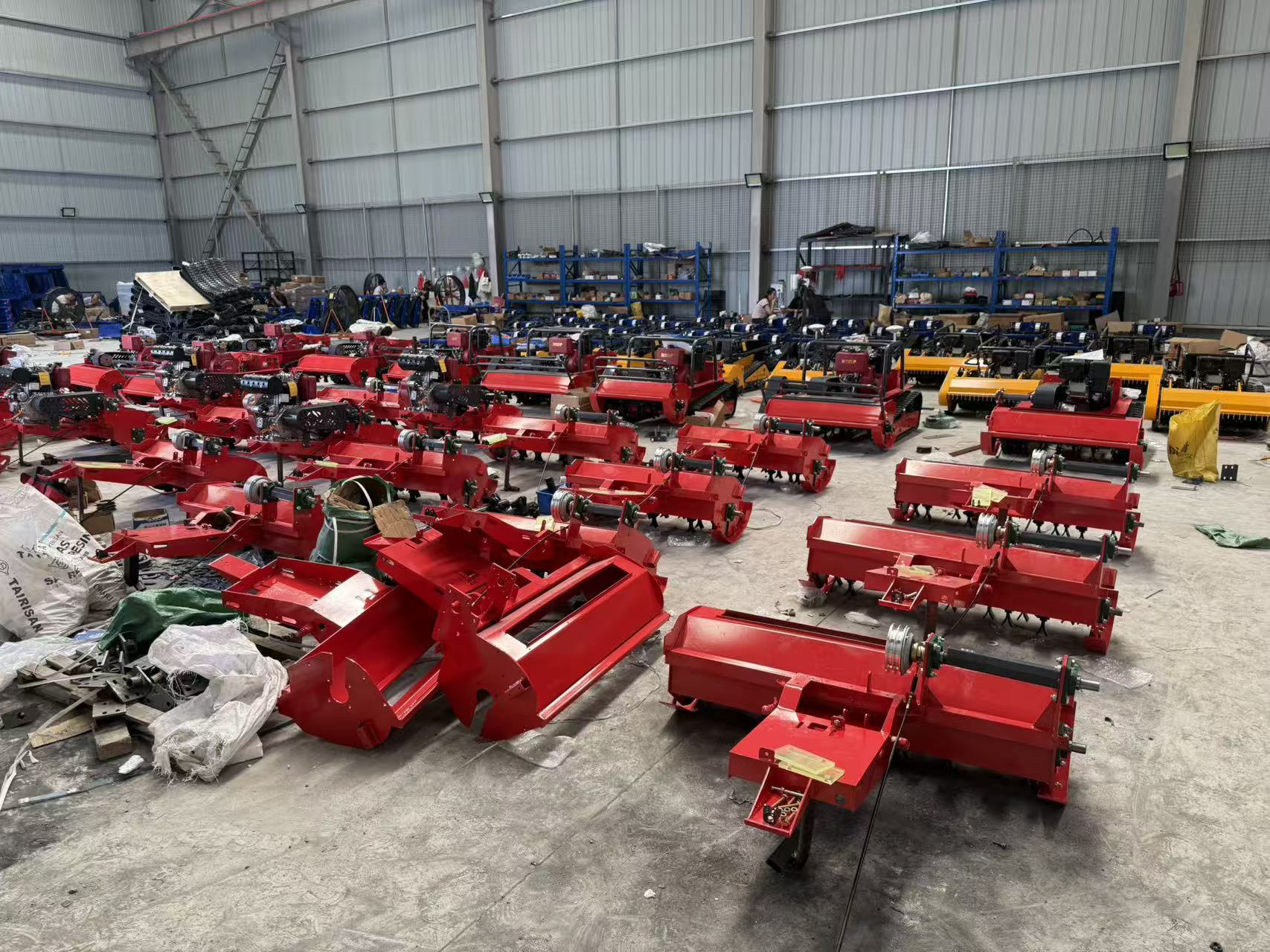
NUOYU provides remote-control mowing equipment for commercial vegetation-management applications that can include solar-site maintenance.
Potential applications include:
- Solar farm vegetation management
- Slope mowing
- Roadside vegetation control
- Farm vegetation management
- Orchard maintenance
- Brush and weed cutting
- Commercial land maintenance
For a solar project, buyers can provide:
- Panel-row spacing
- Site terrain
- Vegetation type
- Required cutting width
- Access conditions
- Expected mowing frequency
- Project quantity
- Target market
- OEM/ODM requirements
This information helps the manufacturer evaluate whether a particular remote mower configuration is appropriate for the project.
Explore NUOYU Solar Farm Vegetation Management Solutions or browse the NUOYU Remote Control Mower Products.
FAQ: Remote Control Mower for Solar Farm Vegetation Management
1. Can a remote control mower be used on a solar farm?
Yes, depending on the machine configuration and site conditions. Solar farm mowing requires careful consideration of panel spacing, infrastructure, terrain, vegetation, and site safety procedures.
2. What should I measure before buying a solar farm mower?
Measure panel-row spacing, narrow access points, machine entrances, turning areas, road widths, and clearances around equipment.
3. Can a flail mower be used for solar farm vegetation?
A flail mower can be considered for certain grass, weed, and mixed-vegetation applications. The actual suitability depends on the mower’s configuration and the manufacturer’s rated operating conditions.
4. Are crawler remote mowers suitable for solar farms?
Crawler models can be considered for solar sites with uneven or sloped terrain. The appropriate configuration depends on ground conditions, slope, machine dimensions, and manufacturer specifications.
5. Can remote mowers operate between solar panel rows?
They can be suitable when the machine dimensions and cutting configuration match the available row spacing. Buyers should measure the narrowest working corridor before purchasing.
6. What type of company buys remote mowers for solar farms?
Potential B2B buyers include solar farm operators, O&M companies, vegetation-management contractors, EPC-related service providers, agricultural-equipment dealers, and machinery distributors.
7. Can solar O&M companies buy remote mowers wholesale?
Yes. Commercial buyers can discuss quantity, pricing, spare parts, warranty, delivery, technical support, and potential OEM/ODM requirements with the manufacturer.
Final Thoughts
A remote control mower for solar farm vegetation management should be selected according to the actual solar-site layout rather than based on a single machine specification.
The most important factors include:
- Panel-row spacing
- Machine width
- Cutting width
- Vegetation type
- Terrain
- Track configuration
- Engine power
- Remote-control system
- Electrical infrastructure
- Drainage
- Transport
- Maintenance
- Spare parts
- Supplier support
For solar operators and O&M contractors, the best starting point is to map the site and identify the most demanding mowing areas.
Once the working conditions are clear, the supplier can recommend a machine configuration based on the project’s practical requirements.
Looking for a remote control mower for solar farm vegetation management?