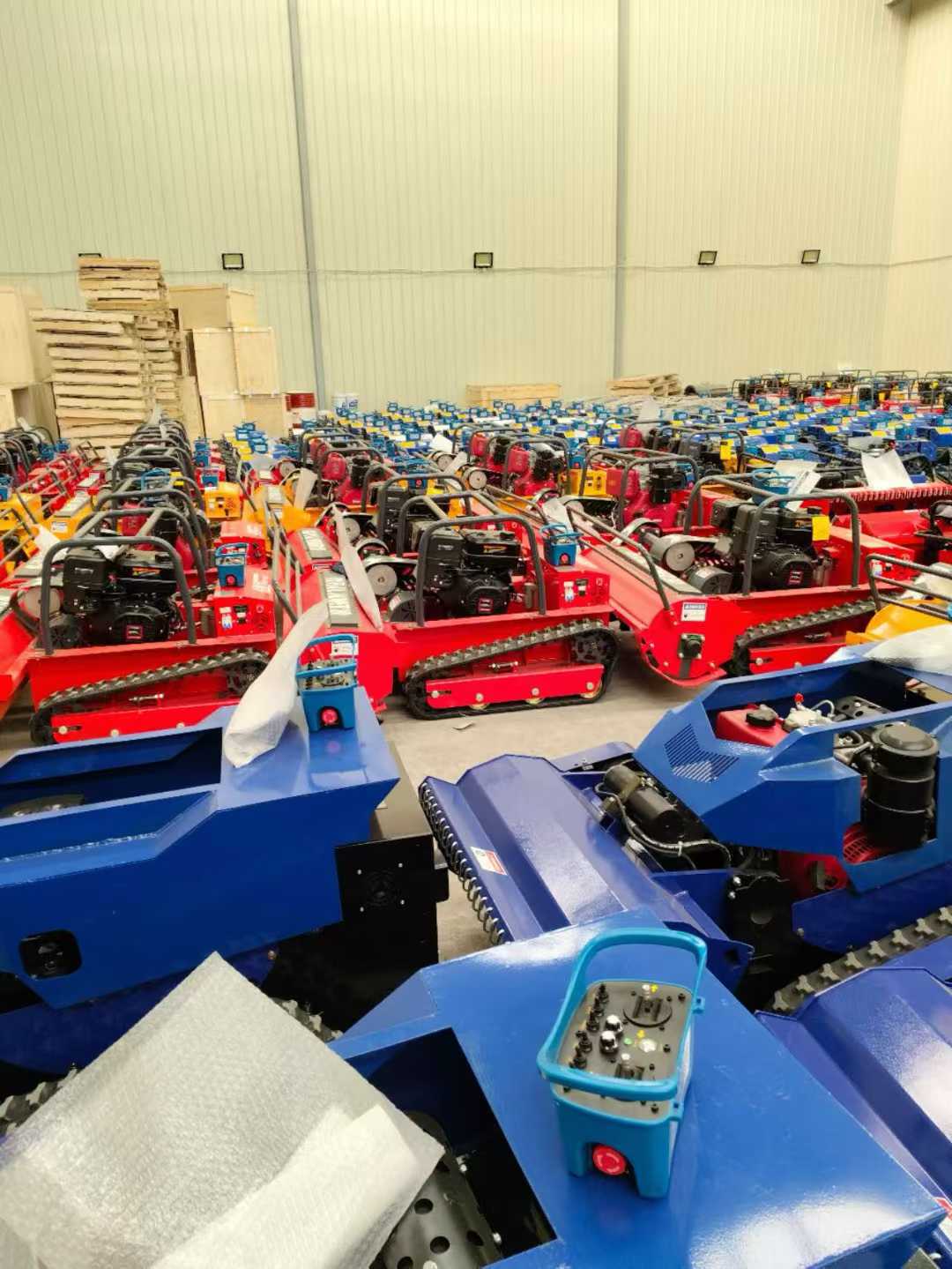
Highway and roadside vegetation maintenance requires equipment that can handle more than ordinary flat lawns.
Road networks contain embankments, drainage channels, roadside slopes, uneven shoulders, vegetation-covered areas, and restricted-access zones. In many locations, maintaining these areas with conventional ride-on mowing equipment can be difficult.
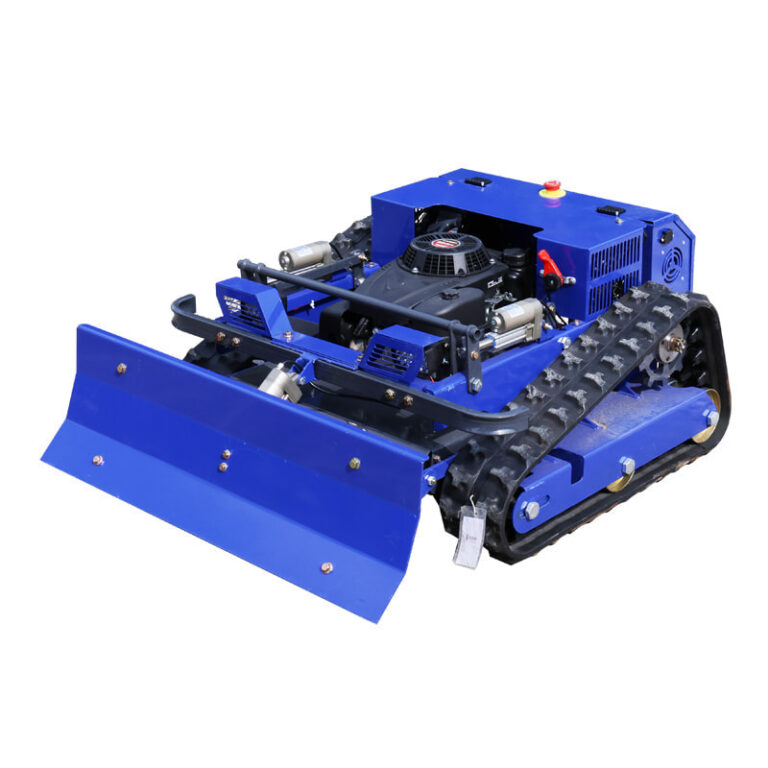
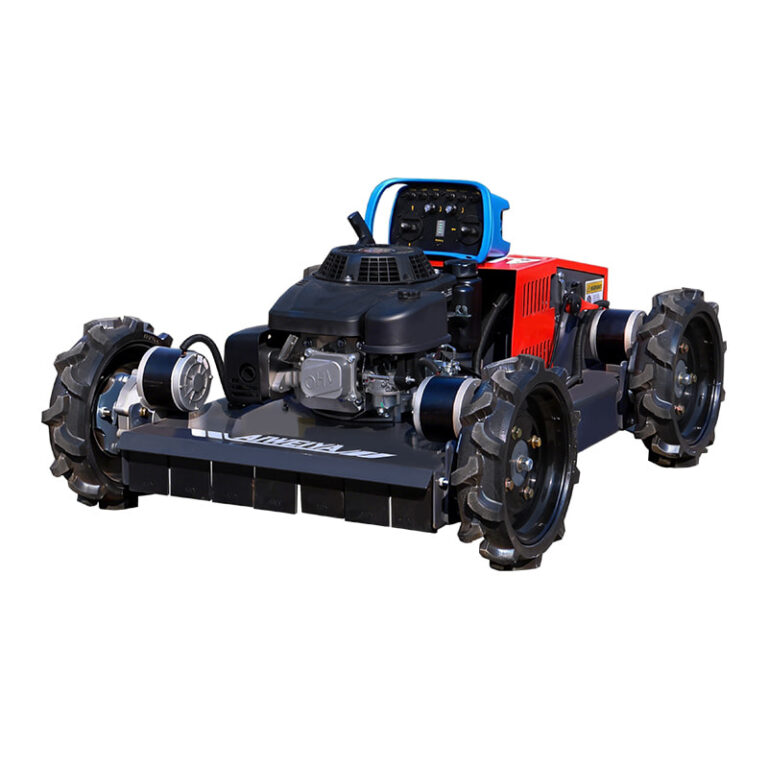
A remote control mower for highway slope maintenance provides an alternative approach by allowing the operator to control the mowing machine remotely while remaining away from the machine itself.
For highway maintenance contractors, landscaping companies, municipal departments, infrastructure service providers, and vegetation-management businesses, remote-controlled mowing equipment can be used as part of a specialized roadside maintenance fleet.
The right machine, however, needs to be selected according to the actual road environment.
Important considerations include slope conditions, vegetation density, crawler traction, machine width, cutting system, remote-control operation, transportation, maintenance, and long-term parts support.

1. Why Highway Slope Maintenance Requires Specialized Equipment
Highway vegetation maintenance is different from mowing an ordinary commercial lawn.
Roadside areas may include:
- Steep embankments
- Long grass
- Dense weeds
- Brush
- Uneven soil
- Rocks
- Drainage channels
- Guardrails
- Signposts
- Utility infrastructure
- Limited access points
The working environment can also change from one section of road to another.
One area may be relatively flat, while another section may contain a steep embankment with dense vegetation.
For contractors, this means the mowing equipment needs to be adaptable to different roadside conditions.
A specialized remote mower can be considered for difficult sections while conventional equipment continues to handle easier areas.
2. Common Highway Vegetation Management Areas
A remote control mower may be useful across several types of roadside environments.
Highway Embankments
Embankments are among the most obvious applications.
The combination of slope angle, vegetation, and limited access can make mowing difficult.
Tracked remote mowers can be used for vegetation management on suitable embankments when the machine’s specifications match the site conditions.
Roadside Grass Areas
Roadside grass can grow quickly during the growing season.
Regular mowing helps maintenance contractors keep vegetation under control according to project requirements.
Drainage Slopes
Drainage areas may have sloped ground and dense vegetation.
These locations can require specialized equipment that can access uneven terrain.
Roadside Brush Areas
Where vegetation includes weeds and brush rather than only grass, a flail-type cutting system may be considered.
[LINK: Remote Control Mower for Roadside Vegetation Control]
Median and Infrastructure Areas
Some road infrastructure zones may contain vegetation around barriers, drainage structures, and other roadside features.
Machine dimensions and maneuverability should be evaluated before using equipment in restricted areas.
3. The Role of Remote Control Technology
The primary difference between a remote mower and a conventional ride-on mower is how the operator interacts with the machine.
The operator controls the mower remotely instead of sitting directly on the machine.
This can provide practical advantages when working in locations where the operator needs to maintain distance from the mowing equipment.
For highway maintenance projects, remote operation can allow the operator to stand in a suitable observation position while controlling:
- Forward and reverse movement
- Steering
- Cutting operation
- Working speed
- Other machine functions depending on the model
The exact control functions and operating range vary by manufacturer and machine configuration.
For commercial buyers, remote-control specifications should therefore be reviewed together with the complete machine configuration.
4. Why Crawler Tracks Can Be Useful on Highway Slopes
Many highway maintenance projects include sloped terrain.
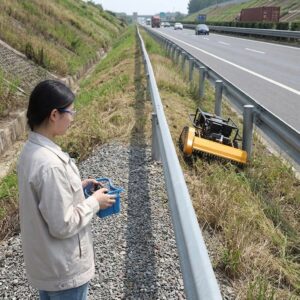
Crawler tracks can provide a large ground-contact area, which can be useful when working across uneven or sloped ground.
Compared with conventional wheel configurations, crawler systems can offer different traction characteristics.
However, track design should not be considered separately from the rest of the machine.
Commercial buyers should also evaluate:
- Machine weight
- Track width
- Ground pressure
- Center of gravity
- Engine power
- Cutting system
- Ground clearance
- Slope capability
Most importantly, actual operating conditions should remain within the manufacturer’s specified limits.
Why Crawler Tracks Are Important for Slope Mowing
5. Highway Embankments Are Not All the Same
A major mistake in roadside equipment selection is treating every embankment as identical.
The same road project can contain different ground conditions.
For example:
Dry Grass Slope
A dry grass-covered embankment may provide relatively stable ground conditions.
Wet Embankment
After rainfall, the same area may become significantly more challenging.
Rocky Ground
Stones and hard obstacles can affect cutting performance and machine movement.
Dense Vegetation
Tall weeds and brush can increase cutting resistance.
Loose Soil
Loose soil can change traction characteristics.
For this reason, contractors should evaluate the actual worksite rather than relying solely on a general description such as “highway slope.”
6. Match the Cutting System to Roadside Vegetation
Highway vegetation can range from short grass to dense weeds and brush.
The cutting system should therefore be matched to the expected vegetation.
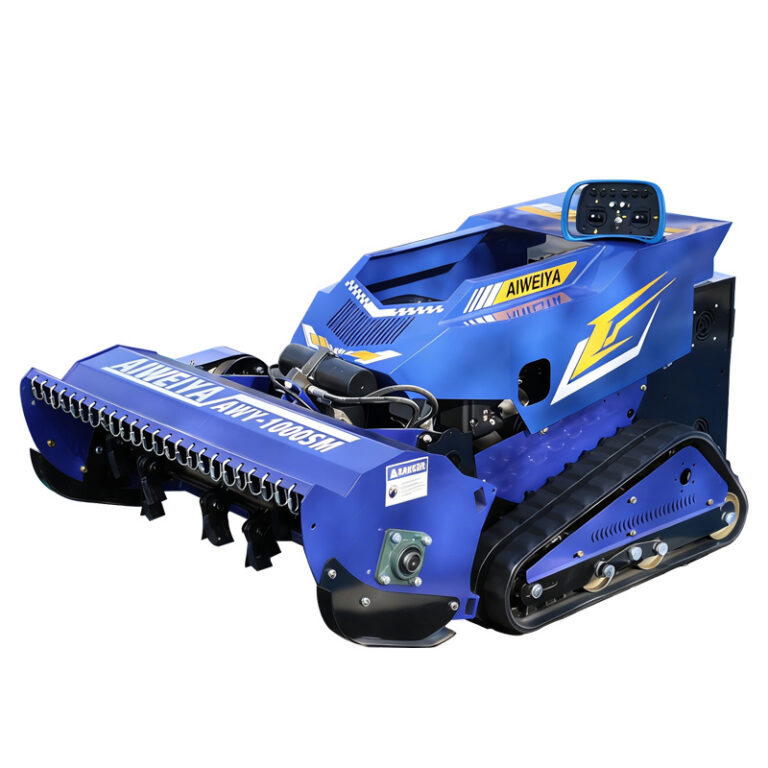
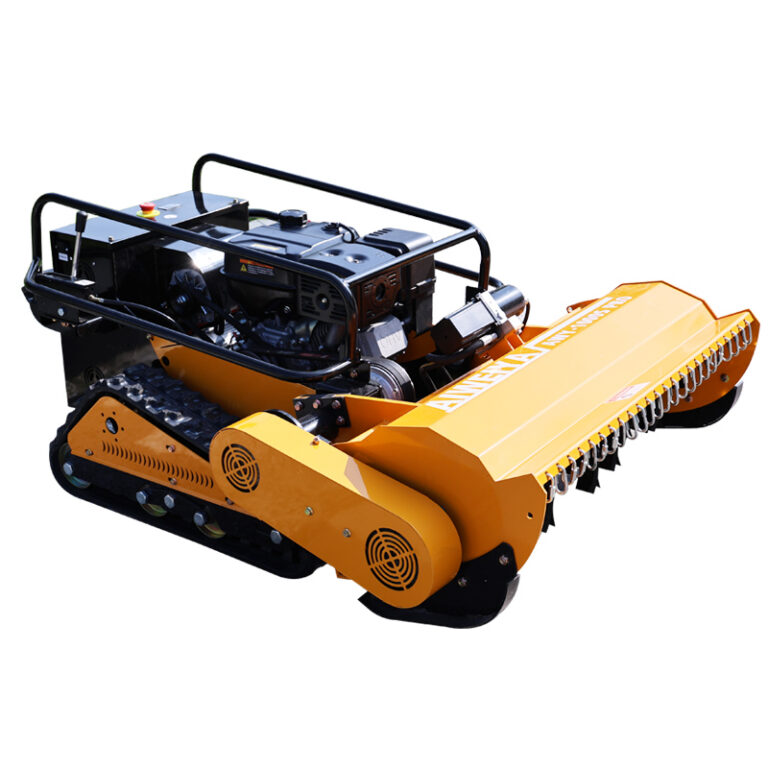
A remote control flail mower can be particularly relevant to applications involving mixed vegetation.
Depending on machine configuration, a flail system may be used for:
- Grass
- Weeds
- Dense vegetation
- Brush
- Overgrown roadside areas
- Embankments
- Farm and infrastructure vegetation
The correct configuration depends on the machine and the manufacturer’s recommended application.
How to Choose a Remote Control Flail Mower
7. Cutting Width and Roadside Access
Cutting width affects productivity, but a larger cutting deck is not automatically the best option for every highway project.
A contractor may need to work around:
- Guardrails
- Signposts
- Drainage structures
- Barriers
- Trees
- Utility equipment
- Narrow access areas
A wider machine can cover more area per pass, but it may require more working space.
Therefore, highway contractors should balance:
Cutting Width + Machine Width + Access + Vegetation + Maneuverability
For large open embankments, productivity may be the main consideration.
For narrow roadside areas, compact dimensions may be more important.
Remote Control Mower Cutting Width Explained

8. Engine Power for Dense Roadside Vegetation
Highway vegetation can become dense during periods of rapid growth.
When vegetation becomes thicker, the cutting system may experience greater resistance.
Engine power should therefore be considered together with:
- Cutting width
- Flail configuration
- Vegetation density
- Working speed
- Terrain
- Machine weight
For commercial users, the goal should be to match the powertrain to the expected workload.
Choosing equipment based only on maximum engine horsepower can result in an incomplete comparison.
Remote Control Mower Engine Power Explained
9. Stability Is Important on Roadside Embankments
Highway embankments can create a combination of slope angle and uneven ground.
A stable machine design can help maintain controlled movement while mowing.
Factors worth evaluating include:
- Center of gravity
- Track configuration
- Machine width
- Weight distribution
- Ground clearance
- Cutting-deck position
The machine should be operated according to the manufacturer’s specified slope and terrain requirements.
A contractor should also evaluate whether the machine is suitable for the specific direction and working pattern planned for the site.
10. Vegetation Height and Mowing Frequency
Roadside vegetation management can involve different mowing schedules.
Some contracts may require frequent grass cutting.
Other projects may involve less frequent maintenance where vegetation becomes taller and denser between mowing cycles.
Mowing frequency can affect equipment selection.
For example:
Frequent mowing
→ more grass-focused operation
Seasonal mowing
→ potentially taller vegetation
Overgrown areas
→ greater demand on the cutting system
Contractors should communicate expected vegetation conditions to the supplier before purchasing.
This information can help determine the appropriate machine and cutting configuration.
11. Roadside Safety and Work-Zone Planning
Highway mowing projects involve an important factor that ordinary landscaping projects may not have: nearby traffic.
Equipment operation should therefore be coordinated with the project’s traffic-management and safety procedures.
Depending on the project and jurisdiction, contractors may need to consider:
- Traffic control
- Work-zone boundaries
- Warning signage
- Operator positioning
- Equipment access
- Emergency procedures
- Visibility
- Communication between workers
The exact requirements depend on the road authority, project specifications, and local regulations.
Remote control technology does not replace established highway work-zone safety procedures.
It is one part of the equipment strategy.
12. Keeping the Operator Away From the Mowing Machine
One practical feature of remote-controlled equipment is that the operator does not need to sit directly on the machine.
This can be useful when the mower is working on a slope or difficult-to-access roadside area.
The operator can maintain a suitable observation position while controlling the machine.
However, the operator still needs clear visibility and must follow the manufacturer’s operating procedures.
For commercial fleets, proper operator training is also important.
13. Highway Contractors Can Use a Fleet-Based Approach
Not every section of a highway requires the same machine.
A contractor may operate different equipment for different terrain types.
For example:
| Working Area | Potential Equipment Approach |
|---|---|
| Flat roadside grass | Conventional mower |
| Steep embankment | Tracked remote mower |
| Dense weeds | Remote flail mower |
| Brush-covered area | Heavy-duty flail configuration |
| Narrow access area | Compact mower |
| Large open area | Wider cutting configuration |
This approach can help contractors match equipment to the actual job rather than using one machine for every situation.
14. Remote Flail Mowers for Highway Vegetation Control
Flail systems are commonly associated with vegetation management because they can process grass, weeds, and other vegetation within the cutting deck.
When combined with a remote-controlled tracked platform, the machine can be configured for applications involving difficult roadside vegetation.
Commercial buyers should compare:
- Flail-head design
- Cutting width
- Engine power
- Cutting components
- Machine weight
- Track system
- Maintenance access
The exact cutting capability depends on the mower model.
Remote Control Flail Mower for Dense Vegetation
15. Transporting the Mower Between Highway Sites
Roadside contractors may move equipment between multiple project locations in a single week.
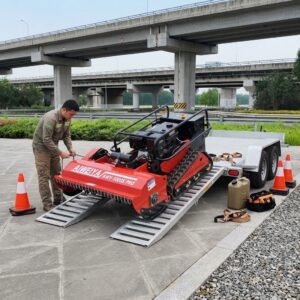
Transportation should therefore be considered before purchasing.
Important questions include:
- What is the machine’s operating weight?
- What transport equipment is required?
- Can the mower be loaded efficiently?
- How much space does it require?
- How long does setup take?
- Can one contractor easily move it between sites?
For companies with multiple crews, standardized transportation procedures can also improve fleet management.
16. Maintenance Requirements for Roadside Contractors
Highway vegetation projects can expose equipment to:
- Dust
- Grass
- Mud
- Stones
- Moisture
- Plant debris
Regular maintenance is therefore important.
After operation, contractors should follow the manufacturer’s maintenance schedule and inspect relevant components.
Typical areas may include:
Cutting System
Check cutting components and remove accumulated vegetation.
Tracks
Inspect track condition and remove debris.
Engine
Follow the manufacturer’s engine maintenance schedule.
Remote Controller
Inspect the remote-control equipment and charging system as applicable.
Fasteners
Check components according to the manufacturer’s maintenance instructions.
Cooling System
Keep relevant cooling areas free of accumulated debris.
Remote Control Mower Maintenance Guide for Commercial Users
17. Spare Parts Matter for Highway Maintenance Fleets
For a contractor, equipment downtime can interfere with project schedules.
This makes spare-parts support an important part of supplier evaluation.
Potential replacement components may include:
- Cutting components
- Track components
- Belts
- Filters
- Electrical components
- Remote-control components
- Engine service parts
Before purchasing, ask the supplier:
Which spare parts are normally stocked?
What is the typical lead time?
Can common maintenance parts be ordered together with the machine?
Are technical manuals available?
For international buyers, spare-parts logistics should be discussed before placing a bulk order.
18. Choosing a Supplier for Highway Maintenance Equipment
Highway maintenance equipment is typically a commercial purchase rather than a simple consumer product.
B2B buyers should evaluate the supplier’s ability to support long-term operation.
Consider asking about:
- Factory production capability
- Product range
- Quality-control procedures
- Spare parts
- Warranty
- Technical support
- Export experience
- OEM/ODM capability
- Packaging
- Documentation
- Production lead time
A supplier that understands the application may also be able to help match different mower configurations to different project requirements.
How to Find a Reliable Remote Control Mower Manufacturer in China
Remote Control Mower Manufacturer vs Trading Company
19. OEM and Private Label Highway Mowers
Some distributors may want to add remote control mowers to an existing landscaping or agricultural equipment product line.
OEM and private-label cooperation can provide opportunities to develop a product range for specific markets.
Potential requirements may include:
- Brand labeling
- Product colors
- Packaging
- User manuals
- Spare-parts packages
- Product configurations
- Dealer documentation
The exact customization options depend on the manufacturer’s capabilities.
Remote Control Mower OEM and ODM Guide
20. What Highway Contractors Should Include in a Quotation Request
A detailed inquiry can help suppliers provide a more accurate quotation.
Instead of simply asking:
“How much is a remote control mower?”
provide information such as:
Application: Highway slope maintenance
Terrain: Grass-covered embankment
Slope: Approximate working slope
Vegetation: Grass, weeds, or brush
Cutting width: Required working width
Quantity: Number of machines
Destination: Country and delivery location
Business type: Contractor / distributor / municipal buyer
Customization: OEM or standard configuration
This information gives the supplier a clearer understanding of the project.
Remote Control Mower Price: What Affects the Cost?
21. Evaluating Productivity for Roadside Projects
Productivity should be evaluated using the complete work process.
A simple calculation can start with:
Area Covered Per Hour = Effective Cutting Width × Working Speed × Operating Efficiency
The actual productivity will be lower than the theoretical calculation because projects involve:
- Turning
- Obstacles
- Terrain changes
- Transport
- Refueling
- Maintenance
- Setup
- Operator adjustments
For this reason, contractors should use realistic field productivity when estimating project capacity.
22. Commercial Applications Beyond Highways
The same equipment designed for highway slope maintenance may also have applications in other industries.
Potential markets include:
Railway Maintenance
Vegetation along railway embankments may require specialized mowing equipment.
Solar Farms
Large solar sites can contain extensive grass and vegetation.
Industrial Sites
Industrial properties may have difficult terrain and overgrown areas.
Agricultural Properties
Farm roads, embankments, and field boundaries may require vegetation control.
Municipal Projects
Public land and drainage areas can create recurring vegetation-management requirements.
This multi-application capability can be valuable for contractors looking to maximize equipment utilization.
Remote Control Mower for Solar Farm Vegetation Management
23. How Dealers Can Build a Highway-Maintenance Product Line
For distributors, highway slope mowers can become part of a larger professional equipment portfolio.
A dealer may offer different configurations for:
- Light vegetation
- Dense vegetation
- Steep slopes
- General landscaping
- Farms and orchards
- Infrastructure maintenance
Instead of selling a single machine configuration to every customer, dealers can use application-based product recommendations.
This approach allows customers to select equipment according to their actual working environment.
How to Choose a Remote Control Mower Supplier for Your Market
How to Become a Remote Control Mower Dealer
24. Common Mistakes in Highway Mower Selection
Choosing Only by Price
A lower purchase price may represent a different configuration or support package.
Compare the complete quotation.
Ignoring Machine Width
A mower that is too wide may be inconvenient around roadside infrastructure.
Ignoring Vegetation Type
Grass and dense brush can place different demands on the cutting system.
Focusing Only on Maximum Slope
Actual performance depends on terrain and operating conditions.
Forgetting Spare Parts
Commercial machines need ongoing maintenance.
Not Planning Transportation
Highway contractors may need to move equipment frequently between project sites.
Buying Without Considering Future Applications
A machine that can work across several commercial applications may be more flexible for a contractor’s fleet.
25. Highway Maintenance Buyer Checklist
Before purchasing a remote control mower for highway slope maintenance, review the following checklist.
Terrain
- What is the typical slope?
- What is the steepest working section?
- Is the surface grass, soil, rock, or mixed terrain?
- Are wet conditions common?
Vegetation
- Grass
- Weeds
- Brush
- Mixed vegetation
- Expected vegetation height
Machine
- Crawler system
- Engine power
- Cutting width
- Ground clearance
- Machine width
- Machine weight
Remote Control
- Operating range
- Control functions
- Operator visibility
- Remote-controller reliability
Commercial Operation
- Transport requirements
- Maintenance schedule
- Spare-parts availability
- Warranty
- Technical support
B2B Supply
- Factory capability
- MOQ
- OEM/ODM
- Packaging
- Export experience
- Delivery lead time
26. Why Highway Contractors Consider Remote Mowing Equipment
Highway vegetation management requires equipment that can work within a demanding environment.
Remote-controlled mowing equipment can provide a specialized option for difficult roadside terrain.
Its potential value comes from combining:
- Remote operation
- Tracked mobility
- Slope-oriented design
- Suitable cutting systems
- Commercial machine construction
- Flexible applications
- Professional supplier support
For contractors, the goal should be to match the mower to the actual highway maintenance project.
A machine that performs well on one type of embankment may not be the ideal configuration for every roadside environment.
27. NUOYU Remote Control Mowers for Commercial Roadside Applications
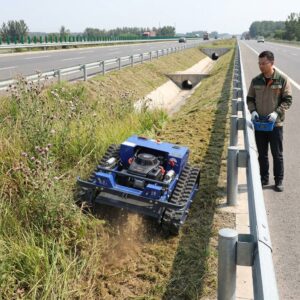
NUOYU focuses on remote control mower solutions for professional applications including slope mowing, roadside vegetation control, brush cutting, farm and orchard maintenance, landscaping, and other commercial vegetation-management projects.
For highway maintenance contractors and B2B buyers, the appropriate configuration can be evaluated according to:
- Roadside terrain
- Slope conditions
- Vegetation type
- Cutting width
- Engine power
- Track configuration
- Expected workload
- Quantity requirements
NUOYU also supports business cooperation for dealers, distributors, importers, contractors, and OEM/ODM customers.
NUOYU Remote Control Mower Products
NUOYU Roadside Vegetation Control Solutions
For a project quotation, buyers can provide information about the highway environment, slope conditions, vegetation, required cutting width, destination market, and expected order quantity.
Request a Remote Control Mower Quote
FAQ
1. What is a remote control mower for highway slope maintenance?
It is a remotely operated mowing machine designed for vegetation management in difficult roadside environments, including suitable highway embankments and slopes.
2. Can remote control mowers be used on highway embankments?
They can be used for suitable embankment applications when the machine’s specifications and operating limits match the terrain and working conditions.
3. Why are crawler tracks commonly used for slope mowing?
Crawler tracks provide a larger ground-contact area and can offer useful traction characteristics on uneven terrain. Actual performance depends on the complete machine configuration and ground conditions.
4. What vegetation can a highway remote mower cut?
Depending on the cutting system, remote mowers can be configured for grass, weeds, dense vegetation, and some brush-management applications.
5. Is a flail mower suitable for roadside vegetation?
A remote control flail mower can be suitable for many commercial vegetation-management applications involving grass, weeds, and mixed vegetation. The correct configuration depends on the machine and manufacturer’s specifications.
6. How should highway contractors choose cutting width?
Consider the size of the working area together with roadside access, machine width, obstacles, vegetation density, and required productivity.
7. What should I tell a manufacturer when requesting a quotation?
Provide the application, terrain, approximate slope, vegetation type, required cutting width, quantity, destination, and any OEM/ODM requirements.
8. Can highway contractors purchase remote mowers in bulk?
Yes. Contractors, distributors, and other B2B customers can discuss bulk purchasing requirements with manufacturers and suppliers.
9. Can remote control mowers be used for other applications?
Depending on the machine, they may also be used for farms, orchards, solar farms, landscaping, embankments, brush management, and other vegetation-control applications.
Remote Control Mower for Farms and Orchards
Conclusion
Highway slope maintenance presents a combination of challenging terrain, dense vegetation, limited access, and demanding commercial schedules.
A remote control mower for highway slope maintenance can provide a specialized solution for contractors and organizations managing roadside vegetation.
The right equipment should be evaluated according to the complete application rather than one specification.
Before purchasing, consider:
- Slope conditions
- Ground type
- Vegetation
- Crawler configuration
- Cutting width
- Engine power
- Machine stability
- Remote-control system
- Transport
- Maintenance
- Spare parts
- Supplier support
For B2B buyers, the supplier’s ability to provide long-term technical and parts support can be just as important as the initial machine quotation.
If your business is looking for remote control mowing equipment for highway embankments, roadside vegetation, or other difficult terrain, provide your project requirements to the manufacturer and request a configuration based on your actual working environment.
Need a remote control mower for highway slope maintenance?
View NUOYU Remote Control Mower Products