Introduction: Helping Landscaping Businesses Handle More Challenging Jobs
Landscaping companies manage a wide variety of properties, from residential communities and commercial campuses to hotels, industrial facilities, public green spaces, and large estates. Each customer may have different expectations for appearance, maintenance frequency, site access, and service costs.
While conventional lawn mowers remain essential for many landscaping jobs, some properties include steep banks, uneven ground, rough grass, narrow access routes, or overgrown boundaries that are more difficult to maintain with standard equipment.
For contractors, these challenges affect more than mowing performance. Difficult sites can require additional labor, longer operating hours, more complicated work planning, and closer attention to safety.
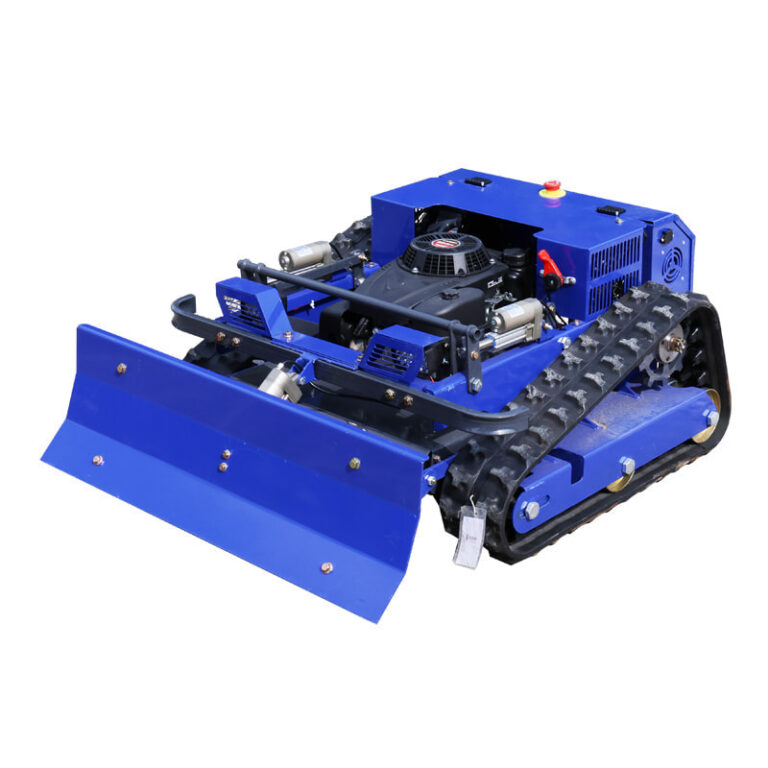
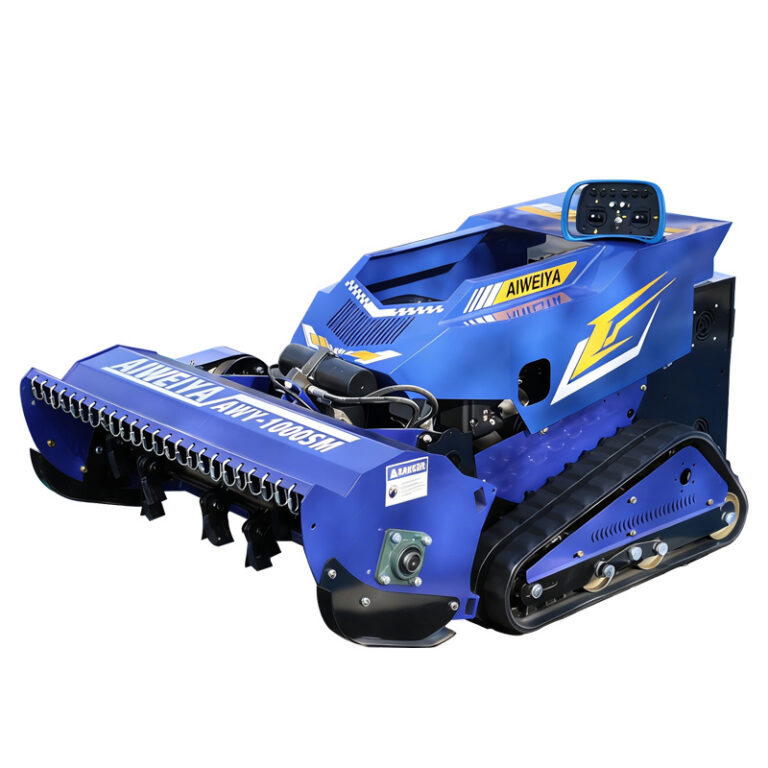
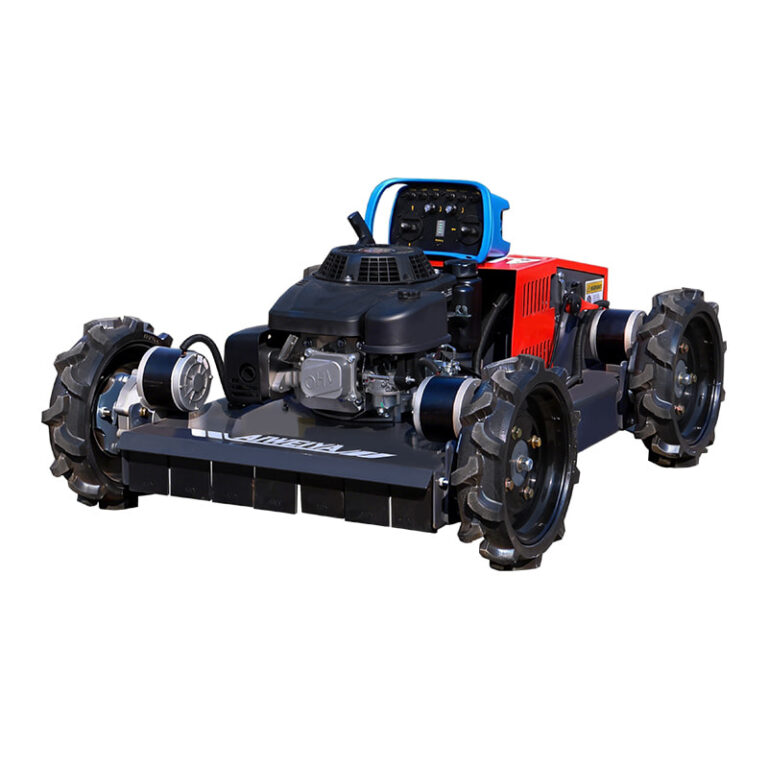
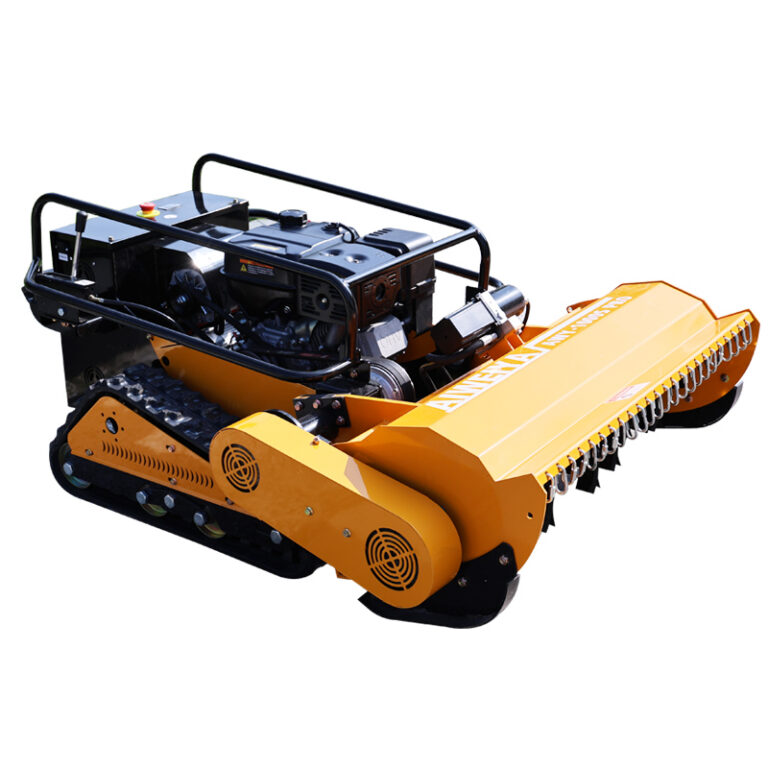
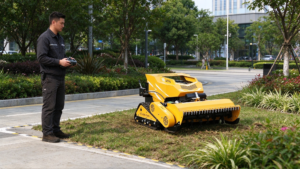
A remote control mower for landscaping companies can help contractors manage selected difficult-to-maintain areas while keeping the operator separate from the cutting machine. Depending on the machine configuration and site conditions, it may be suitable for certain slopes, rough vegetation, landscaped boundaries, and commercial grounds.
However, purchasing specialized equipment should be a business decision rather than a reaction to a single challenging job. Landscaping companies need to evaluate the machine’s capabilities, expected utilization, operating costs, transportation requirements, and potential contribution to contract profitability.
This guide explains how to evaluate remote control mowing equipment for professional landscaping operations.

1. What Landscaping Companies Need from Commercial Mowing Equipment
Professional landscaping is a service business. Equipment must help the company deliver the required result within the agreed schedule and budget.
A suitable mower should be assessed against five main business requirements.
1.1 Consistent Work Quality
Different customers expect different finishing standards. A hotel lawn, an office campus, and an overgrown industrial boundary may require very different cutting results.
Before choosing a mower, define whether the task involves fine lawn maintenance, routine grass cutting, rough vegetation control, or heavier flail mowing.
A machine designed for rough vegetation should not automatically be selected for decorative lawns where a refined finish is the primary requirement.
1.2 Predictable Project Scheduling
Landscaping companies often manage multiple sites in the same week. Delays at one property can affect the schedule for other customers.
Equipment selection should account for the complete working cycle, including transport, unloading, site preparation, mowing, repositioning, cleaning, and routine servicing.
1.3 Practical Labor Allocation
Some areas are difficult to mow efficiently with conventional equipment. A remote-controlled machine may offer a different operating approach for suitable locations, potentially allowing contractors to allocate workers to other tasks while reducing direct exposure to selected terrain-related hazards.
Actual labor savings depend on the site, operating procedure, staffing model, and equipment productivity. Contractors should validate these assumptions with a trial rather than treating them as guaranteed outcomes.
1.4 Flexible Job Coverage
A landscaping business may maintain lawns, roadside boundaries, sloping grounds, rough field edges, and vegetation around commercial facilities.
A remote control mower can add another capability to the fleet when its cutting system and operating limits match the work. It should complement existing equipment rather than be expected to perform every landscaping task.
1.5 Manageable Ownership Costs
A machine that is inexpensive to purchase may not be economical if it is frequently unavailable, difficult to transport, or poorly matched to the company’s projects.
Consider the purchase price alongside fuel, servicing, wear parts, repairs, training, transportation, and expected utilization.
2. Which Landscaping Projects May Benefit from a Remote Control Mower?
Not every landscaping site requires specialized remote-controlled equipment. The best candidates are properties where terrain, vegetation, or access makes conventional mowing less practical.
2.1 Commercial Office Campuses
Office campuses often contain large lawns, landscaped boundaries, planted areas, and sloping sections beside roads or parking facilities.
Conventional equipment may remain the best choice for open, level lawns. A remote mower may be useful for selected rough perimeter areas or suitable slopes where a conventional ride-on mower is not the preferred option.
Contractors should identify which portions of a contract genuinely benefit from specialized equipment before estimating a return on investment.
2.2 Hotels and Resorts
Hotels and resorts typically maintain extensive grounds, including lawns, gardens, landscaped banks, and peripheral green areas.
Appearance requirements are particularly important around guest-facing spaces. Contractors should match the mower and cutting system to the required finish and keep rough vegetation work separate from areas requiring detailed ornamental maintenance.
2.3 Industrial and Warehouse Properties
Industrial parks and warehouses may include grass strips around fences, uneven boundaries, undeveloped plots, and areas beside utility infrastructure.
These locations may favor durable commercial equipment, but the contractor must consider obstacles, debris, access restrictions, and the risks associated with nearby operations.
2.4 Residential Communities and Housing Developments
Large residential communities often contain shared green spaces, roadside grass, drainage boundaries, and landscaped banks.
A contractor may use conventional mowers for common lawns while evaluating a remote control mower for selected difficult areas. Public access and pedestrian management should be incorporated into the maintenance plan.
2.5 Large Estates and Recreational Properties
Estates, sports and recreation properties, and large landscaped grounds can contain a mixture of maintained lawns and rough peripheral vegetation.
The right fleet may combine fine-cutting equipment with a heavier-duty mower for areas that require a different treatment.
Remote Control Mower for Large Property Maintenance
3. How to Select the Right Machine for Your Landscaping Business
The best purchasing process begins with the company’s existing contracts and expected future work.
3.1 Start with Your Most Frequent Difficult Jobs
Review the work orders completed over the previous season. Identify jobs that repeatedly involve steep or uneven terrain, tall grass, restricted access, or high labor requirements.
Record the type of vegetation, approximate area, terrain, time spent, and current equipment used.
This information helps determine whether a specialized mower would solve a recurring problem or be used only occasionally.
3.2 Evaluate the Cutting System
The cutting system should match the intended work.
For maintained lawns, appearance and finish quality may be the priority. For rough grass, weeds, and selected dense vegetation, a flail cutting system may be worth considering.
Before ordering, confirm the intended vegetation types, cutting height adjustments, maintenance requirements, and limitations of the proposed configuration.
How to Choose a Remote Control Flail Mower
3.3 Compare Cutting Width with Site Access
A wider cutting width may reduce the number of passes required on an open area. However, the machine must still fit through entrances, between obstacles, and along the actual working route.
Measure:
- Gate and access-path widths
- Trailer loading space
- Turning areas
- Narrow passages between landscaped features
- Storage and workshop space
Consider both the overall machine width and the cutting deck dimensions.
3.4 Check the Machine’s Power and Intended Workload
Power requirements depend on the cutting system, vegetation density, terrain, and operating conditions.
Ask the supplier for the technical specifications and intended applications of the model. Where possible, arrange a demonstration using vegetation and terrain comparable to your regular jobs.
Do not use engine output alone as a substitute for a realistic productivity assessment.
3.5 Confirm Terrain and Slope Limits
If your company maintains banks or sloping properties, request the manufacturer’s documented operating limits.
Confirm any restrictions relating to slope direction, turning, surface conditions, machine configuration, and cutting operation.
A tracked chassis does not make a mower suitable for every hillside. The operator must follow the manufacturer’s instructions and the project’s site-specific safety procedures.
3.6 Review Remote-Control Functions
Check the functions available through the remote controller, the documented operating range, emergency-stop arrangements, and visibility requirements.
Make sure operators understand how to stop the machine and respond to communication problems or unexpected movement.
3.7 Evaluate Serviceability
Landscaping companies often operate equipment during concentrated seasonal periods. Long service interruptions can affect customer commitments.
Ask about routine maintenance, replacement components, technical support, warranty coverage, and spare-parts ordering.
Remote Control Mower Specifications Buyers Should Compare
4. Can a Remote Control Mower Improve Landscaping Business Productivity?
Potential productivity benefits should be measured against the company’s existing working method.
A remote control mower may help with selected difficult areas, but the result depends on vegetation, site layout, machine performance, and how the job is organized.
4.1 Measure the Complete Job Cycle
Do not measure productivity using cutting speed alone.
For each representative job, record:
- Travel time to the site
- Loading and unloading
- Site inspection and preparation
- Active cutting time
- Turning and repositioning
- Cleaning and routine checks
- Return transport and servicing
This creates a more accurate picture of the total labor and machine time required.
4.2 Identify Work That Can Be Reassigned
If a remote mower makes a particular task easier to manage, a contractor may be able to reorganize how the crew works.
For example, a crew member who previously spent substantial time assisting with a difficult mowing task may be able to handle another necessary activity when the operating plan permits.
However, remote operation does not mean that the machine can be left unsupervised. Operators must maintain the required visibility, monitor the work area, and comply with the machine’s operating procedures.
4.3 Reduce Unplanned Schedule Disruption
Matching the mower to the terrain and vegetation can help establish a more predictable workflow. The machine still needs inspections and maintenance, and unsuitable ground conditions may require work to be postponed.
Contractors should schedule servicing and prepare alternatives for jobs affected by equipment downtime.
4.4 Use Consistent Performance Records
For each job, track:
- Area completed
- Total crew hours
- Machine operating hours
- Fuel consumption
- Travel and setup time
- Maintenance events
- Customer acceptance and rework
Comparing several similar jobs provides a better basis for future estimates than relying on a single demonstration.
5. Calculate the Return on Investment Before Purchasing
A remote control mower should be evaluated as a business asset. The financial case depends on how often the machine is used and which costs it changes.
5.1 Estimate Annual Operating Costs
Include:
- Purchase and financing costs
- Delivery and transportation equipment
- Fuel and consumables
- Scheduled servicing
- Wear parts and repairs
- Operator training
- Insurance and storage, where applicable
- Downtime and replacement arrangements
Use supplier quotations and your own operating records to avoid relying on unsupported estimates.
5.2 Estimate the Financial Value of Time Saved
Suppose your company currently spends a certain number of labor hours on difficult mowing jobs. If a trial shows that the new machine reduces the total time required, calculate the value using your actual labor costs.
For a simple estimate:
Annual labor value = Verified hours saved per year × Fully loaded labor cost per hour
The fully loaded labor cost should reflect the cost relevant to your business, not only the employee’s base wage.
Be careful not to count hours as financial savings if employees are still paid and the time is not used productively elsewhere. In that case, the benefit may be additional capacity rather than a direct cash saving.
5.3 Estimate Additional Contract Capacity
If the equipment enables the company to take on more suitable work, estimate the additional contribution after deducting the costs of performing those jobs.
Annual additional contribution = Revenue from additional work − Direct costs of delivering that work
Use realistic demand forecasts. Purchasing a machine does not automatically generate additional contracts.
5.4 Calculate a Simple Payback Period
A simplified payback calculation is:
Payback period = Initial investment ÷ Annual net financial benefit
This is useful for an initial comparison, but it does not replace a full investment analysis. The calculation should account for ongoing costs, financing, machine life, resale value, and changes in workload where relevant.
5.5 Test the Business Case with a Trial
If possible, test the proposed machine on representative sites before making a large purchase.
Record the actual working cycle and compare it with the existing method. Include transportation, setup, operator familiarization, and maintenance requirements.
A measured trial can reveal whether the machine offers a genuine benefit for your company’s typical contracts.
6. How to Price Remote-Controlled Mowing Services
Specialized equipment may change the way a contractor prices certain jobs. The appropriate pricing model depends on the contract and the client’s requirements.
6.1 Price by Area Where Conditions Are Predictable
Area-based pricing can work when the site is clearly defined and vegetation, access, and terrain are reasonably consistent.
For difficult sites, measure the area and classify the working conditions before quoting.
6.2 Use Time-Based Pricing for Variable Conditions
Hourly or day-based pricing may be appropriate when vegetation density, obstacles, or ground conditions are difficult to estimate accurately in advance.
The quotation should explain what is included and how unexpected site conditions will be handled.
6.3 Separate Specialized Work from Routine Lawn Maintenance
A site may contain broad, level lawns and difficult perimeter slopes. These tasks may require different equipment, labor arrangements, and productivity assumptions.
Separating them in the quotation can help customers understand the service scope and allow the contractor to estimate costs more accurately.
6.4 Include Mobilization and Transportation
Moving specialized equipment between sites takes time and may require a suitable trailer or loading equipment.
For small jobs or distant sites, transportation can represent a meaningful portion of the total cost. Include it when estimating the contract price.
6.5 Keep Safety and Site Preparation in the Scope
The contract should clearly define responsibility for access arrangements, debris removal, public-area controls, site preparation, and other required work.
Do not quote based solely on the nominal area if the site requires significant preparation or restrictions.
7. Safety Planning for Landscaping Contractors
Landscaping businesses work in different environments every day. A consistent operating procedure helps operators understand the machine’s limitations and manage site-specific risks.
7.1 Inspect the Work Area
Before mowing, check for stones, branches, litter, hidden obstacles, people, animals, and other potential hazards.
Assess the surface for holes, soft ground, unstable edges, and unexpected changes in slope.
7.2 Establish a Clear Operating Zone
Keep pedestrians and other workers away from the active cutting area. On commercial sites, coordinate with the property manager when access routes or nearby operations may be affected.
Use appropriate barriers, signs, or temporary restrictions where necessary.
7.3 Maintain Visibility and Control
Operate from a position that complies with the manufacturer’s instructions and provides suitable visibility of the machine and work area.
Stop the operation if visibility is lost or the site changes in a way that makes continued work unsafe.
7.4 Train Staff on the Specific Model
Training should cover startup, shutdown, emergency stops, remote-control functions, slope limitations, transport, and routine inspection.
Do not assume that experience with one remote-controlled mower automatically qualifies an operator to use another model.
7.5 Keep Maintenance Records
A documented inspection and servicing process can help the company identify recurring faults and manage machine availability.
Follow the manufacturer’s maintenance schedule and record any repairs or operating issues that may affect safe performance.
8. Transport, Storage, and Equipment Deployment
A mower that performs well at one site may not be practical for a business that services multiple properties every day. Transportation should therefore be included in the purchasing decision.
8.1 Check Trailer Compatibility
Confirm the machine’s operating weight, dimensions, loading requirements, and recommended transport arrangements.
Verify that the company’s existing trailer and vehicle are suitable for the equipment, including appropriate load ratings and securement methods.
8.2 Plan Loading and Unloading
Consider the equipment and space needed to load the mower safely. The supplier should provide the relevant instructions for ramps, lifting points, and transport preparation.
Operators should follow those instructions and avoid improvised loading arrangements.
8.3 Consider Storage and Workshop Access
The mower should fit within the company’s storage area and allow practical access for inspection and servicing.
Also consider the space required for spare parts, cutting components, cleaning, and routine maintenance.
8.4 Organize the Work Schedule by Location
When several suitable sites are close together, grouping jobs geographically may reduce unnecessary travel.
This can improve the utilization of specialized equipment, although the plan must still account for customer schedules, site access, and required maintenance windows.
8.5 Maintain a Deployment Checklist
Before leaving the depot, confirm that the machine, remote controller, required accessories, safety equipment, and essential service items are available.
A simple checklist can reduce avoidable return trips and help crews arrive prepared.
9. Maintenance Planning for a Landscaping Fleet
The cost of ownership depends partly on how well the company maintains the machine.
9.1 Establish Daily Checks
Before and after use, follow the manufacturer’s inspection procedure. Depending on the model, this may include checking the cutting components, tracks, visible fasteners, protective features, remote controller, and signs of leakage or damage.
Any work around the cutting mechanism must follow the manufacturer’s shutdown and isolation instructions.
9.2 Follow Scheduled Servicing
Maintain records of operating hours and completed services. Use the manufacturer’s recommended intervals and approved procedures.
Avoid extending maintenance intervals simply because the machine appears to be working normally.
9.3 Monitor Wear Components
Cutting components and track systems may require attention according to operating conditions and machine design.
Inspect them at the prescribed intervals and replace worn or damaged parts as required.
9.4 Stock Critical Spare Parts
Identify the components most likely to affect the machine’s availability and ask the supplier about recommended stock levels.
The right inventory depends on usage intensity, lead times, local support, and the consequences of downtime.
9.5 Document Operator Feedback
Ask operators to report unusual vibration, control problems, unexpected performance changes, or damage.
Early reporting helps the maintenance team investigate issues before they disrupt a scheduled project.
Remote Control Mower Maintenance Guide
10. Should a Landscaping Company Buy One Machine or Several?
The right fleet size depends on workload, travel distances, and the number of crews that need the equipment.
10.1 Start with One Unit for a Defined Use Case
For companies new to remote-controlled mowing, starting with one unit can provide real operating data before expanding the fleet.
Choose a machine based on a clearly identified group of suitable jobs rather than an uncertain expectation of future demand.
10.2 Expand When Utilization Supports It
Additional units may make sense when the first machine is consistently booked, multiple teams have overlapping requirements, or travel between projects causes scheduling conflicts.
Compare the cost of additional equipment with alternative arrangements such as rescheduling, subcontracting, or using existing machines.
10.3 Standardize Where Practical
Using the same model across several crews may simplify operator training, parts inventory, and maintenance planning.
However, if the company serves both fine-landscaping customers and heavy vegetation-control clients, different machines may be needed for different tasks.
10.4 Keep Existing Equipment Where It Still Performs Well
There is usually no reason to replace every conventional mower simply because a remote-controlled option is available.
Maintain the machines that are already suitable for open lawns and routine cutting. Add specialized equipment where the operating and commercial case is strong.
11. What Landscaping Companies Should Ask Suppliers
Before purchasing, request enough technical and commercial information to compare the proposed equipment against alternatives.
Machine Specifications
- What vegetation types is the model designed to cut?
- What are its cutting width, overall dimensions, and operating weight?
- What cutting system is fitted?
- What slope limits and ground conditions apply?
- What remote-control functions and emergency-stop features are provided?
- What applications are excluded from the manufacturer’s recommendations?
Maintenance and Support
- Which routine maintenance tasks can the customer perform?
- Which spare parts are recommended for regular stock?
- What warranty coverage and exclusions apply?
- What after-sales technical support is available?
- Are operating manuals and maintenance instructions supplied?
Commercial Terms
- What is included in the quoted price?
- What accessories or optional configurations are available?
- What are the delivery lead time and transport terms?
- Are multiple-unit orders or dealer arrangements available?
- Can the supplier discuss OEM or ODM requirements?
- What documentation is available for the buyer’s internal purchasing process?
The quotation should clearly distinguish standard equipment from optional accessories and services.
12. Why Landscaping Businesses May Consider NUOYU
NUOYU supplies remote control lawn mower solutions for commercial buyers, including businesses evaluating equipment for rough grass, slopes, orchards, large properties, and other vegetation management tasks.
For landscaping companies, the most useful starting point is a discussion about actual working conditions rather than choosing a model based only on its appearance or headline specifications.
When contacting the supplier, prepare the following information:
- The type of properties your company maintains
- Typical vegetation height and density
- Whether your jobs include sloping or uneven ground
- Approximate working area and maintenance frequency
- Available transport vehicles and storage space
- Desired cutting width and cutting-system type
- Expected order quantity and delivery destination
- Any dealer, OEM, or customization requirements
This information can help the supplier assess which available configuration may be appropriate. Confirm all technical specifications, operating limits, delivery arrangements, and commercial terms before ordering.
Explore related NUOYU resources:
- NUOYU Remote Control Mower Products
- Remote Control Mower for Large Property Maintenance
- NUOYU OEM/ODM Solutions
- Contact NUOYU for Commercial Pricing
13. Frequently Asked Questions
Q1. Is a remote control mower suitable for landscaping companies?
It may be suitable for companies that regularly maintain certain difficult-to-access areas, rough vegetation, or suitable slopes. The decision should be based on the machine’s documented capabilities and the company’s actual project requirements.
Q2. Can one remote control mower handle every landscaping job?
No. Different jobs require different cutting systems and finishing standards. Many landscaping companies will still need conventional mowers and other tools for open lawns, detailed landscaping, and specialized maintenance work.
Q3. Can remote control mowing reduce labor costs?
It may reduce the time or labor required for particular tasks, but results vary. Contractors should compare the complete working cycle and account for transportation, setup, supervision, servicing, and operator training before calculating savings.
Q4. How do I calculate whether the machine is worth buying?
Estimate the annual financial benefit using verified time savings, additional work capacity, and actual operating costs. Compare this benefit with the initial investment and ongoing expenses. A site trial can improve the reliability of the estimate.
Q5. Is a tracked mower better for commercial landscaping?
Tracks can be advantageous on certain uneven surfaces, but they do not make every tracked machine suitable for every site. Ground conditions, machine design, slope limits, access dimensions, and the cutting task must all be considered.
Q6. What maintenance is required?
Requirements depend on the model. Follow the manufacturer’s schedule for inspections, cleaning, cutting-component maintenance, track checks, servicing, and remote-control system checks.
Q7. Can landscaping contractors buy multiple units?
Contractors can discuss multi-unit requirements with the supplier. Before expanding a fleet, verify utilization, operator capacity, service support, spare-parts arrangements, and the suitability of the selected model across the intended sites.
Q8. What information should I provide when requesting a quotation from NUOYU?
Provide the intended applications, terrain, vegetation conditions, workload, required cutting width, order quantity, destination, and any configuration or customization requirements. Request written specifications and commercial terms before confirming an order.
Conclusion: Choose Equipment That Supports Your Business Model
For landscaping companies, specialized mowing equipment should solve a recurring operational problem and support a sustainable service business.
A remote control mower may help contractors manage selected difficult sites, expand their vegetation management capabilities, and organize certain jobs more effectively. The actual value depends on the match between the machine, the terrain, the cutting task, and the company’s workload.
Before investing, identify the jobs that will use the equipment, compare the complete operating costs, verify the manufacturer’s limits, and test performance under representative conditions.
Looking to expand your commercial landscaping equipment fleet? Contact NUOYU to discuss your project requirements, suitable remote control mower configurations, and commercial purchasing options.