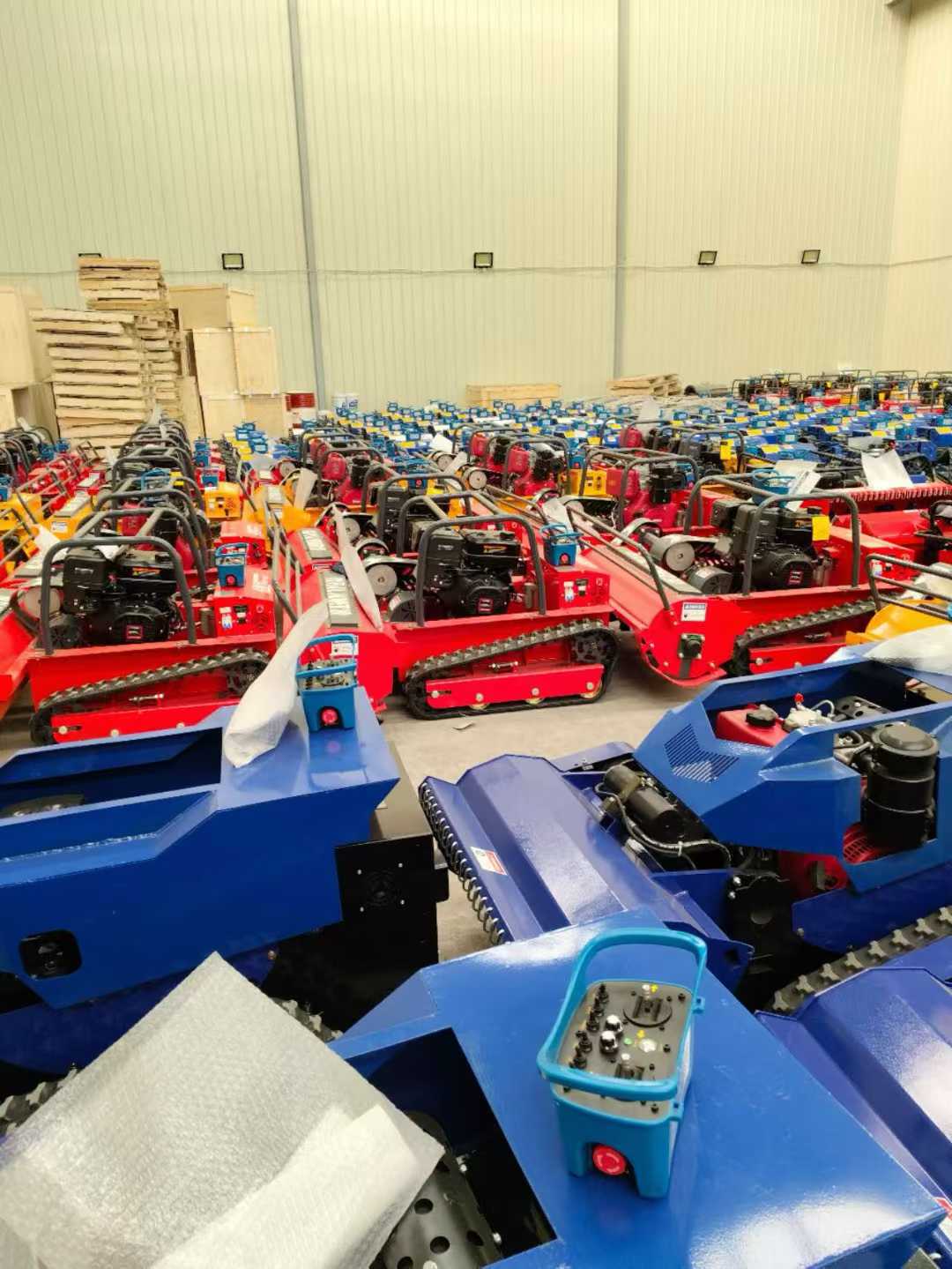
Introduction: Better Equipment for Roadside Maintenance Projects
Roadside maintenance involves more than keeping grass short. Contractors and public maintenance teams may need to manage vegetation along road shoulders, drainage channels, embankments, access roads, and roadside green spaces.
These locations can present a combination of challenges: narrow access, uneven ground, changing vegetation density, roadside traffic, limited working space, and frequent movement between job sites.
For professional maintenance companies, choosing suitable equipment is essential for balancing productivity, operating costs, site requirements, and worker safety.
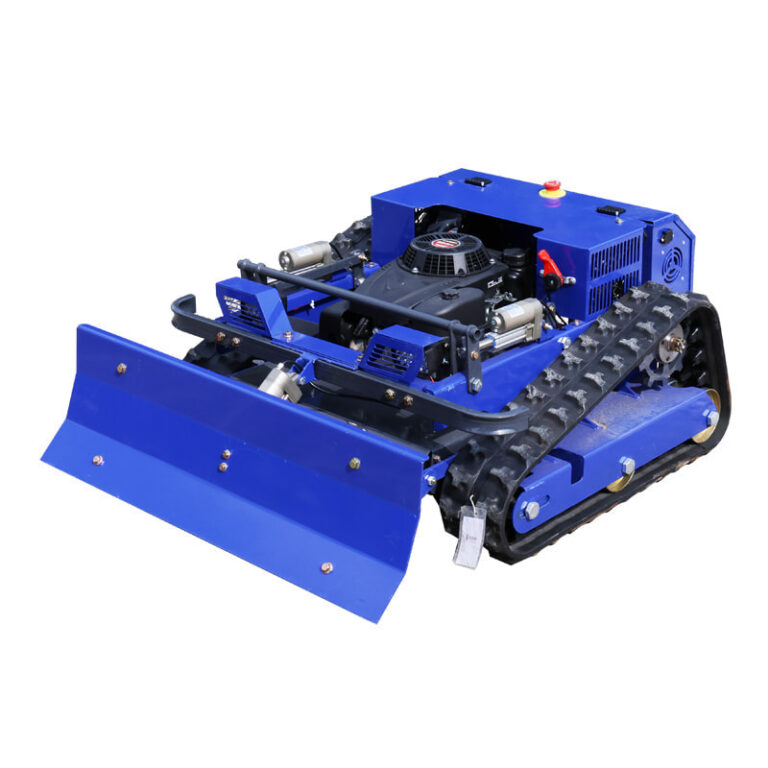
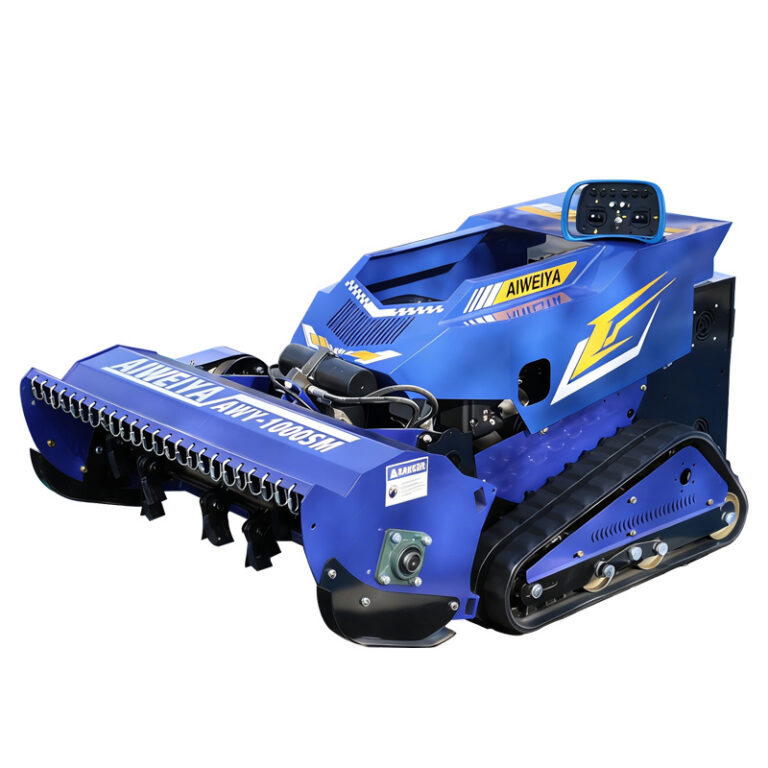
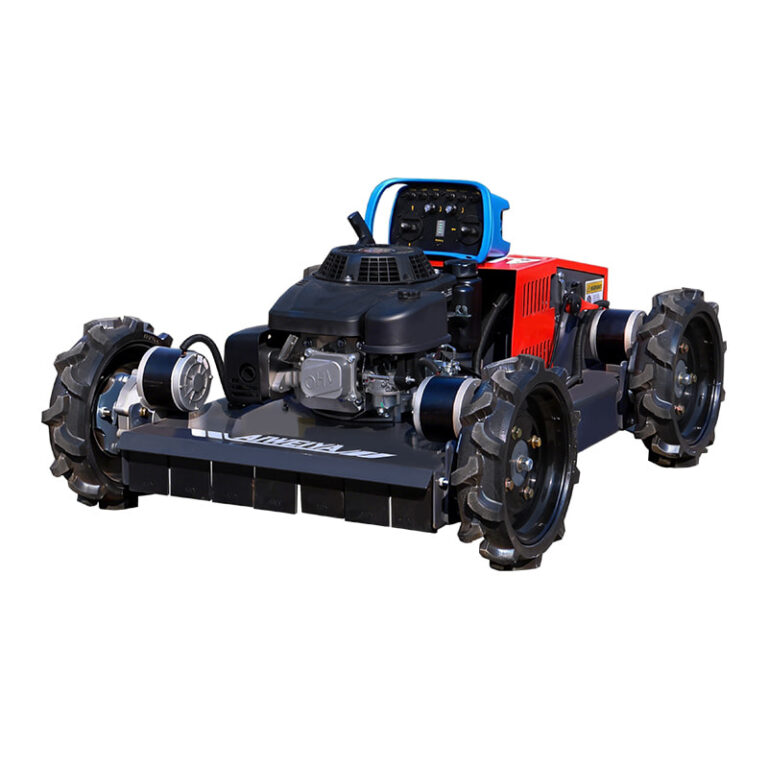
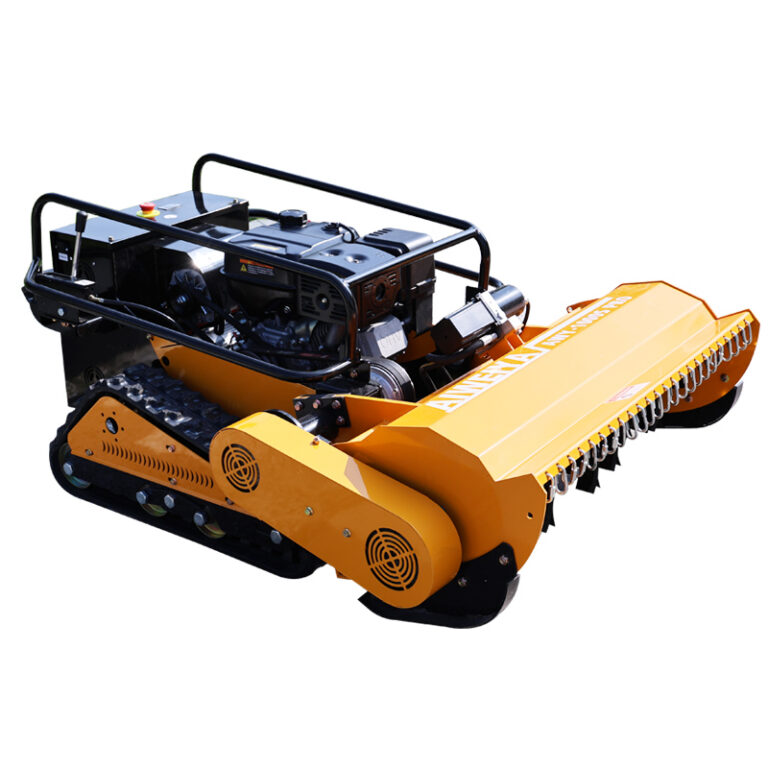
A remote control mower for roadside maintenance can be an option for suitable vegetation-management tasks. Remote operation allows the operator to control the mower from a separate position, while the machine’s cutting system and drive configuration determine which vegetation and terrain it can handle.
For B2B buyers, the key is to select equipment that matches the company’s actual maintenance contracts rather than relying on a single specification.
This guide explains how to evaluate remote control mowers for roadside maintenance, compare configurations, plan commercial operations, and assess suppliers.
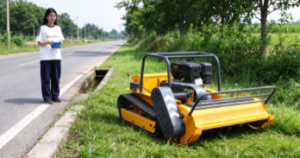
1. What Does Roadside Maintenance Involve?
Roadside maintenance includes a range of activities intended to keep road-adjacent land manageable, accessible, and in suitable condition.
Depending on the contract, the work may include:
- Cutting grass along road shoulders
- Managing weeds along access roads
- Maintaining roadside green belts
- Controlling vegetation near drainage channels
- Cutting grass on suitable road embankments
- Maintaining vegetation around roadside facilities
- Managing overgrown areas near industrial or private roads
Not every task requires the same type of mower.
A regularly maintained roadside verge may need a different cutting configuration from a neglected drainage bank covered with tall weeds. Similarly, a narrow strip beside a barrier may require a more compact machine than a large, open roadside area.
Before selecting equipment, contractors should divide their work into common application types and identify the most demanding conditions they expect to encounter.
This helps establish the appropriate machine size, cutting system, traction requirements, and maintenance plan.
2. Common Roadside Areas and Their Equipment Requirements
Road Shoulders and Grass Verges
Road shoulders often contain regularly maintained grass and weeds. Access, cutting width, visibility, and transport between sites may be important factors.
Drainage Ditches
Drainage areas may have uneven surfaces, damp soil, and changing vegetation density. Buyers should assess the actual ground profile and confirm that the mower is suitable for the intended terrain.
Road Embankments
Embankments introduce additional considerations involving slope, traction, stability, and operator positioning. The machine must remain within the manufacturer’s approved operating limits.
Access Roads and Industrial Routes
Private roads, factory access routes, and industrial driveways may have grass verges that need periodic maintenance. Compact dimensions and maneuverability can be particularly useful where access is restricted.
Large Roadside Green Belts
Wider green belts may allow more continuous mowing. In these areas, cutting width, working speed, and the ability to cover large areas can influence productivity.

3. Why Contractors Consider Remote Control Mowers
Remote control mowers offer a different way to perform certain roadside vegetation tasks.
Remote Operation
The operator controls the machine from a separate position rather than riding on it. This can provide flexibility when planning work in suitable areas, provided the operator maintains an appropriate view and follows the required safety procedures.
Access to Selected Difficult Areas
Some roadside locations contain uneven ground or restricted areas that are difficult to maintain with conventional equipment. A suitably configured remote mower may be useful where its dimensions, traction, and operating limits match the site.
Flexible Cutting Applications
Depending on the cutting system, a remote mower may be configured for regular grass maintenance or certain rougher vegetation-management tasks.
Fleet Versatility
Contractors serving several customers may benefit from equipment that can perform more than one suitable task. However, buyers should verify the machine’s actual capabilities instead of assuming that one mower can handle every roadside condition.
Remote operation does not remove the need for traffic management, site inspection, trained operators, or appropriate personal protective equipment.
4. Choosing the Right Cutting System
The cutting system should match the vegetation that appears most frequently in your contracts.
Standard Grass Cutting
For regularly maintained grass verges, select a machine designed for the required finish and grass conditions.
Flail Mowing
A flail mower may be appropriate for suitable combinations of grass, weeds, and rough vegetation. Its performance depends on rotor design, cutting tools, power, working speed, and vegetation density.
Heavier Vegetation
Where vegetation includes substantial woody material, thick branches, or stumps, a standard roadside mower may not be suitable. Contractors should identify the material to be cut and ask the manufacturer to confirm the equipment’s limits.
When comparing cutting systems, request the specifications for the exact configuration being quoted.
Related article:How to Choose a Remote Control Flail Mower
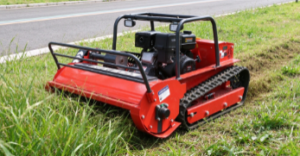
5. Crawler Tracks, Traction, and Roadside Ground Conditions
Roadside terrain can change over short distances. One section may be firm and level, while another may include loose soil, ruts, wet grass, or an uneven drainage profile.
Crawler tracks can provide a continuous contact area with the ground and may offer useful traction on certain surfaces. Actual performance depends on track design, machine weight, weight distribution, soil conditions, and terrain.
When evaluating a tracked remote control mower, check:
- Track design and dimensions
- Machine weight and ground clearance
- Traction characteristics
- Turning behavior
- Stability on the intended terrain
- Manufacturer-approved slope limits
Wet grass, loose soil, hidden holes, and lateral slopes can still create significant operating risks. A tracked machine should not be assumed to be suitable for every embankment or drainage ditch.
For projects involving slopes, consult the manufacturer’s operating instructions and confirm the machine’s limitations before work begins.
Related article:Remote Control Mower for Slope Mowing
6. Cutting Width and Access Along Roads
Cutting width influences how much vegetation can be covered in a single pass. However, roadside maintenance often involves narrow or irregular areas where the overall machine dimensions matter just as much.
A wider mower may be useful for broad, open verges. A compact mower may be more practical where the route contains narrow access points, roadside structures, trees, or barriers.
Before ordering, compare:
- Cutting width
- Overall machine width
- Overall length and height
- Machine weight
- Turning space
- Loading and transport requirements
Confirm the narrowest access point at the intended site. Do not assume that the cutting width is the same as the machine’s overall width.
For contractors managing multiple road sections, a machine that can be transported and deployed efficiently may be more practical than a larger model that struggles to reach some work areas.
Related article:Remote Control Mower Cutting Width Explained
7. Engine Power and Productivity
Roadside mowing workloads vary considerably. Regularly maintained grass generally presents a different cutting demand from tall, dense vegetation.
Engine power should therefore be evaluated alongside the cutting system, cutting width, travel speed, and expected vegetation density.
When comparing models, review:
- Rated engine output
- Cutting-system configuration
- Recommended operating speed
- Fuel capacity and operating requirements
- Cooling and maintenance needs
- Expected workload and duty cycle
Do not assume that a higher power rating automatically means higher productivity. The complete machine configuration and the working conditions determine actual results.
For a realistic comparison, ask suppliers to describe expected performance under conditions similar to your projects. Include vegetation type, approximate height, terrain, and the required cutting result.
8. Planning Roadside Work and Safety Procedures
Roadside maintenance may take place near moving vehicles, pedestrians, public access points, and infrastructure. Remote operation alone is not a traffic-safety solution.
Before work starts, the contractor should assess the site and follow the applicable work-zone requirements.
A practical planning process includes:
- Inspect the roadside area for hidden obstacles and ground hazards.
- Identify traffic exposure, public access, and pedestrian movement.
- Establish the required traffic control and work-zone arrangements.
- Confirm that the machine is suitable for the ground and slope.
- Select an operator position with a suitable view of the mower.
- Establish an exclusion zone around the machine and cutting area.
- Follow the manufacturer’s procedures for emergency stops and communication loss.
- Stop work when visibility, traction, or site conditions become unsafe.
Requirements vary by jurisdiction and road type. Contractors should follow the relevant local rules and project-specific safety plan.
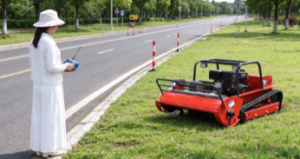
9. Building an Efficient Roadside Maintenance Workflow
For contractors responsible for several road sections, productivity depends on more than the mower’s maximum speed.
A consistent workflow can help reduce unnecessary travel, repeated inspections, and avoidable downtime.
Step 1: Survey the Route
Identify the areas requiring mowing, the vegetation conditions, the access points, and any site-specific hazards.
Step 2: Group Nearby Work Areas
Where contract requirements permit, organize nearby sites into a practical sequence to reduce transport time.
Step 3: Match the Machine to the Task
Use the appropriate cutting system and machine configuration for the vegetation and terrain.
Step 4: Prepare the Site
Complete the required work-zone setup, inspection, and operator briefing before starting.
Step 5: Monitor Performance
Observe cutting quality, traction, machine behavior, and any increase in engine load. Adjust the working method in accordance with the manufacturer’s guidance.
Step 6: Inspect and Maintain the Machine
After the job, complete the required checks, clean the machine safely, and record any maintenance issues.
For businesses with multiple crews, documenting these steps can help standardize operations and improve maintenance planning.
10. Maintenance and Spare Parts for Roadside Contractors
Roadside work can expose equipment to dust, grass, soil, moisture, and occasional debris. Regular inspection is important for businesses that depend on the mower for scheduled contracts.
Key maintenance areas include:
Cutting tools: Check for wear, damage, and secure attachment according to the manufacturer’s instructions.
Cutting deck: Remove accumulated material after shutdown and isolation, following the approved cleaning procedure.
Tracks and undercarriage: Inspect track condition, rollers, tension where applicable, and accumulated debris.
Engine and cooling system: Follow service intervals and keep cooling areas clean.
Remote control system: Check controller condition, batteries, controls, and emergency-stop functions.
Wear parts: Identify the parts that may require replacement during frequent commercial use.
Technical support: Confirm how to obtain parts, manuals, and troubleshooting assistance.
For fleet managers, planned servicing and spare-parts availability can help reduce the risk of delays when a contract has a fixed completion schedule.
Related article:Remote Control Mower Maintenance Guide for Commercial Users
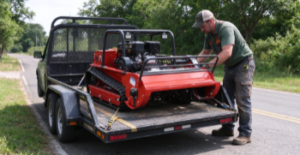
11. Transport Between Roadside Sites
Roadside contractors often work along routes containing several separate maintenance areas. Transport time can affect the amount of productive working time available each day.
Before choosing a machine, check:
- Machine dimensions and weight
- Trailer capacity and compatibility
- Loading and unloading requirements
- Secure tie-down arrangements
- Storage requirements
- Transport rules applicable to the vehicle and equipment
For businesses with compact work vehicles or restricted storage space, overall machine dimensions may be a decisive factor.
When comparing quotations, request the complete dimensions and weight of the machine in its quoted configuration rather than relying on general product descriptions.
12. Buying Considerations for Contractors, Dealers, and Municipalities
Different B2B buyers evaluate roadside mowing equipment according to different business needs.
Road Maintenance Contractors
Contractors may prioritize machine reliability, suitable terrain capability, efficient deployment, serviceability, and predictable operating costs.
Landscaping Companies
Landscaping businesses may need a versatile machine for roadside grass, commercial properties, and other compatible vegetation-management tasks.
Equipment Dealers and Distributors
Dealers should assess product-market fit, wholesale conditions, documentation, spare-parts availability, warranty support, and the manufacturer’s ability to support repeat orders.
Rental Companies
Rental businesses should consider ease of operation, operator training, inspection procedures, wear-part costs, and the availability of replacement components.
Municipal Buyers
Public-sector buyers may need detailed technical specifications, procurement documentation, service information, and evidence that the proposed machine is appropriate for the intended work.
Before making a purchase, each buyer should define the required applications and compare complete machine configurations.
13. How to Compare Supplier Quotations
A useful quotation should identify the machine configuration clearly enough for an objective comparison.
| Item | What to verify |
|---|---|
| Engine | Brand, model, rated output |
| Cutting system | Flail or other configuration, cutting tools |
| Cutting width | Actual working width |
| Machine dimensions | Overall width, length, height |
| Machine weight | Transport and loading requirements |
| Drive system | Crawler tracks or wheels |
| Remote control | Functions, operating range, safety features |
| Maintenance | Service intervals and wear parts |
| Spare parts | Availability and supply arrangements |
| Warranty | Coverage, exclusions, and claims process |
| Customization | OEM, labeling, packaging, and MOQ |
| Logistics | Packaging, shipping, and delivery arrangements |
For commercial buyers, the lowest initial price is not necessarily the lowest-cost solution over the machine’s working life.
Consider the expected maintenance costs, parts supply, transport, downtime, and whether the machine can handle the work that generates your revenue.
14. Questions to Ask Before Ordering
Before placing an order, prepare a clear description of your typical roadside projects.
Ask the supplier:
- Which machine configuration is recommended for the vegetation?
- What terrain and slope limits apply?
- What are the cutting width and overall machine dimensions?
- What safety and emergency-stop functions are included?
- What routine maintenance is required?
- Which spare parts should be stocked?
- What warranty and technical support are provided?
- Can the machine be configured for OEM or private-label requirements?
- What are the MOQ, production lead time, and shipping arrangements?
If possible, provide photographs of the work area and details about the vegetation, ground conditions, and access limitations. These details can help the supplier assess whether the proposed machine is appropriate.
15. Why Consider NUOYU for Roadside Maintenance Equipment?
NUOYU offers remote control mower products and vegetation-management solutions for professional and commercial applications.
For roadside maintenance projects, buyers can discuss the intended workload, ground conditions, vegetation, required cutting width, and operating frequency before choosing a configuration.
B2B customers may also need information about wholesale cooperation, spare parts, technical documentation, and OEM/ODM requirements.
When contacting NUOYU, provide:
- Your main roadside maintenance applications
- Typical vegetation conditions
- Whether the terrain includes slopes or drainage areas
- Access and transport constraints
- Expected purchase quantity
- Destination market
- Any customization requirements
This information helps clarify the technical and commercial requirements before a quotation is prepared.

Explore more:
- NUOYU Remote Control Mower Products
- NUOYU Roadside Vegetation Management Solutions
- Contact NUOYU for a Commercial Quotation
Frequently Asked Questions
1. What is a remote control mower used for in roadside maintenance?
It can be used for suitable grass and vegetation-management tasks along road verges, access roads, drainage areas, and other roadside locations. Suitability depends on the machine configuration and site conditions.
2. Are tracked remote control mowers suitable for roadside slopes?
Some tracked models are designed for certain sloped applications. Buyers must verify the manufacturer’s slope limits and assess soil, moisture, terrain, and other site conditions before use.
3. Is a flail mower suitable for roadside grass and weeds?
A suitably configured flail mower can handle many grass and weed applications. Vegetation density, stem thickness, rotor design, engine power, and working speed all affect performance.
4. How do I choose the right cutting width?
Consider the size of the work area, the narrowest access point, nearby obstacles, transport constraints, and the vegetation being cut. A wider deck is not always more productive on restricted sites.
5. What should contractors consider when buying roadside mowing equipment?
Contractors should evaluate terrain capability, cutting performance, safety functions, maintenance, transport, spare parts, warranty support, and the total cost of ownership.
6. Can one remote control mower serve multiple roadside contracts?
Potentially, if the different applications fall within the machine’s capabilities. Contractors should compare the vegetation, terrain, access, and cutting requirements of their contracts before choosing a versatile configuration.
7. What information is needed for a supplier quotation?
Provide the application, vegetation type, ground conditions, slope requirements, desired cutting width, quantity, destination market, and any OEM or private-label requirements.
8. Can equipment dealers purchase remote control mowers wholesale?
Dealers can contact the manufacturer to discuss wholesale pricing, minimum order quantities, product configurations, spare parts, warranty conditions, and customization options.
Conclusion
Roadside maintenance requires equipment that can handle the specific combination of vegetation, access, terrain, and operating conditions found along each route.
A remote control mower for roadside maintenance can be a useful option for contractors, municipalities, landscaping companies, and equipment distributors when the machine is correctly matched to the application.
The most important purchasing factors include cutting-system suitability, traction, machine dimensions, safe operation, maintenance requirements, transportation, and supplier support.
For B2B buyers, defining the real working conditions and comparing complete configurations is more valuable than selecting equipment based on a single specification.
Need a remote control mower for your roadside maintenance business? Contact NUOYU to discuss your applications, machine requirements, and commercial purchasing options.