As urban areas expand and agricultural operations grow larger, municipalities, farms, highway authorities, and property managers face an ongoing challenge: how to control vegetation efficiently across large, difficult-to-access areas.
Traditional manual mowing and brush cutting can be costly, labor-intensive, and dangerous—especially on steep slopes and alongside busy roads. As labor shortages continue to affect outdoor maintenance industries, remote-control (RC) mowers are emerging as a practical alternative for large-scale vegetation management.
Here are three key reasons why more organizations are turning to RC mowing technology.
Pain Point 1: Rising Labor Costs and Persistent Labor Shortages
Professional landscaping and vegetation-management work requires significant manpower, particularly when maintaining large municipal green spaces, roadside embankments, farms, and other extensive properties.
At the same time, finding and retaining workers willing to perform physically demanding outdoor work can be increasingly difficult. For large sites, relying entirely on manual labor can make routine vegetation management both expensive and difficult to scale.
The Solution: One Operator Can Cover More Ground
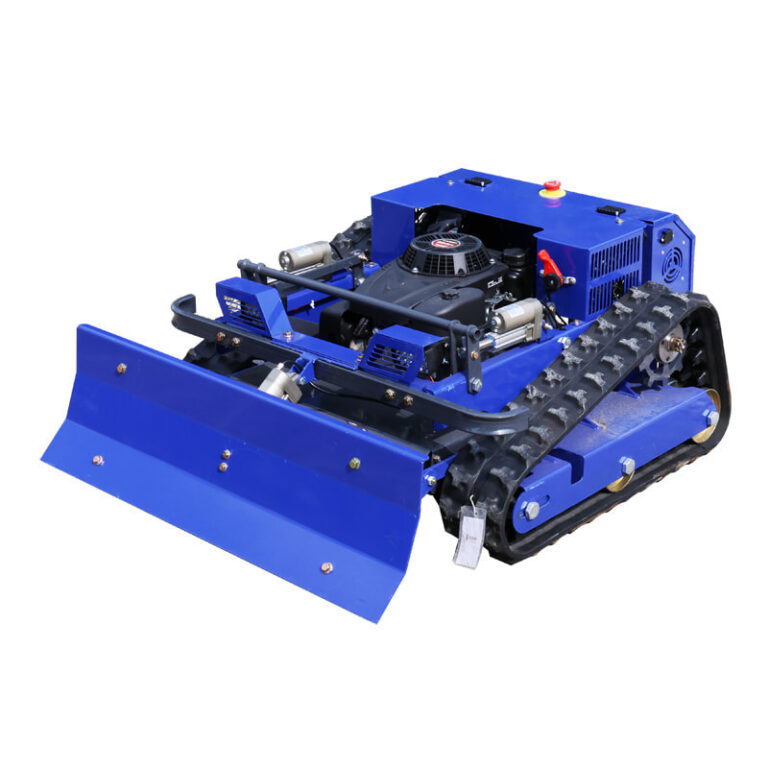
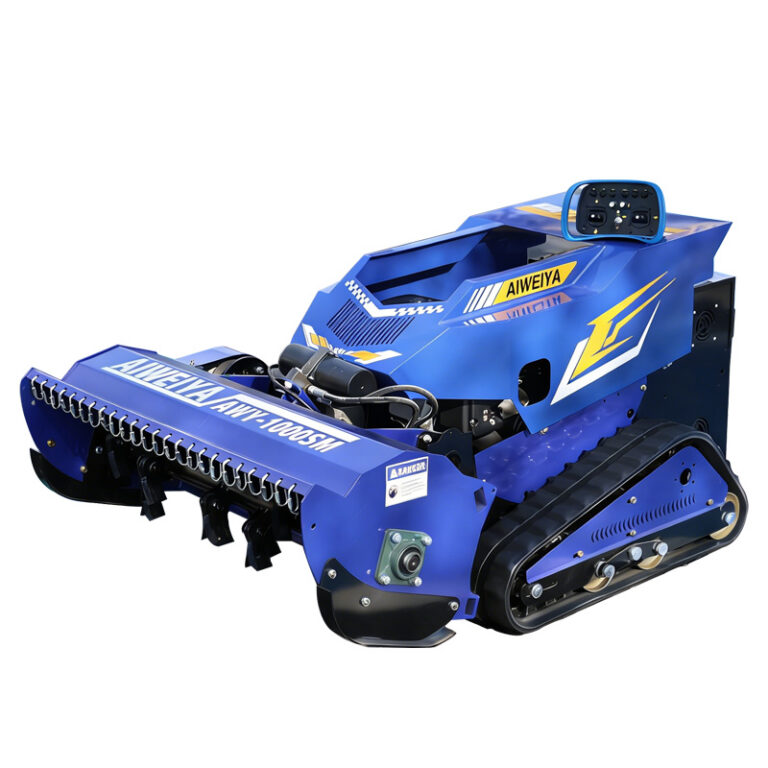
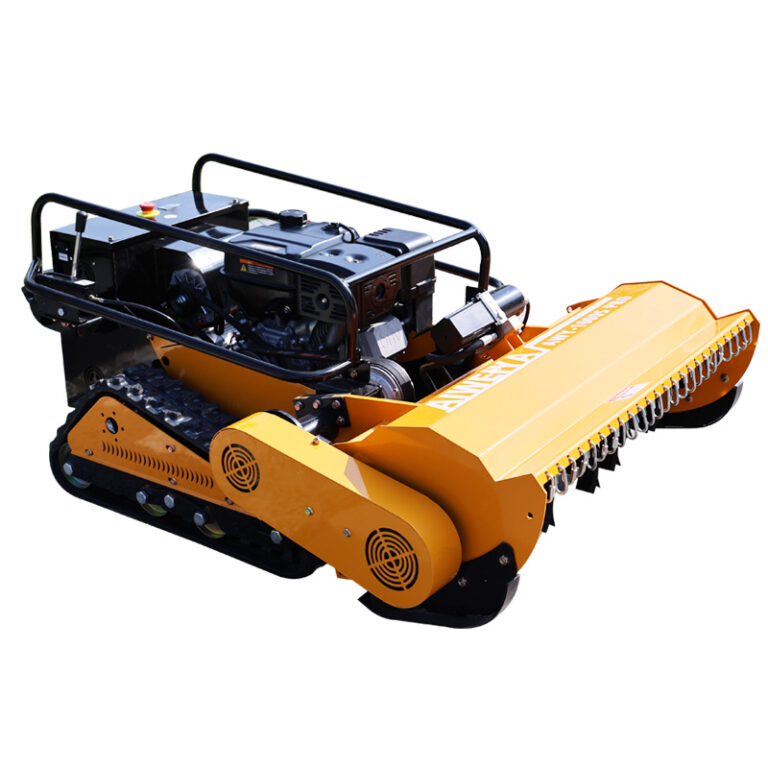
A high-performance tracked RC mower can significantly increase productivity by allowing one operator to control the machine remotely while remaining outside the immediate mowing zone.
Depending on the mower’s cutting width, terrain, vegetation density, and operating conditions, a single machine can cover large areas far more efficiently than handheld equipment. This can reduce the number of workers required for certain mowing tasks and help organizations control long-term labor costs.
Rather than replacing every worker, RC mowers can be viewed as force-multiplying equipment: one trained operator can manage a machine that performs the most physically demanding part of the job.
Pain Point 2: Dangerous Work on Highways and Steep Slopes
Some of the most challenging vegetation-maintenance jobs involve steep embankments, drainage areas, rough terrain, and roadsides with passing traffic.
Using handheld brush cutters in these environments can expose workers to risks such as slips, falls, flying debris, fatigue, and proximity to vehicles. Moving heavy equipment across uneven or steep terrain can make these jobs even more demanding.
The Solution: Put Distance Between the Operator and the Hazard
RC mowers allow operators to control the machine from a safer position rather than standing directly beside or behind the cutting equipment.
On suitable slopes, a tracked RC mower can work remotely while the operator maintains a greater physical distance from the cutting deck and difficult terrain. This can reduce direct exposure to certain hazards and make challenging mowing operations easier to manage.
However, remote control does not mean zero risk. Operators still need to maintain a safe distance, follow traffic-control procedures, keep bystanders away from the operating area, and follow the machine manufacturer’s maximum slope and operating requirements.
Pain Point 3: Large, Complex Areas Are Difficult to Maintain Efficiently
Large farms, golf courses, utility corridors, parks, and municipal properties often combine open spaces with slopes, obstacles, narrow passages, trees, and uneven ground.
Walk-behind equipment can require significant time and physical effort over large areas. Conventional tractors and ride-on mowers may provide excellent productivity in open fields but can be less suitable for steep slopes, confined spaces, or areas where maneuverability is critical.
The Solution: A Combination of Mobility and Precision
Tracked RC mowers offer a useful middle ground between handheld equipment and large agricultural machinery.
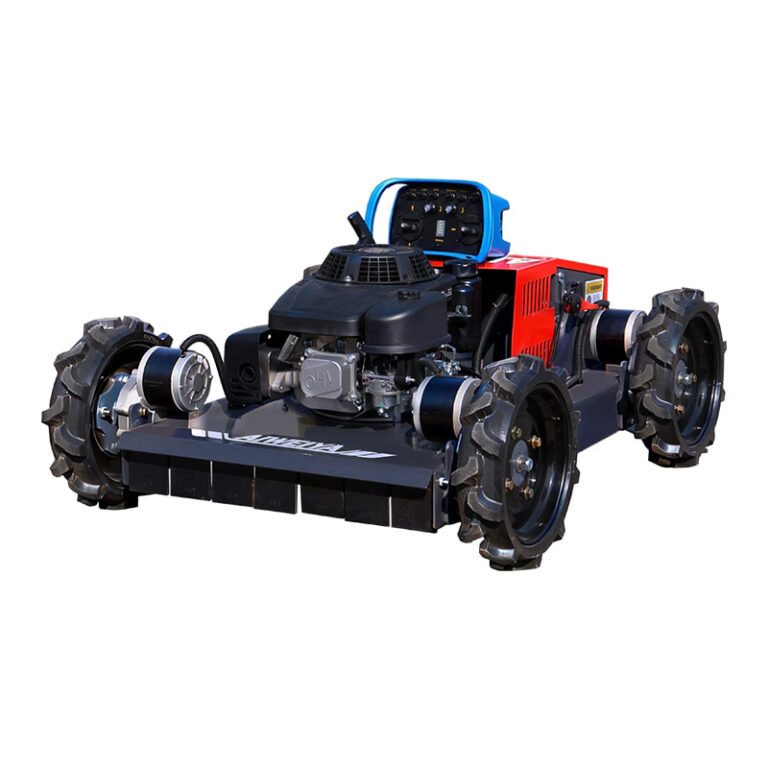
Their compact design and tracked undercarriage can provide traction on uneven terrain, while remote operation allows the operator to control the mower from a more suitable location. Depending on the model and attachment configuration, RC machines can handle everything from routine grass maintenance to dense vegetation and rough-area clearing.
Adjustable cutting heights also allow operators to adapt the machine to different vegetation-management requirements rather than using the same setting for every job.
More Than a Mower: A Productivity Tool
The growing appeal of RC mowers isn’t simply about replacing manual labor with machines. It’s about making vegetation management safer, more scalable, and more efficient.
For municipalities and large property owners, the potential benefits include:
- Reduced dependence on physically demanding manual mowing
- Greater productivity with fewer operators
- Improved access to steep or difficult terrain
- Reduced operator exposure to certain mowing hazards
- More consistent vegetation management across large areas
- Greater flexibility for maintaining complex landscapes
Of course, the right machine depends on the application. Terrain, slope angle, vegetation type, cutting width, battery or fuel capacity, transport requirements, and operator visibility all need to be considered before choosing an RC mower.
Conclusion
From municipal green spaces and highway embankments to large farms and commercial properties, remote-control mowers are becoming an increasingly practical solution for large-scale vegetation management.
They don’t simply replace traditional equipment—they can change the way difficult mowing jobs are planned and performed. By combining remote operation, tracked mobility, and high-capacity cutting systems, RC mowers can help organizations tackle labor shortages, improve productivity, and reduce operator exposure to challenging working environments.
If you’re managing a large property or dealing with difficult mowing conditions, it may be time to consider whether an RC mower can improve your operation.
Looking for the right RC mower for your application? Contact us to discuss your terrain, vegetation, working area, and productivity requirements, and we’ll help you find a suitable solution.