Introduction: Why Orchard Weed Control Is Essential
Maintaining a productive orchard requires more than planting healthy trees and providing proper irrigation. One of the biggest challenges growers face every season is controlling unwanted grass and weeds.
Weeds compete directly with fruit trees for essential resources such as water, nutrients, sunlight, and growing space. When grass and weeds become established around trees, they can slow tree development, reduce fruit quality, increase pest pressure, and make orchard management more difficult.
Effective orchard weed control is not simply about keeping the ground clean. A well-designed weed management program helps improve tree health, reduce labor requirements, protect irrigation systems, and create a more efficient growing environment.
Today, growers use a combination of mechanical mowing, herbicide applications, mulching, cover crops, and advanced equipment such as remote control lawn mowers to maintain orchards more effectively.
This guide explains the most practical methods for controlling grass and weeds in orchards and how modern mowing technology is changing orchard maintenance.
Why Weed Control Matters in Fruit Orchards
Fruit trees and weeds compete for the same limited resources. This competition is especially serious in young orchards where trees are still developing strong root systems.
Grass and weeds growing near tree trunks can absorb significant amounts of moisture and fertilizer before tree roots can fully utilize them. As a result, young trees may experience slower growth, weaker root development, and reduced productivity.
In addition to resource competition, excessive weed growth creates several other problems:
1. Increased Pest and Disease Risk
Dense vegetation around tree bases creates a humid environment where fungal diseases can develop more easily.
Weeds can also provide hiding places and alternative food sources for pests such as:
- Rodents
- Snails
- Insects
- Field pests
These pests may eventually move from the ground vegetation into the tree canopy and damage fruit production.
2. Reduced Orchard Efficiency
Overgrown weeds make orchard operations more difficult.
They can interfere with:
- Irrigation inspection
- Fertilizer application
- Fruit harvesting
- Equipment movement
- Orchard monitoring
A consistent weed control program allows growers to manage orchards more efficiently throughout the growing season.
Common Types of Weeds Found in Orchards
Understanding the types of weeds present in your orchard is the first step toward choosing the right control method.
Annual Grasses
Annual grasses complete their life cycle within one growing season. Common examples include:
- Crabgrass
- Foxtail
- Barnyardgrass
These weeds grow quickly during warm seasons and produce large amounts of seeds. Their dense root systems compete with fruit trees for surface moisture and nutrients.
Because they spread rapidly, annual grasses require regular mowing or early-season control methods.
Perennial Grasses
Perennial grasses are among the most difficult weeds to manage.
Examples include:
- Bermudagrass
- Johnsongrass
- Quackgrass
Unlike annual weeds, perennial grasses survive year after year through underground roots, rhizomes, and plant runners.
Even small pieces of remaining roots can regenerate new plants, making consistent management necessary.
Broadleaf Weeds
Broadleaf weeds include:
- Dandelions
- Thistles
- Pigweed
- Lambsquarters
- Field bindweed
Many broadleaf weeds develop deep root systems that allow them to access moisture from deeper soil layers.
Some climbing species can wrap around young trees and interfere with healthy growth.
Sedges
Sedges, especially nutsedge varieties, are common in orchards with frequent irrigation.
Their underground tubers allow them to survive unfavorable conditions and return after removal.
Because of their aggressive growth habits, sedges often require a combination of mechanical and chemical control methods.
Mechanical Weed Control Methods for Orchards
Mechanical weed management remains one of the most widely used approaches in orchard production.
Unlike chemical methods, mechanical control physically removes vegetation and can be integrated into organic farming systems.
Traditional Orchard Mowing
Regular mowing between tree rows helps:
- Prevent weeds from producing seeds
- Reduce vegetation height
- Improve orchard accessibility
- Maintain cleaner growing conditions
Common orchard mowing equipment includes:
- Tractor-mounted rotary mowers
- Flail mowers
- Brush cutters
However, traditional machines have limitations.
Large tractors may struggle in narrow orchard spaces, uneven terrain, or areas close to tree trunks. Operators must also be careful to avoid damaging trees, irrigation pipes, and low branches.
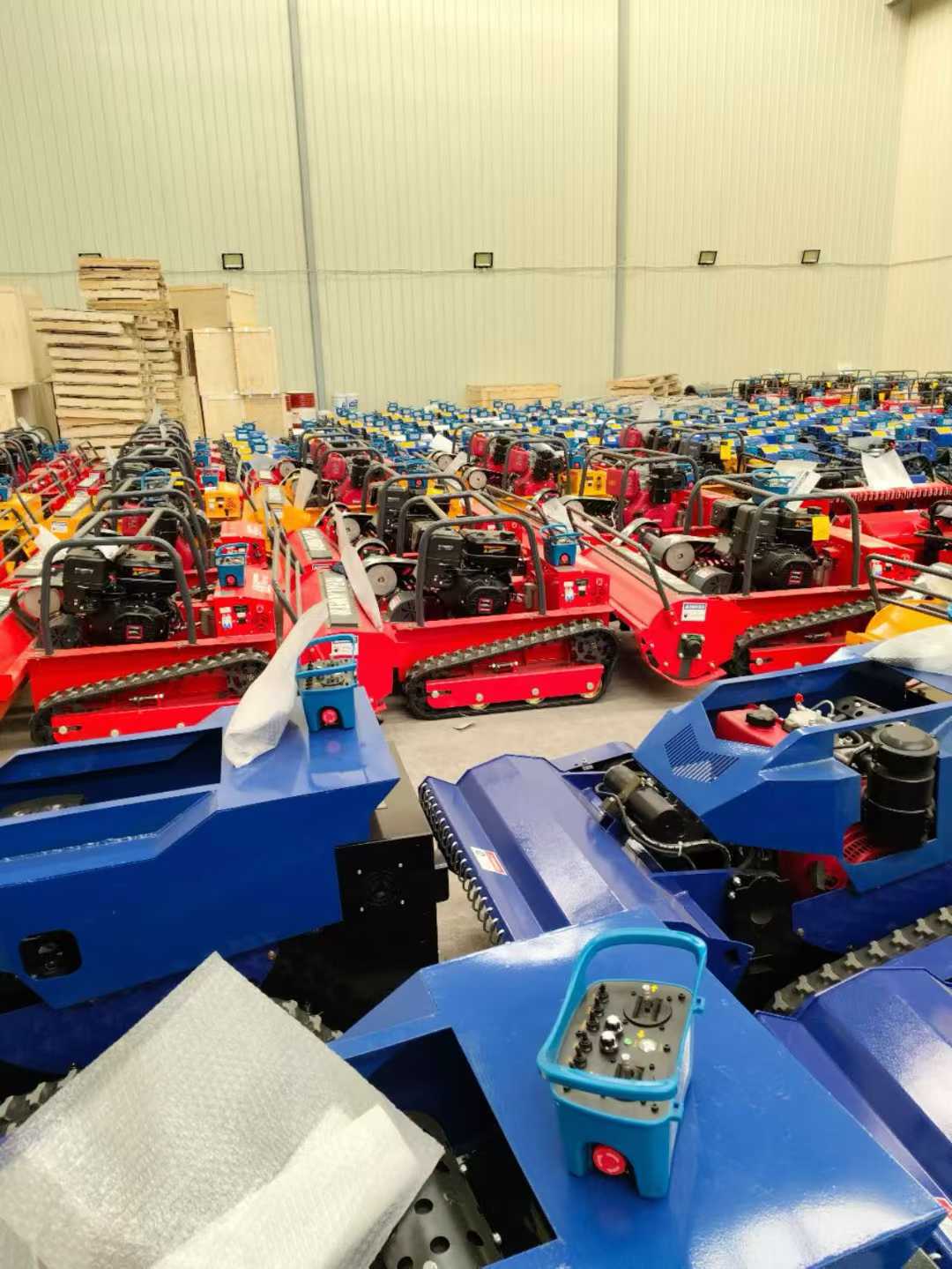
Remote Control Lawn Mowers: A Smarter Solution for Orchard Weed Control
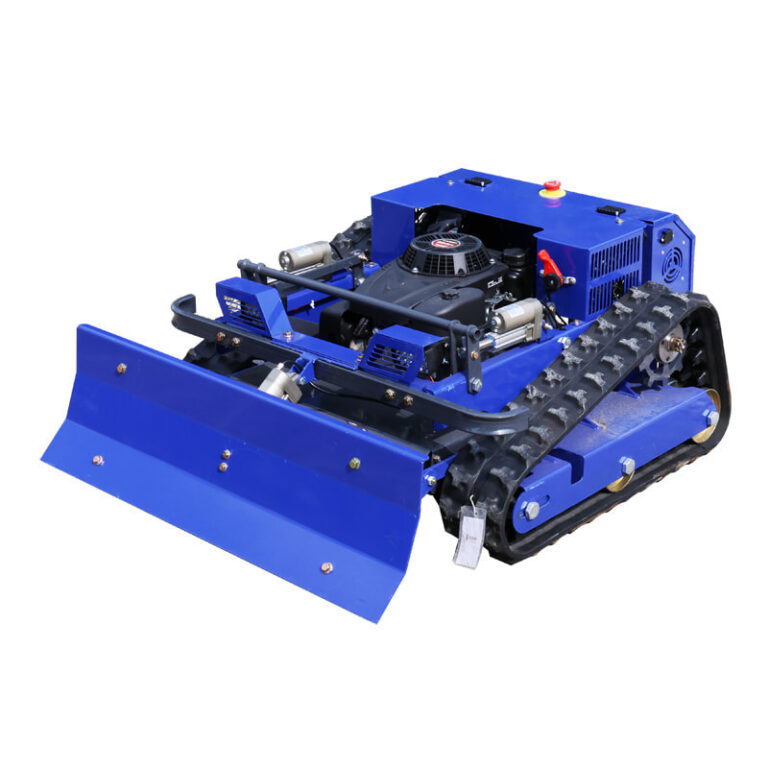
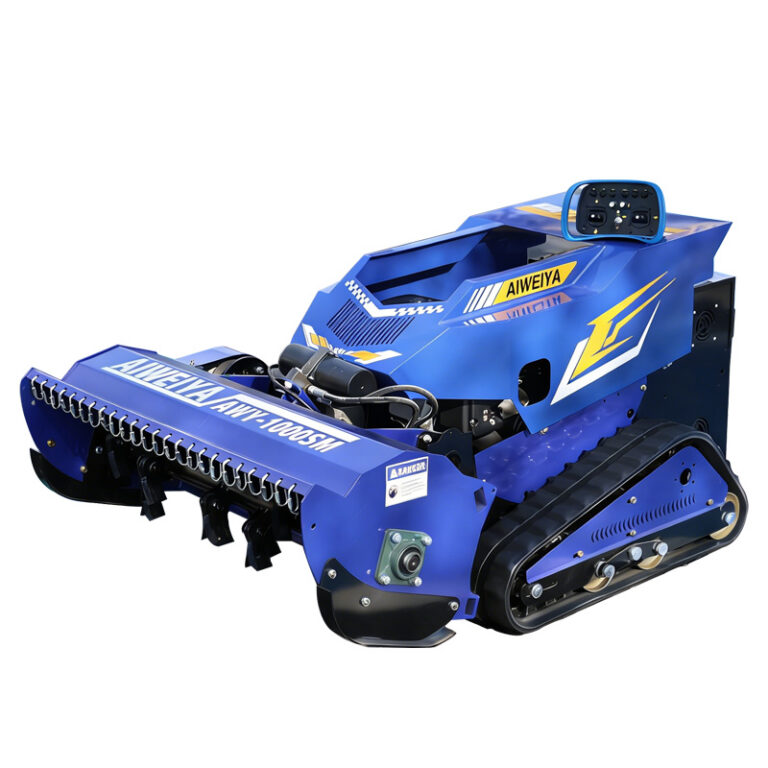
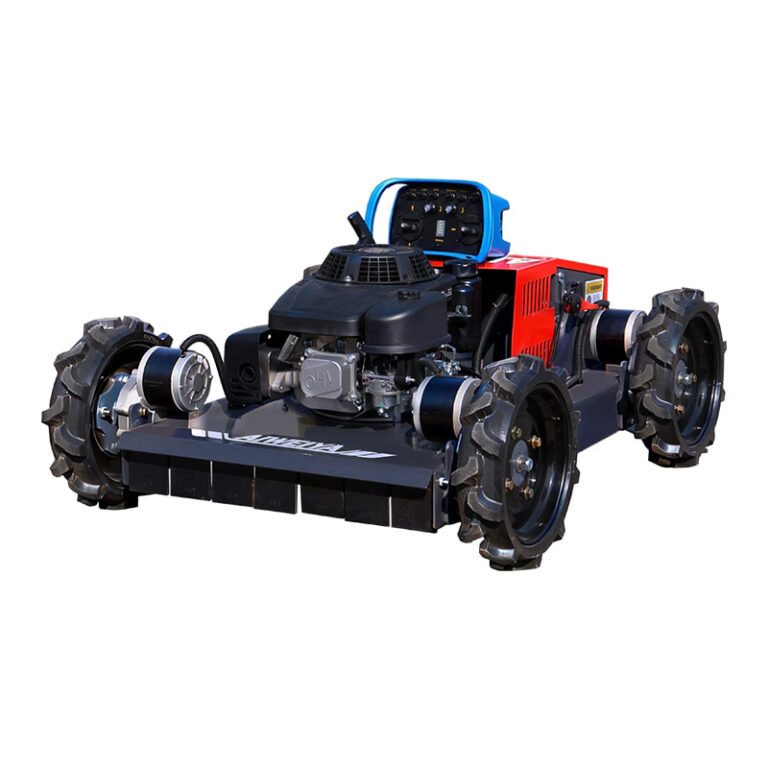
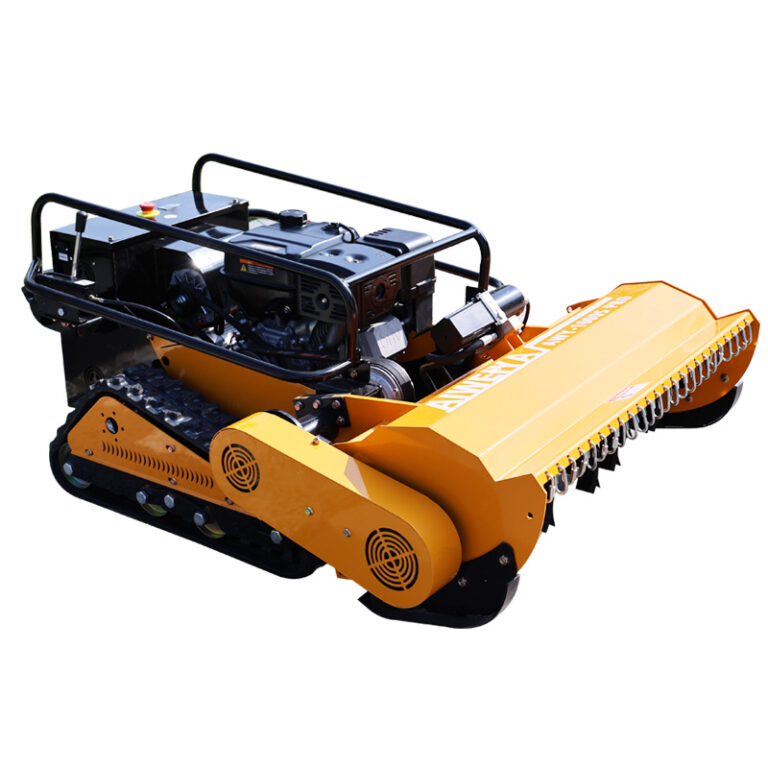
Modern growers are increasingly turning to remote control lawn mowers to solve the challenges of traditional orchard mowing.
A remote controlled mower uses tracked movement and wireless operation, allowing operators to maintain difficult areas safely and efficiently.
Advantages of RC Mowers in Orchards
1. Easy Access to Narrow Orchard Areas
Many orchards contain tight spaces between trees where traditional tractors cannot operate effectively.
Compact RC mowers can move through these areas while maintaining excellent cutting performance.
2. Protect Trees and Root Systems
Heavy agricultural equipment can create soil compaction and damage sensitive root zones.
Remote control mowers usually feature low ground pressure tracked systems, helping reduce soil disturbance while maintaining stable operation.
3. Safer Operation on Slopes
Many orchards are located on hillsides or uneven terrain where traditional mowing equipment can become dangerous.
A slope-capable remote controlled mower allows operators to control the machine from a safe distance without riding on unstable areas.
4. Reduce Labor Requirements
Manual weed trimming around trees is time-consuming and physically demanding.
RC mowers reduce the need for workers to operate handheld equipment for long periods, improving productivity and reducing labor pressure.
5. Precise Cutting Around Tree Rows
The area directly around tree trunks is one of the most important zones for weed management.
Remote controlled mowers allow operators to cut vegetation close to trees while reducing the risk of accidental bark damage.
For commercial orchards, vineyards, and agricultural properties, this makes RC mower technology an increasingly valuable investment.
Chemical Weed Control Methods
Herbicides remain an important tool for many orchard operations. However, proper selection and application are essential to protect crops and surrounding environments.
Pre-Emergent Herbicides
Pre-emergent herbicides prevent weed seeds from germinating.
They are usually applied before weed growth begins and are effective against many annual grasses and small-seeded broadleaf weeds.
Timing is critical because these products work best when applied before weed emergence.
Post-Emergent Herbicides
Post-emergent herbicides target weeds that are already growing.
Different products are designed for different weed categories:
- Non-selective herbicides control many grass and broadleaf species
- Selective herbicides target specific weed groups
- Contact herbicides damage plant tissue directly
Growers must carefully follow application guidelines to avoid crop damage.
Mulching and Organic Weed Suppression
For growers looking for chemical-free solutions, mulching provides an effective method of reducing weed growth.
Organic Mulch
Common organic mulch materials include:
- Wood chips
- Bark
- Straw
- Compost
Mulch blocks sunlight from reaching weed seeds while improving soil moisture retention and organic matter.
For best results:
- Apply a sufficient mulch layer
- Keep mulch away from direct contact with tree trunks
- Maintain proper moisture conditions
Weed Mats and Landscape Fabric
Synthetic weed barriers can provide long-term weed suppression in tree rows.
They are commonly made from:
- Woven polypropylene
- Geotextile materials
While effective, growers should monitor them regularly to ensure proper water movement and durability.
Cover Crops and Living Mulches
Some orchard managers choose to manage vegetation rather than eliminate it completely.
Low-growing cover crops can:
- Reduce weed invasion
- Improve soil structure
- Support beneficial insects
- Reduce erosion
Common cover crop options include:
- White clover
- Creeping fescue
- Subterranean clover
The key is selecting plants that suppress weeds without competing heavily with fruit trees.
Integrated Orchard Weed Management Strategy
The most successful orchard weed programs usually combine multiple approaches.
A practical annual strategy may include:
1. Start the Season With Clean Ground
Remove existing weeds before major spring growth begins.
Methods may include:
- Early mowing
- Mechanical removal
- Targeted herbicide applications
2. Maintain a Weed-Free Tree Zone
The area around each tree should receive special attention.
Keeping the tree-row strip clean helps:
- Reduce competition
- Protect young trees
- Improve irrigation efficiency
3. Maintain Row Middles Regularly
Regular mowing between orchard rows prevents weeds from producing seeds and keeps vegetation manageable.
4. Monitor Weed Growth
Inspect orchards regularly and identify new weed species early.
Early action is usually easier and less expensive than controlling mature infestations.
5. Protect Irrigation Systems
Grass and weeds around irrigation equipment can interfere with water distribution.
Keep areas around:
- Drip emitters
- Sprinklers
- Water lines
properly maintained.
How to Choose the Right Orchard Mowing Equipment
Choosing suitable orchard mowing equipment depends on several factors:
Orchard Size
Large commercial orchards may require powerful machines with wide cutting capacity.
Smaller farms may benefit from compact remote-controlled solutions.
Terrain Conditions
For slopes and uneven land, choose equipment with:
- Strong traction
- Stable tracked movement
- Remote operation capability
Tree Spacing
Narrow planting layouts require smaller and more flexible mowing equipment.
Labor Availability
If labor costs are increasing, automated and remote-controlled mowing solutions can significantly improve efficiency.
Conclusion: The Future of Orchard Weed Control
Effective weed management is essential for maintaining healthy trees, improving fruit quality, and maximizing orchard productivity.
Traditional methods such as mowing, herbicides, and mulching remain valuable, but modern technology is providing growers with safer and more efficient alternatives.
A remote control lawn mower offers significant advantages for orchard applications by combining powerful cutting performance, precise operation, reduced soil impact, and improved worker safety.
For growers managing orchards, vineyards, slopes, and agricultural land, investing in advanced mowing equipment can reduce maintenance challenges and create a more sustainable approach to vegetation management.
A successful orchard weed control program is not based on one single method. The best results come from combining proper planning, regular maintenance, and the right equipment for your specific environment.