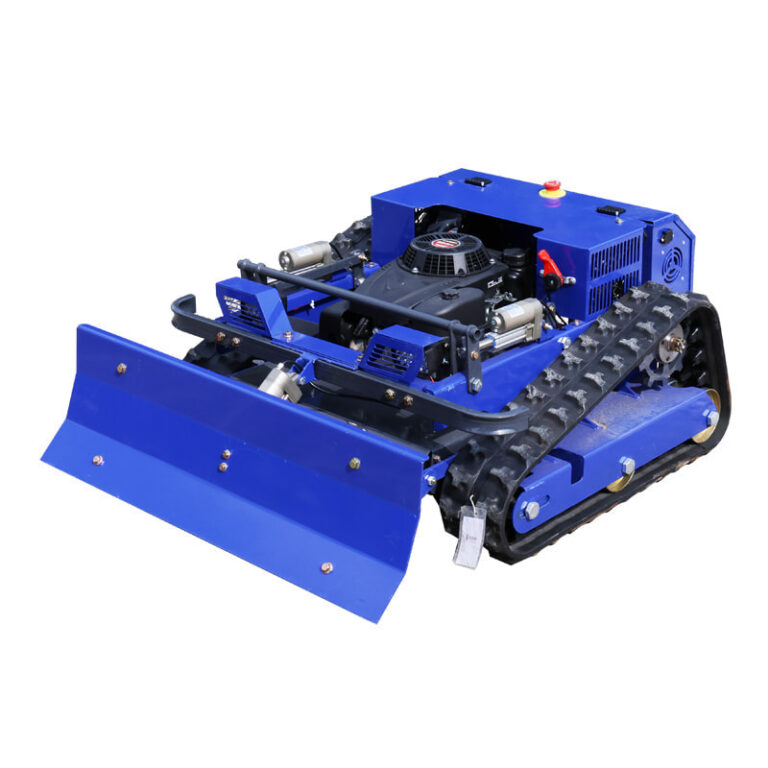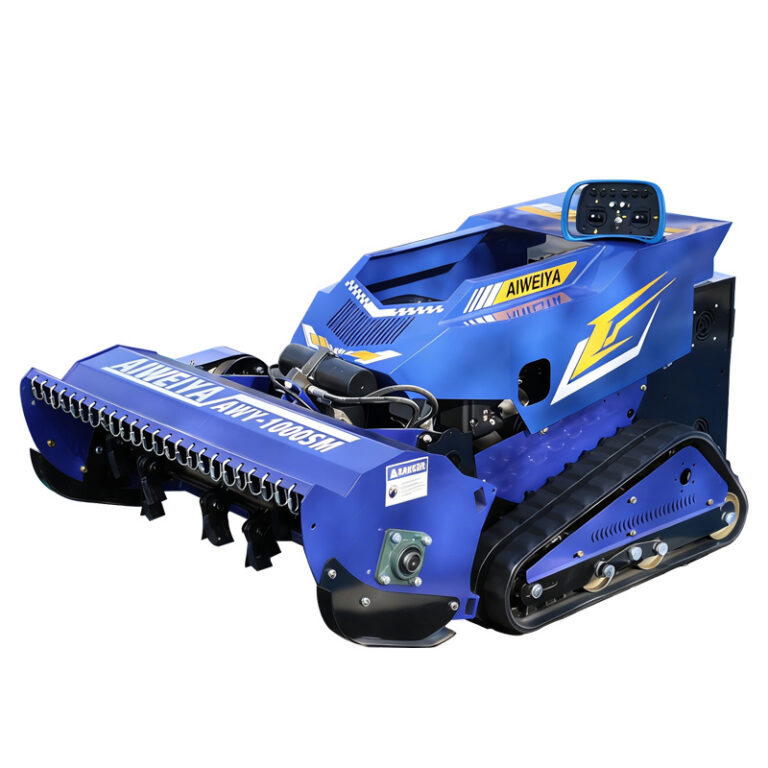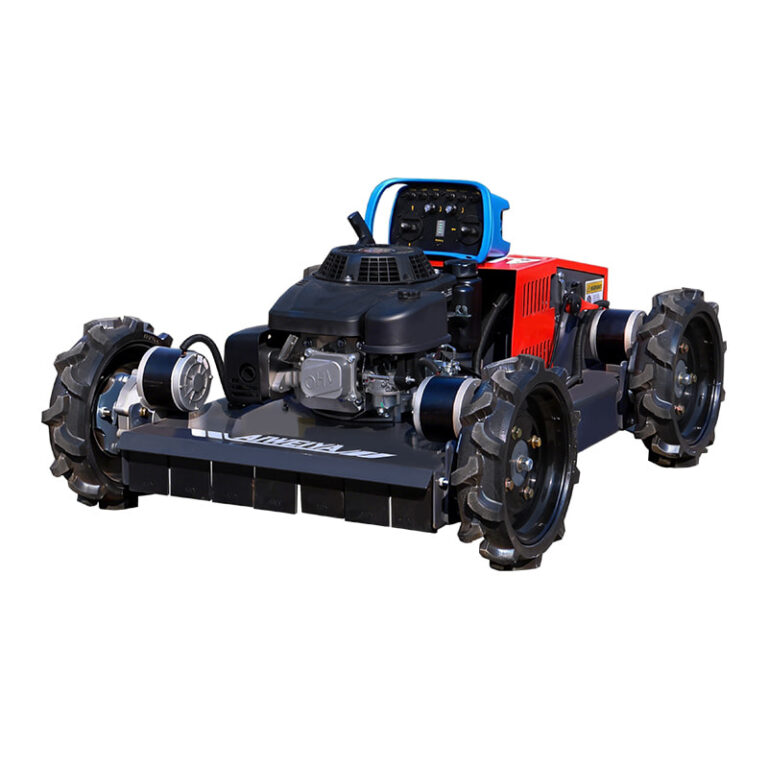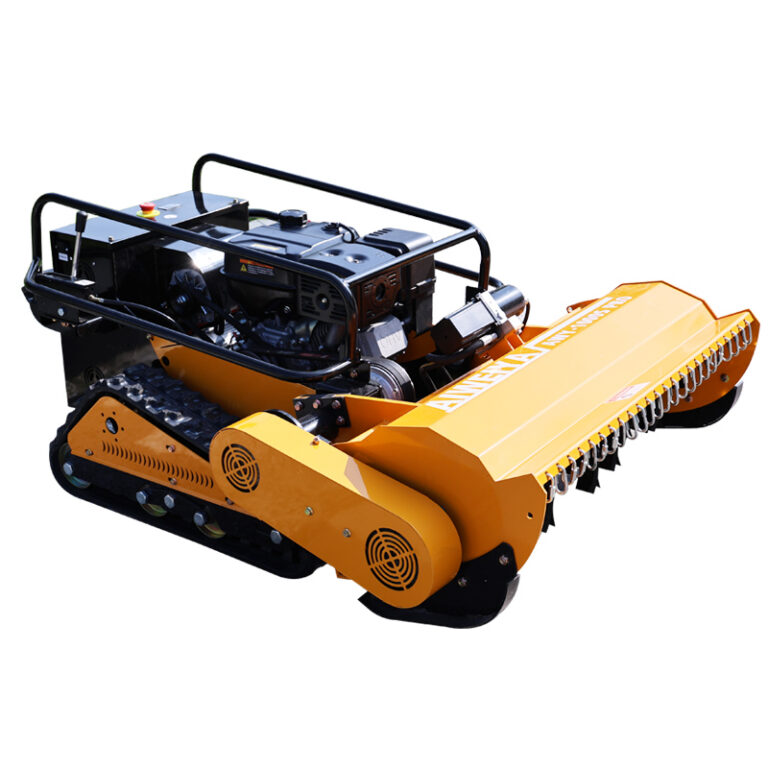
Managing vegetation on farms and orchards can require significantly more than simply cutting grass.
Agricultural properties often contain uneven ground, slopes, tall grass, weeds, brush, fallen branches, narrow working areas, and obstacles around trees or agricultural infrastructure. Regular vegetation control is important for maintaining access, improving property appearance, and keeping working areas manageable.
For these applications, a remote control mower for farms and orchards can provide a practical alternative to conventional mowing equipment.
Instead of requiring the operator to sit directly on the machine, a remote controlled mower allows the operator to control the equipment from a suitable position.
This can be especially useful when mowing:
- Orchard floor vegetation
- Farm field edges
- Sloped agricultural land
- Areas between tree rows
- Tall grass
- Weeds and brush
- Overgrown field boundaries
- Difficult-to-access areas
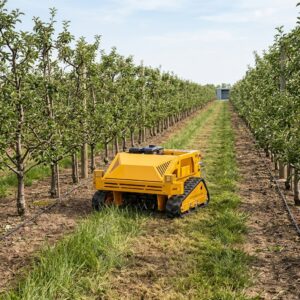
However, choosing agricultural mowing equipment requires careful consideration. A mower designed for open lawns may not be the right solution for an orchard or farm.
The ideal machine depends on the property layout, vegetation type, terrain, tree spacing, required productivity, and maintenance requirements.
This guide explains the key factors agricultural buyers should evaluate before purchasing a remote control mower for farms and orchards.
1. Understand the Type of Agricultural Property
The first step is to identify where the mower will actually be used.
A small orchard with closely spaced trees has very different requirements from a large open farm.
Common applications include:
Orchard Floor Maintenance
Mowing grass and weeds between rows of fruit trees can help maintain a cleaner and more accessible orchard floor.
Farm Field Edges
Vegetation often grows along field boundaries, fences, drainage areas, and access roads.
Sloped Farmland
Uneven or sloped agricultural land may be difficult to maintain with conventional equipment.
Overgrown Agricultural Areas
Unused or infrequently maintained areas can develop tall grass, weeds, and brush.
Farm Roadside Maintenance
Remote control mowing equipment can also be useful around agricultural access roads and embankments.
Before selecting a machine, define the primary application rather than choosing equipment based only on engine power.
2. Evaluate the Orchard Layout
Orchards create a unique mowing environment because trees become fixed obstacles.
Important dimensions include:
- Distance between tree rows
- Distance between individual trees
- Available turning space
- Ground clearance beneath trees
- Width of access paths
- Slope between rows
A mower that is too wide may struggle to move between rows.
A mower that is too large may also have difficulty maneuvering around tree trunks.
For orchard applications, machine width and maneuverability can be just as important as cutting capacity.
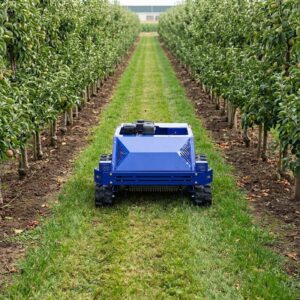
When discussing the machine with a supplier, provide the approximate row spacing and access width.
This allows the manufacturer to recommend a more appropriate configuration.
3. Choose the Right Machine Width
Cutting width directly affects productivity.
A wider cutting deck can cover more area with each pass, which can be beneficial for large open farmland.
However, wider is not always better.
For orchards, buyers may need a more compact machine that can operate between rows without damaging trees or agricultural infrastructure.
Consider:
- Orchard row width
- Tree spacing
- Field size
- Required productivity
- Turning radius
- Transport requirements
A commercial contractor maintaining large open fields may prioritize cutting width.
An orchard operator may prioritize maneuverability.
Therefore, the correct cutting width should be determined by the property rather than selected solely for maximum productivity.
Remote Control Mower Cutting Width Explained
4. Consider the Type of Vegetation
Farm and orchard vegetation can vary considerably.
The machine should be matched to the material being cut.
Typical vegetation includes:
- Short grass
- Tall grass
- Weeds
- Thick weeds
- Brush
- Young vegetation
- Mixed overgrowth
For regularly maintained grass, a standard grass-cutting configuration may be sufficient.
For heavier vegetation, a remote control flail mower may provide greater versatility.
Flail systems are commonly considered for applications involving tall grass, weeds, brush, and rough vegetation.
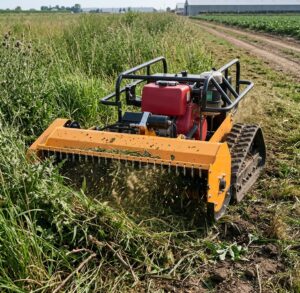
When purchasing equipment, explain the actual vegetation conditions to the manufacturer.
For example:
“The orchard is maintained several times per year, but some areas can develop tall grass and thick weeds.”
This provides more useful information than simply asking for a general-purpose mower.
How to Choose a Remote Control Flail Mower
5. Decide Between Rotary and Flail Cutting
The cutting system is an important purchasing decision.
Rotary Cutting
Rotary systems are generally suitable for grass and relatively light vegetation.
They may be appropriate when the primary goal is routine mowing.
Flail Cutting
Flail cutting systems are designed for more demanding vegetation management.
They can be considered for:
- Tall grass
- Dense weeds
- Brush
- Rough field edges
- Overgrown orchard areas
For farms and orchards where vegetation conditions vary throughout the year, a flail configuration can provide additional flexibility.
The choice should ultimately depend on the type of material that needs to be cut and the desired finish.
6. Look at Ground Conditions
Agricultural land is rarely perfectly flat.
Farm and orchard surfaces may contain:
- Soft soil
- Mud
- Grass
- Gravel
- Uneven ground
- Small stones
- Ruts
- Slopes
- Wet areas
Ground conditions can affect traction and machine stability.
Crawler tracks can be particularly useful in applications where ground contact and traction are important.
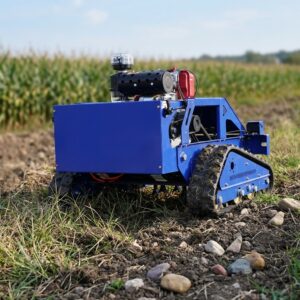
A crawler remote control mower distributes its contact across the track surface rather than relying on individual wheels.
This can make tracked equipment attractive for challenging agricultural terrain.
Why Crawler Tracks Are Important for Slope Mowing
7. Consider Orchard Slopes
Many farms and orchards are located on naturally uneven terrain.
If the orchard contains slopes, buyers should pay particular attention to:
- Gradeability
- Track design
- Machine stability
- Center of gravity
- Traction
- Remote control range
A mower designed only for flat grassland may not be suitable for demanding slopes.
Ask the supplier about the machine’s rated slope capability and the conditions under which the specification was measured.
Do not rely solely on a single maximum-slope number.
Actual performance can vary depending on:
- Soil
- Grass moisture
- Surface conditions
- Vegetation
- Machine load
- Direction of travel
How to Choose a Remote Control Mower for Steep Slopes
8. Check the Machine’s Ground Clearance
Ground clearance is another useful specification for agricultural applications.
Farm and orchard surfaces may contain:
- Small rocks
- Roots
- Uneven soil
- Fallen branches
- Furrows
- Ground transitions
Insufficient clearance can increase the risk of the machine contacting obstacles.
However, ground clearance should be considered together with overall machine height and center of gravity.
A high machine may have more clearance but can also have different stability characteristics.
For agricultural use, the complete chassis design is more important than any single measurement.
9. Think About Trees and Obstacles
Orchards contain obstacles that do not move.
Tree trunks are the most obvious example, but buyers should also consider:
- Irrigation pipes
- Sprinklers
- Fences
- Posts
- Electrical equipment
- Farm structures
- Agricultural machinery
- Fallen branches
Operators need good visibility of the machine and working area.
Remote operation can allow the operator to maintain a better observation position while the mower works between trees.
However, the operator should still maintain appropriate clearance from obstacles.
10. Remote Control Makes Difficult Areas Easier to Access
One of the key benefits of remote operation is flexibility.
The operator can stand away from the machine while controlling its movement.
This can be useful when working around:
- Slopes
- Dense vegetation
- Orchard rows
- Drainage areas
- Rough field edges
- Areas with limited visibility from conventional equipment
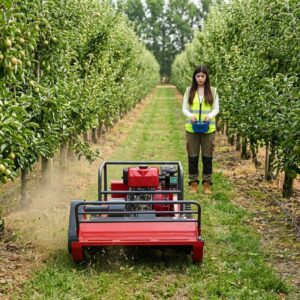
For agricultural buyers, the remote controller should be evaluated as part of the machine rather than as an accessory.
Important considerations include:
- Control range
- Signal stability
- Response speed
- Controller ergonomics
- Battery life
- Emergency stop
- Machine status information
11. Match Engine Power to Agricultural Work
Engine power should be matched to the workload.
Factors affecting engine requirements include:
- Cutting width
- Vegetation density
- Cutting system
- Working speed
- Terrain
- Machine weight
- Expected operating hours
For example, a mower used for regularly maintained orchard grass may have different power requirements from one used to clear thick weeds and brush from an abandoned farm area.
Commercial buyers should therefore avoid choosing a machine based purely on horsepower.
Remote Control Mower Engine Power Explained
12. Productivity Matters for Large Farms
For larger agricultural properties, productivity becomes an important part of equipment selection.
Consider:
- Cutting width
- Working speed
- Fuel capacity
- Operating time
- Turning efficiency
- Terrain
- Vegetation density
- Transport time
A machine with a wider cutting deck may reduce the number of passes required on large open areas.
However, productivity should not come at the expense of accessibility.
The best configuration balances coverage, maneuverability, and terrain capability.
13. Fuel Capacity and Operating Time
Agricultural mowing may involve long working periods.
If operators need to stop frequently for refueling, overall productivity can decrease.
Ask about:
- Fuel tank capacity
- Expected operating time
- Fuel consumption
- Engine type
- Refueling procedure
Operating time will vary depending on working conditions.
Heavy vegetation and demanding terrain can increase engine workload compared with light grass mowing.
For commercial buyers, it can be useful to estimate the expected working area per day and compare it with machine operating time.
14. Maintenance in Farm and Orchard Environments
Agricultural environments can be demanding for equipment.
Grass, dust, mud, moisture, and plant debris can accumulate around the machine.
Regular maintenance may include:
- Cleaning the cutting deck
- Checking cutting tools
- Inspecting tracks
- Checking belts
- Lubrication
- Engine maintenance
- Air filter inspection
- Fastener inspection
- Remote controller maintenance
Farm operators should establish a regular maintenance schedule based on actual operating hours.
Remote Control Mower Maintenance Guide for Commercial Users
15. Spare Parts Are Important for Agricultural Buyers
If a mower is used during an important agricultural maintenance period, unexpected downtime can be costly.
Before ordering, ask the supplier about spare parts availability.
Common replacement items may include:
- Cutting tools
- Belts
- Filters
- Bearings
- Track components
- Electrical components
- Controller batteries
- Engine service parts
For dealers and large farm operators, it can be useful to purchase a recommended spare-parts package together with the machine.
This can reduce delays when routine replacement is required.
16. Consider Seasonal Mowing Requirements
Farm and orchard vegetation changes throughout the year.
During one season, the mower may mainly handle grass.
Later, vegetation may become taller or denser.
A commercial machine should therefore be selected based on the most demanding regular application, rather than the easiest mowing condition.
For example:
| Season / Condition | Typical Vegetation | Equipment Priority |
|---|---|---|
| Early Season | Short grass | Efficiency |
| Growing Season | Tall grass | Cutting capacity |
| Wet Period | Dense vegetation | Traction |
| Late Season | Dry weeds / brush | Cutting durability |
| Neglected Areas | Heavy overgrowth | Flail capability |
This approach can help prevent equipment from being underpowered for part of the year.
17. Farm and Orchard Buyers Should Consider Transport
A mower may need to move between:
- Different fields
- Orchard blocks
- Storage areas
- Remote sections of a farm
- Multiple customer properties
Therefore, transport requirements should be considered before purchasing.
Check:
- Machine dimensions
- Machine weight
- Loading method
- Trailer requirements
- Storage requirements
- Access roads
For contractors serving multiple agricultural customers, easy transportation can directly affect business efficiency.
18. How Contractors Can Use Remote Mowers on Farms
Agricultural contractors may use remote control mowers for several services.
Examples include:
- Orchard vegetation maintenance
- Farm field-edge mowing
- Embankment cutting
- Brush management
- Overgrown land clearing
- Access-road vegetation control
- Seasonal vegetation maintenance
For contractors, versatility can be more valuable than optimizing a machine for only one application.
A machine capable of handling several types of vegetation can potentially support a wider range of customer projects.
19. Choosing a Mower for Commercial Agricultural Services
If you are purchasing equipment for a mowing business, evaluate the machine from a business perspective.
Important factors include:
Productivity
How much area can the machine reasonably maintain during a working day?
Versatility
Can it handle farms, orchards, slopes, roadside vegetation, and other commercial applications?
Reliability
Can it operate consistently during long working periods?
Maintenance
Are routine service procedures straightforward?
Spare Parts
Can replacement parts be obtained quickly?
Supplier Support
Can the manufacturer provide technical assistance?
These factors can have a greater effect on profitability than the initial purchase price alone.
20. What Dealers Should Consider
Dealers serving agricultural customers may need more than a single mower model.
A product range could include:
- Compact models
- Higher-power models
- Flail mower configurations
- Slope-capable crawler models
- Different cutting widths
- Customized configurations
Different agricultural customers may have very different requirements.
A manufacturer that supports OEM/ODM projects can also help distributors develop products for specific regional markets.
How to Choose a Remote Control Mower Supplier for Your Market
21. OEM and Private Label Opportunities
Agricultural equipment distributors may want to sell remote control mowers under their own brand.
Potential OEM/ODM requirements include:
- Brand logo
- Product color
- Product labeling
- Packaging
- User manuals
- Spare parts packages
- Product configuration
- Marketing materials
For buyers planning long-term distribution, OEM capability can be an important supplier-selection criterion.
Remote Control Mower OEM and ODM Guide
22. Questions to Ask Before Buying
Before purchasing a remote control mower for a farm or orchard, ask the manufacturer:
- What type of terrain is the machine designed for?
- What is the recommended slope capability?
- What vegetation can the cutting system handle?
- What cutting width is available?
- What is the machine width?
- What is the minimum recommended row spacing?
- Is the machine crawler-based?
- What engine power options are available?
- What is the expected operating time?
- What safety functions are included?
- What spare parts should be stocked?
- Is technical support available?
- Are OEM/ODM services available?
- What is the minimum order quantity?
- Can the manufacturer provide a complete quotation?
Getting answers to these questions can make supplier comparisons much easier.
23. Farm and Orchard Mower Buying Checklist
Before placing an order, review the following.
Property
- Farm or orchard size
- Row spacing
- Tree spacing
- Access width
- Terrain
- Slope
- Ground conditions
Vegetation
- Short grass
- Tall grass
- Weeds
- Brush
- Mixed vegetation
Machine
- Suitable cutting width
- Suitable machine width
- Appropriate engine power
- Crawler track system
- Suitable ground clearance
- Suitable gradeability
Remote Control
- Adequate operating range
- Stable signal
- Emergency stop
- Suitable controller
- Appropriate battery duration
Supplier
- Spare parts
- Warranty
- Technical support
- OEM/ODM
- Bulk order capability
- Export experience
24. Why NUOYU Remote Control Mowers Can Be Used for Agricultural Applications
NUOYU focuses on remote control mowing equipment for commercial vegetation management.
Its equipment can be applied to agricultural environments including:
- Farms
- Orchards
- Sloped agricultural land
- Field boundaries
- Farm roads
- Overgrown areas
- Large rural properties
For agricultural buyers, the key is selecting the configuration according to the actual working environment.
Depending on the application, buyers can evaluate factors such as crawler drive, cutting system, engine power, cutting width, and remote-control functionality.
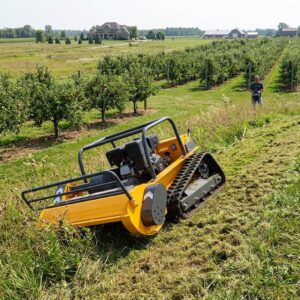
NUOYU also supports commercial buyers such as contractors, dealers, distributors, importers, and OEM/ODM customers.
NUOYU Remote Control Flail Mower Collection
Contact NUOYU for a Commercial Quote
FAQ
What is the best remote control mower for farms?
The best machine depends on farm size, vegetation, terrain, slope, cutting requirements, and working frequency. A crawler remote control mower can be suitable for farms with uneven or challenging terrain.
Can a remote control mower be used in orchards?
Yes. Remote control mowers can be used for vegetation management between orchard rows and around agricultural areas, provided the machine dimensions and maneuverability match the orchard layout.
What cutting width is best for an orchard?
The ideal cutting width depends mainly on row spacing and available maneuvering space. A compact cutting width may be preferable for narrow orchard rows, while larger widths can improve productivity in open areas.
Is a flail mower suitable for farms?
A remote control flail mower can be suitable for farms where vegetation includes tall grass, weeds, brush, and dense overgrowth.
Are crawler tracks useful on farms?
Crawler tracks can provide greater ground contact and may improve traction on uneven, soft, or sloped agricultural terrain.
Can remote control mowers work between trees?
They can be suitable for mowing between trees when the machine width, turning space, and operator visibility are appropriate for the orchard layout.
How do I choose a farm remote control mower?
Start with the property layout, vegetation, terrain, slope, row spacing, and required productivity. Then compare cutting width, machine width, engine power, drive system, cutting system, remote control range, and after-sales support.
Can I buy remote control mowers wholesale for agricultural customers?
Yes. Dealers, distributors, contractors, and importers can work with manufacturers on bulk purchasing, product selection, spare parts, and potentially OEM/ODM projects.
Final Thoughts
Choosing a remote control mower for farms and orchards requires a practical understanding of the property rather than simply comparing product prices.
The most important factors include:
- Farm or orchard layout
- Row spacing
- Vegetation type
- Cutting width
- Machine width
- Crawler track design
- Terrain
- Slope capability
- Engine power
- Cutting system
- Remote control performance
- Maintenance
- Spare parts
- Manufacturer support
For orchard owners, maneuverability and machine dimensions may be especially important.
For large farms, productivity and operating efficiency may have greater priority.
For contractors and dealers, versatility, reliability, spare parts, and supplier support can become critical purchasing factors.
A well-matched remote control mower can help professional users manage grass, weeds, brush, and other vegetation across challenging agricultural environments.
If you are looking for a farm or orchard remote control mower, provide the manufacturer with your property size, terrain, vegetation type, row spacing, and required cutting width. This information can help the supplier recommend a machine configuration that better fits your actual application.
Need a Remote Control Mower for Your Farm or Orchard?
Contact NUOYU for model recommendations, commercial pricing, OEM/ODM options, and application-specific solutions.