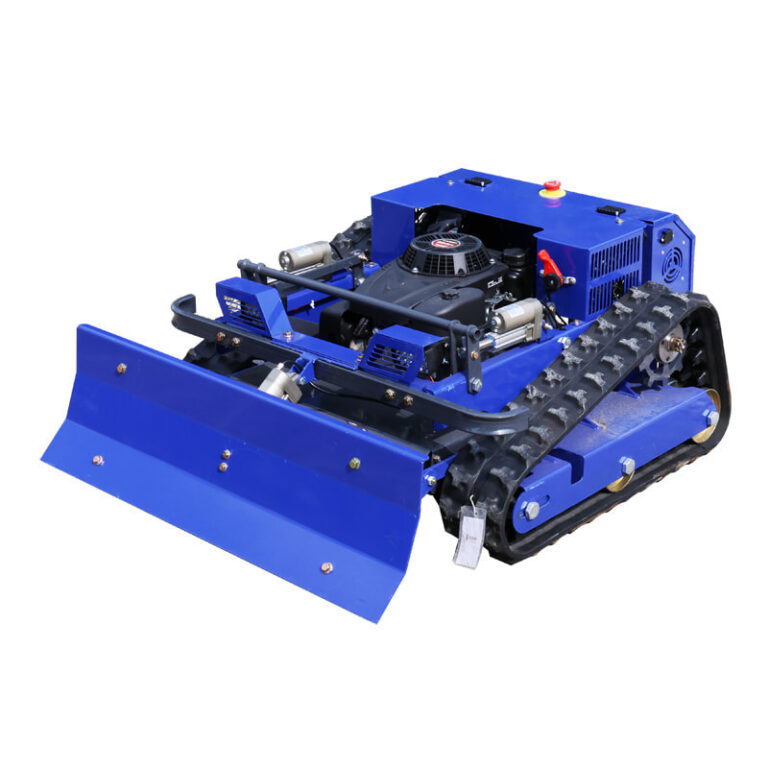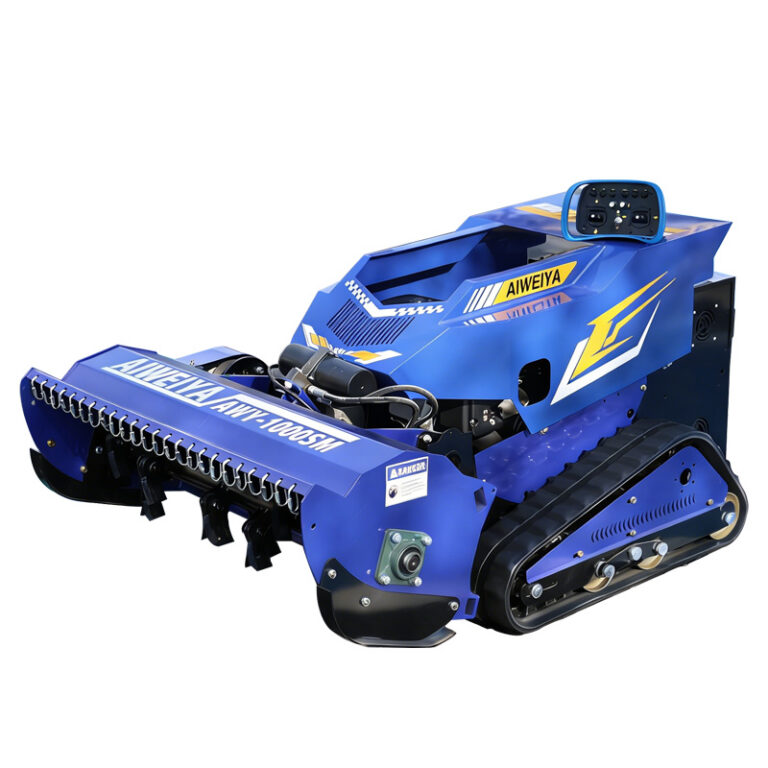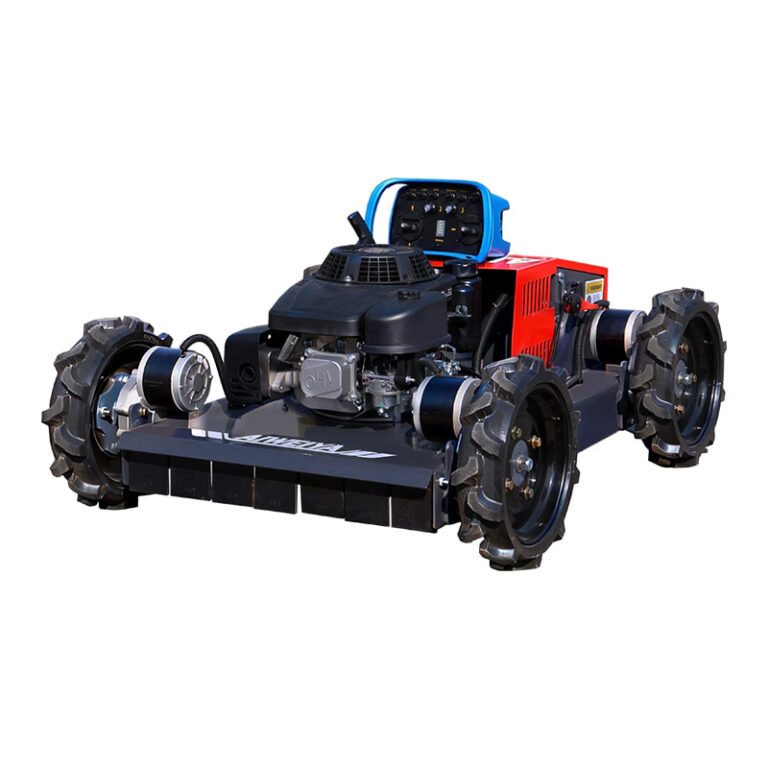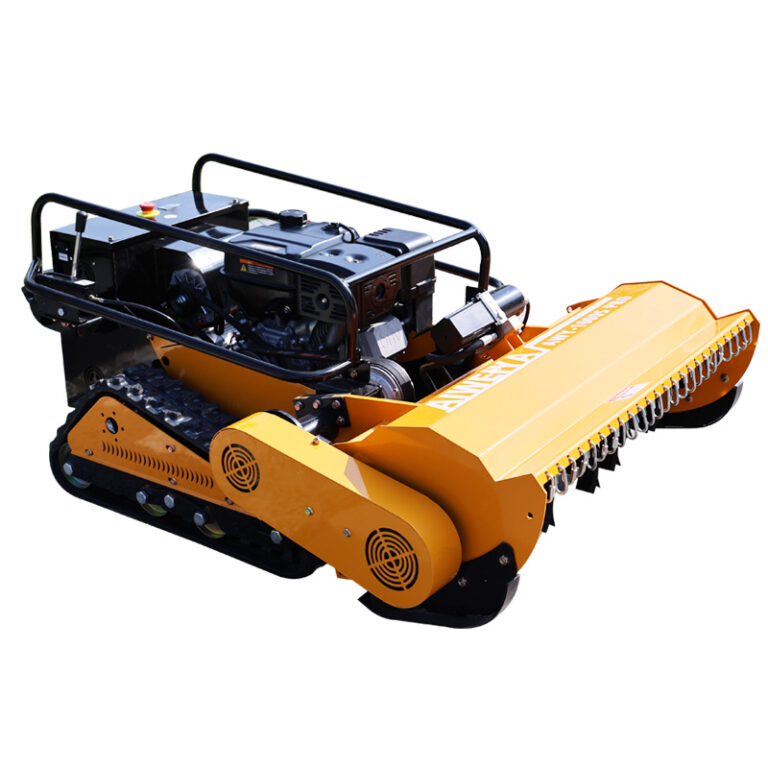
Choosing a remote control mower for commercial use requires more than comparing prices or engine size.
Different machines can have very different capabilities even when they look similar. For professional buyers, contractors, dealers, farms, landscaping companies, and rental businesses, the right specifications determine whether a mower can handle the terrain, vegetation, workload, and operating conditions of a particular application.
The most important remote control mower specifications to compare include engine power, cutting width, cutting system, drive type, slope capability, machine weight, working speed, remote control range, traction, stability, fuel capacity, maintenance requirements, and manufacturer support.
This guide explains the specifications that commercial buyers should evaluate before placing an order.
1. Start With the Application
Before comparing technical specifications, identify how the mower will actually be used.
A mower designed for routine lawn maintenance may have different requirements from a machine intended for steep slopes, dense weeds, roadside vegetation, orchards, or solar farms.
For example:
- Steep slopes: prioritize crawler tracks, traction, stability, and gradeability.
- Dense grass: consider cutting system, engine power, and cutting width.
- Brush and weeds: a flail cutting system may be more suitable.
- Orchards: consider machine dimensions, maneuverability, and vegetation conditions.
- Roadside maintenance: prioritize stability, remote operation, productivity, and transportability.
- Commercial contractors: consider durability, operating efficiency, serviceability, and spare parts.
- Dealers: evaluate product range, OEM/ODM options, technical support, and supply capacity.
This is why specifications should always be evaluated according to the intended application.
Remote Control Mower Buying Guide for Commercial Buyers
2. Engine Power
Engine power is one of the most commonly compared remote control mower specifications.
Power affects how effectively a mower can operate under different loads.
When mowing thick grass, weeds, brush, or vegetation on challenging terrain, the machine may require more power than a mower working on regularly maintained lawn areas.
What to compare
When reviewing engine specifications, look at:
- Engine type
- Rated power
- Displacement
- Fuel type
- Cooling system
- Fuel capacity
- Engine manufacturer
- Service and parts availability
Do not automatically assume that the highest horsepower machine is the best choice.
A higher-power engine can be useful for demanding applications, but it can also affect fuel consumption, machine weight, purchase cost, and maintenance requirements.
The better approach is to match engine power with the cutting system and intended workload.
3. Cutting Width
Cutting width directly affects mowing productivity.
A wider cutting deck can cover more area in a single pass, potentially reducing the time required to complete a large property.
However, wider cutting equipment may not always be ideal.
For narrow areas, orchards, uneven terrain, or locations with obstacles, a smaller cutting width can improve maneuverability.
Commercial buyers should compare:
- Cutting width
- Cutting height range
- Cutting system
- Deck construction
- Adjustment method
- Suitable vegetation
- Replacement blade availability
For example, a contractor maintaining large open areas may prioritize a wider cutting width, while an orchard operator may prefer maneuverability.
Remote Control Mower Cutting Width Explained
4. Cutting System
The cutting system is another important specification.
Different cutting systems are designed for different types of vegetation.
Two common configurations include rotary cutting systems and flail cutting systems.
Rotary Cutting System
Rotary systems are commonly used for:
- Grass
- Regular lawn areas
- Pasture
- Light vegetation
- General vegetation maintenance
They can be suitable for applications where the primary objective is efficient grass cutting.
Flail Cutting System
Flail systems are often considered for more demanding vegetation conditions.
They can be useful for:
- Dense grass
- Weeds
- Brush
- Overgrown vegetation
- Rough vegetation management
A remote control flail mower can therefore be an attractive option for contractors and professional vegetation-management businesses.
What Is a Remote Control Flail Mower?
5. Crawler Tracks vs. Wheels
The drive system is one of the most important specifications when working on difficult terrain.
Remote control mowers are commonly available with crawler tracks or wheels.
Crawler Remote Control Mower
Tracked machines can provide several advantages for demanding terrain, including:
- Greater contact area
- Strong traction
- Improved stability
- Better performance on uneven ground
- Suitable configuration for slope mowing
Crawler tracks are particularly relevant for applications involving steep slopes, embankments, rough terrain, and challenging ground conditions.
Wheeled Remote Control Mower
Wheeled machines may be suitable for:
- Relatively flat terrain
- Maintained lawns
- Open areas
- Applications where mobility is prioritized
The best choice depends on the actual working environment.
How Do Remote Control Mowers Handle Steep Slopes?
6. Maximum Slope or Gradeability
For professional buyers, slope capability can be a critical specification.
A mower used on flat farmland does not necessarily require the same slope capability as a machine used for embankments or hillside vegetation management.
When evaluating gradeability, ask the manufacturer:
- What is the maximum recommended slope?
- Under what surface conditions was it tested?
- Is the specification for dry or wet ground?
- Is the mower designed for lateral slope operation?
- How does the machine perform on uneven terrain?
- What safety recommendations apply?
A manufacturer should be able to explain the conditions behind the claimed specification rather than simply providing a single maximum number.
Remote Control Mower for Steep Slopes
7. Machine Weight
Machine weight affects transportation, stability, traction, and handling.
A heavier machine may provide advantages in certain operating conditions, but weight also needs to be considered when transporting the mower between job sites.
Commercial buyers should compare:
- Operating weight
- Transport dimensions
- Overall width
- Overall length
- Loading requirements
- Trailer compatibility
For contractors, transportation can become an important part of total operating cost.
A mower that is easy to transport can make it more convenient to move between different projects.
8. Working Speed
Working speed determines how quickly a machine can move through a mowing area.
However, maximum travel speed is not necessarily the same as practical mowing speed.
Actual productivity depends on:
Productivity = Cutting Width × Working Speed × Operating Efficiency
Terrain, vegetation density, turning frequency, slope, obstacles, and operator experience can all influence actual output.
Therefore, commercial buyers should look beyond the maximum speed listed on a specification sheet.
Ask about the recommended operating speed under real working conditions.
9. Remote Control Range
Remote operation is one of the defining features of an RC lawn mower.
A longer control range can give the operator greater flexibility, especially when the machine is operating on slopes, roadside areas, or other locations where close-range operation may not be practical.
Important specifications include:
- Remote control range
- Signal stability
- Control response
- Emergency stop function
- Battery life
- Charging time
- Controller display
- Machine status feedback
A good remote control system should allow the operator to control essential functions accurately.
10. Safety Features
Safety should be treated as a core specification rather than an optional feature.
When purchasing a commercial remote control mower, ask what safety systems are included.
Potential features may include:
- Emergency stop
- Remote shutdown
- Signal-loss protection
- Automatic engine shutdown
- Low-battery warning
- Safety alarms
- Protective guards
- Operator warning indicators
For slope applications, safety becomes particularly important because the machine may operate at a distance from the operator.
Buyers should always review the manufacturer’s operating instructions and recommended working conditions.
11. Traction and Ground Contact
Traction determines how effectively the machine transfers engine power to the ground.
For crawler machines, track design and ground contact can be especially important.
Consider:
- Track width
- Track material
- Ground contact area
- Drive configuration
- Surface conditions
- Wet-ground performance
- Mud and loose-soil conditions
A machine with strong engine power but insufficient traction may not perform effectively on difficult terrain.
This is why engine power and drive system should be evaluated together.
12. Ground Clearance
Ground clearance can become important when working on rough or uneven terrain.
A machine with insufficient clearance may have difficulty moving over:
- Small obstacles
- Uneven ground
- Roots
- Rough pasture
- Debris
- Irregular terrain
When evaluating a mower for farms, orchards, roadside areas, or rough vegetation management, ground clearance should be included in the specification comparison.
13. Machine Dimensions
Overall machine dimensions influence where the mower can operate.
Important dimensions include:
- Overall length
- Overall width
- Overall height
- Cutting width
- Track width
- Ground clearance
For orchard applications, narrow passages may make machine width particularly important.
For roadside work, transport width can also affect logistics.
Before ordering, compare machine dimensions with the actual access conditions of your working sites.
14. Fuel Capacity and Operating Time
For gasoline-powered commercial mowers, fuel capacity can influence daily productivity.
A larger fuel tank may reduce the frequency of refueling, but fuel capacity should be considered together with engine efficiency.
Ask suppliers about:
- Fuel tank capacity
- Expected operating time
- Fuel consumption
- Refueling requirements
- Recommended fuel
- Engine maintenance intervals
For commercial applications, operating time can be more meaningful than fuel tank size alone.
15. Maintenance Requirements
A commercial mower is a working asset, so maintenance should be considered before purchase.
Ask the manufacturer about routine maintenance for:
Engine
- Oil changes
- Air filter
- Spark plug
- Cooling system
- Fuel system
Cutting System
- Blade inspection
- Blade replacement
- Deck cleaning
- Belt or drive-system inspection
Track or Drive System
- Track inspection
- Tension adjustment
- Drive component inspection
A machine with straightforward maintenance procedures can reduce downtime for commercial users.
Remote Control Mower Maintenance Guide for Commercial Users
16. Spare Parts Availability
Spare parts are especially important for dealers, contractors, rental companies, and professional users.
Before purchasing, ask whether the manufacturer can provide:
- Blades
- Belts
- Filters
- Track components
- Remote controllers
- Electrical components
- Engine parts
- Hydraulic or drive components, where applicable
Also ask:
- How quickly can parts be supplied?
- Are common wear parts stocked?
- Is a spare-parts list available?
- Can the manufacturer provide technical documentation?
Reliable parts support can make a significant difference to long-term operating costs.
17. Remote Control Mower Specifications Comparison Table
When comparing several machines, create a standardized specification sheet.
| Specification | Model A | Model B | Model C |
|---|---|---|---|
| Engine Power | — | — | — |
| Engine Type | — | — | — |
| Cutting Width | — | — | — |
| Cutting System | — | — | — |
| Drive Type | — | — | — |
| Maximum Recommended Slope | — | — | — |
| Working Speed | — | — | — |
| Remote Control Range | — | — | — |
| Machine Weight | — | — | — |
| Overall Dimensions | — | — | — |
| Fuel Capacity | — | — | — |
| Ground Clearance | — | — | — |
| Safety Functions | — | — | — |
| Spare Parts Support | — | — | — |
| OEM/ODM | — | — | — |
Using the same criteria makes supplier comparison much easier.
18. Don’t Compare Price Alone
One of the biggest mistakes commercial buyers make is choosing the lowest-priced mower without evaluating the complete specification.
A lower purchase price may not necessarily mean lower total cost.
Consider:
Total Cost of Ownership = Purchase Cost + Maintenance + Parts + Fuel + Downtime + Transportation
For example, a machine with better durability and parts availability may provide better long-term value even if its initial price is higher.
Commercial buyers should therefore evaluate the complete ownership picture.
19. Manufacturer Capability Matters
Technical specifications are only part of the purchasing decision.
The manufacturer’s capability can be equally important.
When evaluating a remote control mower manufacturer, consider:
- Factory experience
- Production capacity
- Quality control
- Product range
- Spare-parts support
- Technical support
- OEM/ODM capability
- Packaging and shipping experience
- Export experience
- Dealer support
This becomes particularly important when purchasing multiple machines or building a product line.
Remote Control Mower Manufacturer vs Trading Company
How to Find a Reliable Remote Control Mower Manufacturer in China
20. OEM and ODM Requirements
If you are a distributor or brand owner, standard specifications may not be enough.
You may need:
- Private labeling
- Custom colors
- Custom decals
- Customized packaging
- Product configuration
- Technical documentation
- Marketing materials
- Dealer-exclusive models
Before placing an OEM or ODM order, confirm the manufacturer’s customization capabilities and minimum order requirements.
Remote Control Mower OEM and ODM Guide
21. Questions to Ask a Remote Control Mower Supplier
Before requesting a quotation, prepare a detailed specification checklist.
Ask:
- What is the engine power?
- What is the cutting width?
- What cutting system does the mower use?
- Is the machine tracked or wheeled?
- What terrain is it designed for?
- What is the recommended maximum slope?
- What is the working speed?
- What is the remote control range?
- What safety functions are included?
- What is the operating weight?
- What are the machine dimensions?
- What are the routine maintenance requirements?
- Which spare parts are available?
- Can you provide technical documentation?
- Do you support OEM/ODM?
- What is the production lead time?
- What after-sales support is available?
The more specific your questions are, the easier it is to compare different suppliers.
22. Specification Priorities by Application
Different businesses should prioritize different specifications.
| Application | Key Specifications |
|---|---|
| Steep Slopes | Tracks, traction, stability, gradeability |
| Orchards | Width, maneuverability, cutting system |
| Farms | Cutting width, power, productivity |
| Roadside Vegetation | Stability, remote control, cutting system |
| Brush Cutting | Flail system, power, durability |
| Landscaping | Cutting width, maneuverability, operating efficiency |
| Solar Farms | Low-maintenance operation, maneuverability, vegetation control |
| Contractors | Productivity, durability, transportability |
| Rental Companies | Durability, safety, maintenance, parts |
| Dealers | Product range, supply capacity, OEM/ODM |
This approach helps buyers avoid choosing a machine based on specifications that are not important to their actual business.
23. Why Specification Matching Is More Important Than Maximum Performance
A machine does not need to have the highest specification in every category.
Instead, it needs to have the right combination of specifications for the job.
For example:
A contractor working on steep embankments may prioritize:
Crawler Tracks + Strong Traction + Stability + Suitable Gradeability
A landscaping company working on large grass areas may prioritize:
Cutting Width + Engine Power + Working Speed + Productivity
A brush-clearing contractor may prioritize:
Flail Cutting System + Engine Power + Durability + Spare Parts
The best commercial mower is therefore the machine that matches the working environment and business requirements.
24. A Practical Remote Control Mower Buying Checklist
Before making a final purchasing decision, confirm the following:
Application
☐ Main mowing application identified
☐ Vegetation type identified
☐ Terrain conditions evaluated
☐ Slope requirements confirmed
Machine
☐ Engine power checked
☐ Cutting width checked
☐ Cutting system selected
☐ Drive system selected
☐ Ground clearance checked
☐ Machine dimensions confirmed
☐ Operating weight confirmed
Operation
☐ Remote control range confirmed
☐ Working speed checked
☐ Traction evaluated
☐ Stability evaluated
☐ Safety functions confirmed
Ownership
☐ Maintenance requirements understood
☐ Spare parts availability confirmed
☐ Warranty terms reviewed
☐ Technical support confirmed
Supplier
☐ Factory capability evaluated
☐ Production capacity confirmed
☐ OEM/ODM capability checked
☐ Lead time confirmed
☐ Shipping and packaging discussed
FAQ
What are the most important remote control mower specifications?
The most important specifications depend on the application, but engine power, cutting width, cutting system, drive type, slope capability, traction, machine weight, remote control range, safety features, and maintenance requirements are commonly important for commercial buyers.
Is a higher horsepower remote control mower always better?
Not necessarily. Higher power can help with demanding vegetation and heavy workloads, but the best mower should balance engine power with cutting system, terrain, productivity, fuel consumption, and operating requirements.
Are tracked remote control mowers better for slopes?
Crawler tracks can provide strong traction and a large ground-contact area, making tracked configurations particularly suitable for many slope and uneven-terrain applications. Actual suitability depends on the machine design and operating conditions.
Should I choose a rotary or flail remote control mower?
Rotary systems can be suitable for grass and general lawn maintenance, while flail systems can be advantageous for dense vegetation, weeds, and brush. The correct choice depends on the vegetation and working conditions.
What should I ask a manufacturer before buying?
Ask about technical specifications, recommended applications, slope capability, safety systems, maintenance, spare parts, warranty, production capacity, lead time, and after-sales support.
Why is the manufacturer important?
A reliable manufacturer can provide consistent product quality, spare parts, technical support, OEM/ODM services, and long-term supply support. These factors are especially important for commercial users and distributors.
Final Thoughts
Comparing remote control mower specifications is an essential step before making a commercial purchase.
Instead of focusing on one specification such as horsepower or price, buyers should evaluate the entire machine.
Consider:
Application → Terrain → Cutting System → Drive System → Power → Productivity → Safety → Maintenance → Supplier Support
For professional users, the right remote control mower should not simply be powerful. It should be properly matched to the terrain, vegetation, workload, and business model.
For dealers, contractors, farms, landscaping companies, rental businesses, and other commercial buyers, working directly with an experienced manufacturer can also make it easier to select the right configuration and build a reliable long-term supply relationship.
NUOYU provides remote control mower solutions for applications including slope mowing, farm and orchard vegetation management, roadside vegetation control, brush cutting, landscaping, and other professional land-maintenance applications.
NUOYU Remote Control Mower Products
If you are comparing models for a specific application, contact NUOYU with your terrain, vegetation type, required cutting width, and expected workload. The manufacturer can then recommend a suitable configuration.